Prime Minister Pohiva Tu’i’onetoa has confirmed that three companies with strong links to the government have been awarded contracts to supply rocks for the government’s new multimillion roading project.
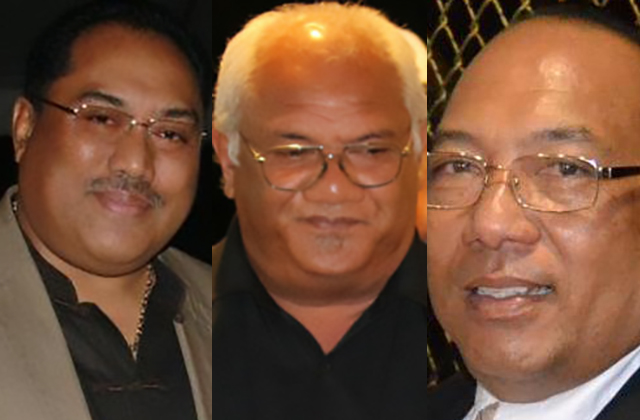
Companies with strong government, family, connections awarded road building contracts. (L-R) Saia Moehau, Lord Nuku and ‘Etuate Lavulavu
The contractors are Island Dredging Limited, City Engineering and Construction Limited and Inter-Pacific Limited.
In April the Prime Minister said claims that a contract had been awarded to City Engineering and Constructions were “false and misleading.”
The Minister of Police, Lord Nuku, used to be a Director for Island Dredging but his name was taken off the director’s list on July 31 last year.
Lord Nuku’s son Faka’osifono Valevale is the current Director of Island Dredging.
Tongan People’s Party Deputy Chairman Etuate Lavulavu was made a Director of Inter-Pacific Limited in February 2016 but was later replaced by ‘Inoke Finau Vala in May this year.
‘Etuate Lavulavu is also the husband of the Minister of Infrastructure and Tourism. Saia Moehau is the sole Director of City Engineering and Construction Ltd and he is a strong supporter of the People’s Party.
The Island Dredging Ltd will supply rocks for Tongatapu 10, Tt9, Tt2, Tt4 and Tt3. City Engineering will supply rocks for Tongatapu 6, Tt7, Tt5, Tt8, and Tt1. Inter-Pacific Ltd will supply rocks for Vava’u 16, VV15, and VV14.
The names of the three contractors were revealed on social media in June. Democrat MPs accused the Prime Minister and his Government in Parliament of nepotism and conflict of interest in regards to the road project.
Opposition MPs claimed that other contractors involved in the bid for the contract were cheaper than the government’s favoured contractors.
Kaniva News reported in April this year that the government claimed it could not afford to pay the market price of between TP$190 and TP$220 for the rocks and so had lawfully cancelled the procurement process.
The Prime Minister said at the time it was following due process for the procurement contract.
Hon. Tu’i’onetoa then said the government had set the price at TP$70 for each truck load.
A bill to tackle online abuse and cyber crime is being introduced by the Tu’i’onetoa government.
It aims to make it an offence to post content that is offensive, threatening, defamatory and causes distress.
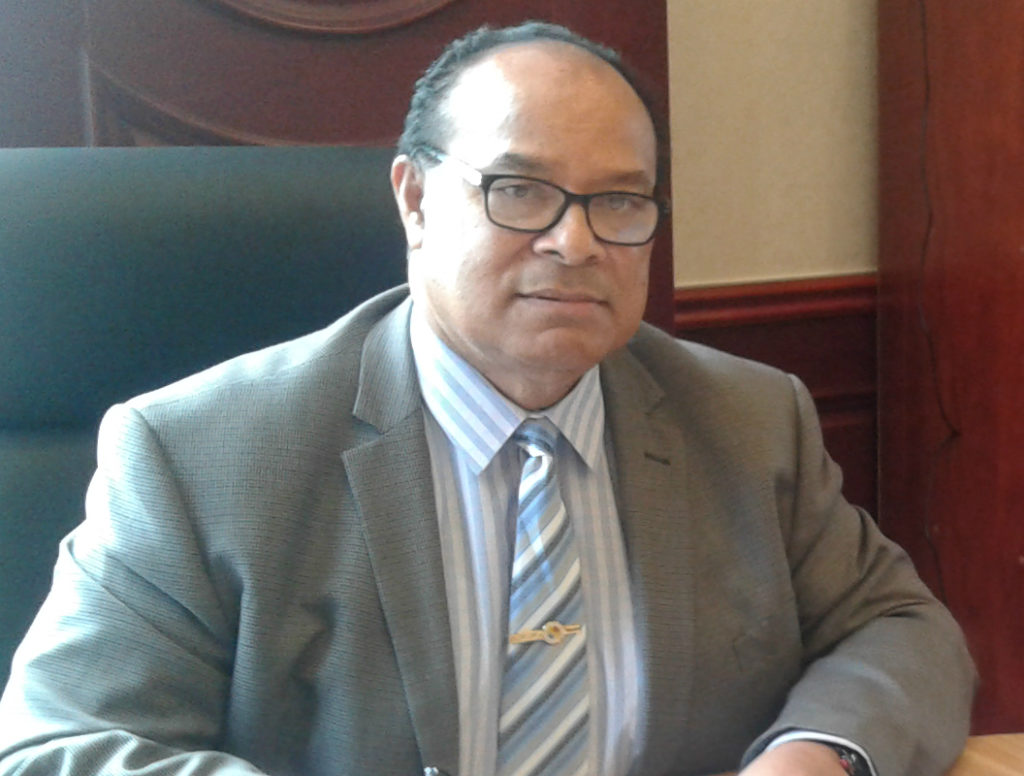
Prime Minister Pōhiva Tu’i’onetoa
Known as the Internet Abuse Offences Bill 2020, the Prime Minister said this was “a very important bill for the poor people of the nation.”
Tu’i’onetoa told local media the people had been bullied and intimidated on social media.
He said some people created fake accounts on Facebook to hide their identity while defaming others.
“It’s going from worse to worst,” he said.
The bill, containing 26 clauses and 19 pages, is expected to be submitted to Parliament this week.
The bill came after a move by the Late ‘Akilisi Pohiva government last year to shut down Facebook after vicious allegations of a sexual nature against the royal family was posted to Facebook.
Prime Minister ‘Akilisi Pōhiva said at the time the government had been long concerned about people abusing Facebook.
The Supreme Court has adjudicated on a custody dispute involving a separated couple.
The court was told that the couple became estranged after the wife began an affair with another man while the husband was away working overseas under seasonal picking fruit programmes.
The husband subsequently sought custody of all the children, three boys aged 11, 8 and 7, and two girls aged 5 and 3, which was granted by the magistrate’s court.
The wife appealed and was given custody by another magistrate.
Before the current case the three boys went to live with their father’s mother. The girls were living with their mother’s sister.
The court ordered that a guardian be appointed to investigate the best interests of children Following the guardian’s report, Judge Niu ordered that the two daughters remain with their mother.
He ordered that the three sons be given into the custody of the father.
He ordered that the parents have access to all the children at set times during the weekend.
Judge Niu ordered that maintenance and school expenses of the children will be provided by the parent in whose custody the children are.
“Each parent shall ensure that each child is properly cared for and shall be responsible for the good health, honesty, discipline and religious teaching of the children in his/her custody,” the judge said.
The PTOA Core Team seems to have completely lost sight of ‘Akilisi Pōhiva’s policies and principles.
Their support for the current government and policies that only benefit the nobles threaten to roll back all that the champion of Tongan democracy achieved after the reforms of 2010.
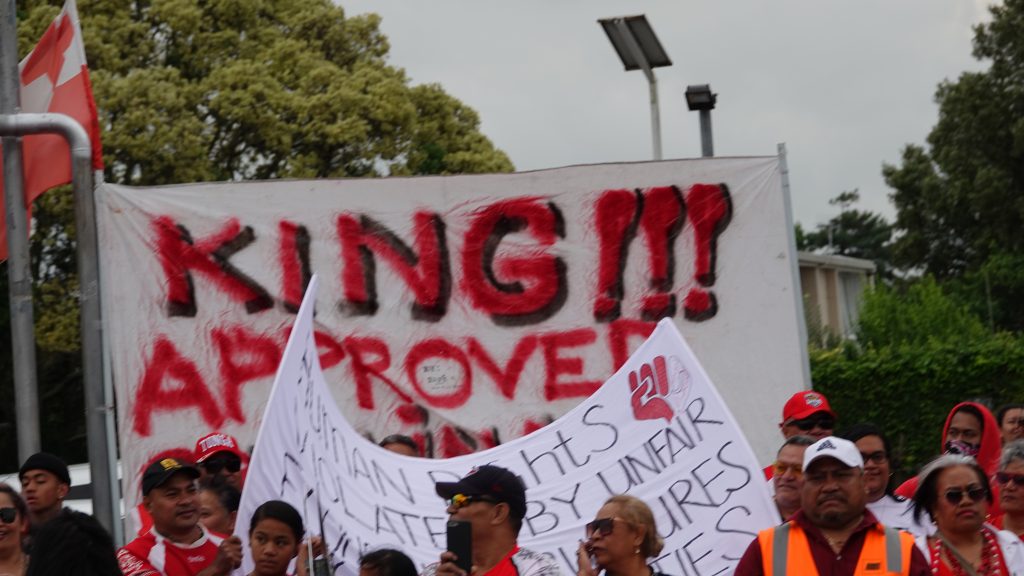
PTOA supporters protesting outside a venue in Mangere, Auckland while PM Pōhiva Tu’i’onetoa was holding a meeting with the Tongan community. Photo/Kalino Lātū
It is a situation that should greatly worry Democrats supporters. The Core Team, which consisted of Democratic Party MPs, no longer seems dedicated to making the late Prime Minister’s vision of a truly democratic Tonga a reality.
Pōhiva was a political reformist who believed the monarchy needed changes. He believed democracy was the right political system for Tonga. He also believed there was need for some immediate changes and also believed in gradual changes through the existing autocratic system which could eventually lead to fundamental changes.
Pōhiva’s core political policy could be summed up by his mission – to free commoners and tax payers politically from the absolute rule of the monarchy and allow them to control the decision making bodies, the government’s executive branch and Parliament. He said the king would still retain his other powers and entitlements stipulated by the constitution, including keeping his estates, privy purse funded from the people’s taxes and his nobles.
Pōhiva was well aware of the danger of having to totally remove the power of the king and nobility all at once. He said it was good to begin with removing the king’s executive powers.
This was clear when I interviewed him in 2011 after the political changes in 2010 when Tonga became partly a democratic system. He told me he was not satisfied with the changes, especially when the king relied on Lord Sevele ‘O Vailahi to implement the changes. Sevele became Pōhiva’s and the Democrats’ enemy and he did everything to ensure the changes were not what the Democrats expected.
However, Pōhiva said he was okay with it as long as the changes he had pushed for finally materialised and left the rest for the future. He left this important message for the PTOA Core Team or whoever would step up to carry on his mission. Pōhiva wanted them to continue pushing for more changes.
New law for king to appoint Secretary for Foreign Affairs
Unfortunately, since Pōhiva’s death the Core Team has done the opposite. In Parliament, the Core Team sometimes appears disorganised. They voted in support of a law to return the power to appoint the Secretary of Foreign Affairs to the king. This was a big blow to Tonga’s democracy and if Pōhiva was still alive he would have strongly opposed this move. Only his son, Siaosi Pohiva, voted against this bill in parliament
New law to consider tradition and custom during trials
Not only that, the Core Team recently voted in support of the noble-led government to allow courts to use traditions and cultural practices in their decision making. Again this was injurious to the democratic reforms the Party’s founder ‘Akilisi pursued for many years. Only Veivosa Taka from the Core Team voted against. It was ridiculous that when the Bill was put into debate some Core Team MPs spoke against it and suggested ways to support their views, but when the Bill was put to the ballot they all voted for it.
New law to give noble MPs $25,000 constituency allowance
They also voted unanimously in support of a move by the noble MPs to give them constituency funding of $25,000 each. This motion was first put into Parliament last year, but ‘Akilisi strongly opposed it, saying it was undemocratic because the nobles were not elected by the people and they were unaccountable to taxpayers.
He said if the nine Nobles in Parliament were given the allowance, this would set them apart from other Nobles who were not in the House and would not get the same benefit for their estates.
Democrat frontliner Mateni Tapueluelu, who fiercely attacked the noble MPs move to get a share of the constituency funding at the time, has given a very muted response when the motion was resubmitted and discussed in Parliament this year before it was approved.
Lack of transparency and accountability
The Core Team has recently been criticised for its lack of transparency and accountability in its decision to forgive MP Māteni Tapueluelu after claims were made that he and his brother-in-law Siaosi Pohiva had engaged in a power struggle that may have lost the Party the government in 2019.
The Core Team’s decision to keep the public in the dark was undemocratic and it undermines the public’s confidence in its impartiality.
‘Akilisi was always transparent and come clean about situation like this.
There is a real danger that the Core Team’s continued support for the nobles will encourage them and the government to continue to make laws to roll back the democratic changes of 2010 and return power to the king.
A Tongatapu police officer has been suspended after being charged with assault and bodily harm.
A Tongan Police officer. Photo/Kaniva Tonga
The 42-year-old male officer, whose name was not released, faces charges of assault of a police recruit.
The case continues a run of allegations of offending by Tongatapu police in the past few weeks.
As Kaniva News previously reported earlier this month, a police officer was suspended and charged with rape and indecent assault of an 18-year-old young woman who was in police custody.
“I have set standards and expect them to be met from all ranks within the Tonga Police,” Police Commissioner Stephen Caldwell said in a statement after the latest incident.
“Every police officer is accountable to the law, not above it. The public rightly expect the highest levels of professionalism and ethical behaviour from their Police.”
This story was originally appeared on TVNZ and is republished with permission
Louena Tupa hasn’t seen her kids in eight months, after finding herself stranded in Japan amid Covid-19 border closures.
Louena Tupa is stuck in Japan after the Covid-19 pandemic closed New Zealand’s borders. Source: Breakfast
Covid-stranded mum pleads with officials to let her return to Tonga to see her children
Now, she’s pleading with officials in New Zealand to let her transit through so he can return to Tonga.
“Being away from my kids for eight months has been very hard, and has been taking a toll on us emotionally,” she told TVNZ1’s Breakfast this morning.
Tupa has been living with her husband in Japan for almost a decade. Earlier this year, the couple decided to send their five-year-old daughter and one-year-old son to Tonga to keep them safe after a Covid-19 cluster broke out in their neighbourhood. Her husband accompanied her children.
Tupa, who was hosting family members in Japan on a trip they’d planned months before, stayed in Chiba. She planned to join her family a week later, but flight after flight she booked was cancelled.
Her final attempt was with Air New Zealand.
“They said everything was fine. By then, they had already announced that only citizens of New Zealand were allowed to come back,” she said.
“I was praying they would let me on for the sake of my kids. But they just said, ‘No sorry, you can’t get on the flight.’
“Ever since then, we’ve been trying.”
She begged the Tongan government to allow her on their repatriation flights, which began last month. But, they were only leaving from Brisbane and Auckland, meaning Tupa had to find a way to transit through either Australia or New Zealand.
She’s been in contact with officials the entire time she has been stranded in Japan.
Tupa is now one step away. After Breakfast discussed her case with the Tongan government, officials there changed their stance and confirmed Tupa will be included in the next repatriation flight to Tonga, set to leave Auckland next month.
Now she’s waiting to hear from Immigration New Zealand to allow her to transit through the country. The Tongan government is only allowing her to travel to Tonga if she completes quarantine in New Zealand.
Tupa is offering to pay for her own stay in managed isolation.
In the time she she’s been away from her children, she’s missed most of the first year of her son’s life.
“Them not being here, it’s just been really hard.”
But Tupa said she was “happy and grateful” her children were in Tonga, where they are safe and surrounded by loving family members.
Pacific Legal lawyer Richard Small said it is a story he’s heard “dozens of times over”.
“We have many clients in the same position. New Zealand is a gatekeeper for the Pacific,” he said.
“They say, of course, that Tonga is an independent government. But it’s New Zealand who really control the transit.”
That means people need to get approval from both New Zealand and Tongan governments, Small said.
He said, at times, it could be a “complete brick wall” for people trying to make it back to the Pacific.
“We’ve got people on antidepressants. We’ve got families at the end of their tether through this process in so many different ways.”
He urged authorities to look at the “human side to this story”, because there were “no real safety issues” if people were able to quarantine.
This story was originally appeared on TVNZ and is republished with permission
New Zealanders have voted for introducing assisted dying.
The preliminary referendum results show 65.2 per cent were in favour of the End of Life Choice Act coming into force.
This means if the final vote is reflected in the official results, assisted dying will become legal for people who meet a certain set of criteria.
The official results are set to come out on November 6, which would include special votes that are estimated to make up 17 per cent of the overall vote. The results could impact the final referendum results.
A ‘yes’ result would mean the End of Life Choice Act would come into force 12 months after the official results are released (November 6, 2021). If it is voted down by the public, it will be repealed.
If the majority say yes, it will lead to those that meet a certain set of criteria being able to request an assisted death.
They would have to be a New Zealander aged over 18, suffering from a terminal illness that’s likely to end their life within six months, be in an advanced state of irreversible physical decline, be experiencing unbearable suffering that cannot be eased in a manner the person considers tolerable and also be competent to make an informed decision.
Reasons that can’t be used to request assisted dying include – being of advanced age, suffering from a mental disorder, or a mental illness or having a disability of any kind.
If a medical or nurse practitioner suspects a person is being pressured into assisted dying, then no further action is allowed.
The End of Life Choice Act passed in Parliament on November 13, 2019.
The provision for a referendum was a bottom line for New Zealand First MPs, who voted in favour of the second reading but threatened to pull any further support if one was not held.
It was a long process of MPs working through proposed changes, occasionally staying until 1am to comb through the finer details of the bill. In that time the scope of the bill was narrowed to allow people with a terminal illness with less than six months to live.
The bill passed the first time in 2017 by 76-44, and the second 70-50 in June, 2019.
Tongans living in New Zealand have just voted on two highly controversial proposals in a national referendum that was held as part of the national elections.
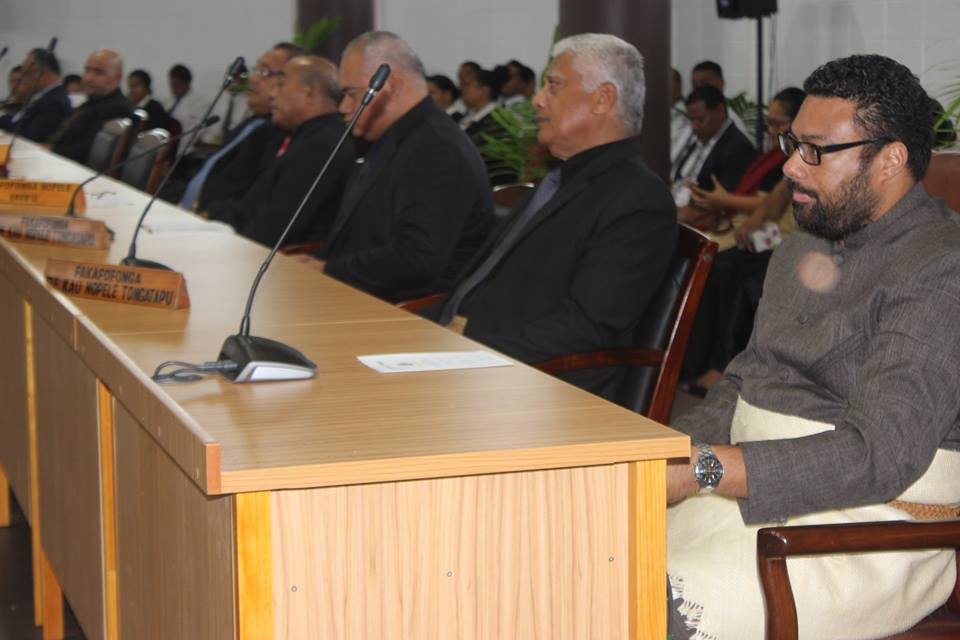
Speaker Lord Fakafanua (R) and Parliament members of the nobility. Photo/Fale Alea ‘O Tonga
Whatever the outcome of the vote, the decision of the referendum will reflect the voice of the people.
And yet their cousins in the kingdom did not have a say when Parliament voted unanimously to pass Clause 89(a) amending the constitution.
The amendment to the constitution means judges will have to take into account custom, tradition and culture in their court rulings is a threat to the kingdom’s democracy.
It could have a major effect on society and appears to be wide open to abuse.
The move has been strongly criticised by the Tonga Law Society. President of the Law Society, Sione Fonua, said it should have been vetted by the public because people could use it to their own advantage.
The director of the Women and Children Crisis Centre, Ofakilevuka Guttenbeil-Likiliki, said she was deeply concerned that rape, sexual assault, domestic violence cases could be hijacked by so-called ‘traditions and practices.’
Unfortunately, all too often Tongan traditions serve elements of injustice, unfairness, prejudice and inequality.
The fahu system in which only the eldest daughter in the family is entitled to be honoured and received presentation of koloa (cultural goods such as fine mats), food and money, is unfair because her other young sisters did not receive such entitlements.
The same traditional restrictions apply to land ownership and family possessions. Only the eldest son is entitled to receive these after the death of their father. The nobles allow their people to live on their land, but most of the land remains registered under the noble’s names, not the people.
This means these people have to live in fear and keep their nobles happy by making sure they donate whenever the nobles want.
Are these the kinds of traditions the new amendment expects the courts to take into account when they are making decisions?
This is not just a question about the law, this is about Parliament with its noble-led government majority ignoring the views of the people, who pay their salaries. It is unacceptable and uncivilised.
The Tongan Law Society is right to argue that the amendment should have been put out to public consultation.
Readers will remember the enormous stink the then opposition kicked up over the Six Amendments the government of the late ‘Akilisi Pohiva wanted to push through to strengthen Tongan democracy, demanding they go to the public for discussion.
The Six Amendments were first submitted to the House by the Tu’ivakanoo’s noble-led government and debates in the House at the time showed the noble MPs supported it. However, most of those Noble MPs fought relentlessly to oppose the amendments when they were reinstated about a year later by the Late Pohiva government.
Now an amendment with the potential to undermine the functioning of justice has been kept from the public.
Consulting with the people would have given them more time to understand the details of the Bills before Parliament made a decision. Without it people could be left puzzled and confused by the new law. The people should have had a voice. They should have been heard.
Sadly, it seems the Noble-led government cares only for the benefit of a minority – the nobles, the royals, their heralds and a few conservative commoners who support them.
Once upon a time the common people were called the kainanga e fonua ( food scraps of the nation).
When we see what potential there is for the law to be abused in the name of customs and traditions, we could be forgiven for thinking that some of the high born in the kingdom still regard commoners as lesser beings, inferiors whose voice should not be heard.
Voice of the people
If the constitution is to be changed or laws are to be passed that have a significant impact on society, then the public should be the ones to have the final say.
This is what happens in New Zealand and Australia.
In Australia the constitution can only be changed if a referendum is held. The change must be approved by a majority of voters across the Commonwealth and a majority of voters in a majority of states.
In New Zealand, counting of the referendum ballot began this week and people are waiting anxiously for the outcome.
Whatever the outcome, it will represent the voice of the people. That is how it should always be in Tonga.

 The husband subsequently sought custody of all the children, three boys aged 11, 8 and 7, and two girls aged 5 and 3, which was granted by the magistrate’s court.