A U.S. training camp for Senegal’s women’s basketball team has been cancelled after several players were denied visas, prompting the West African nation’s prime minister to cancel the program.
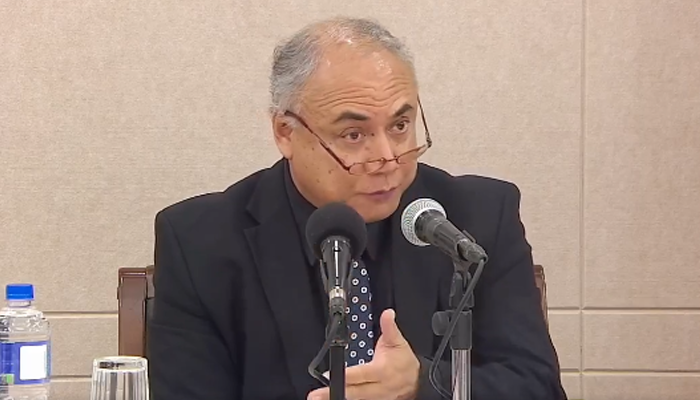
Prime Minister Dr ‘Aisake Eke
Senegal was listed alongside Tonga as a country potentially facing U.S. travel restrictions.
It follows a memo, which was signed by Secretary of State Marco Rubio and recently sent to U.S. diplomats who work with the countries, said the governments of listed nations were being given 60 days to meet new benchmarks and requirements established by the State Department.
It gave them until 8am on Wednesday last week to submit an initial action plan addressing the requirements.
The memo, according to the Washington Post, identified varied benchmarks that, in the administration’s estimation, these countries were failing to meet. Some countries had “no competent or cooperative central government authority to produce reliable identity documents or other civil documents,” or they suffered from “widespread government fraud.” Others had large numbers of citizens who overstayed their visas in the United States, the memo said.
The Senegalese Prime Minister Ousmane Sonko said this week that his country cancelled a planned training program for the nation’s women’s basketball team in the U.S. after several team members’ visas were denied, according to an Associated Press report.
The Senegalese basketball team had planned to train in the US for 10 days to warm up for the 2025 Women’s AfroBasket tournament in Ivory Coast next month, the BBC reported.
But the visa applications for five players and seven officials were not approved, according to a statement from the federation.
This prompted an angry response from the prime minister.
“Informed of the refusal of issuing visas to several members of the Senegal women’s national basketball team, I have instructed the Ministry of Sports to simply cancel the ten-day preparatory training initially planned in the United States of America,” Sonko said on Thursday in a statement shared to social media, according to the BBC.
It is unclear whether Senegal’s ban resulted from providing a response unacceptable to the Trump administration or from failing to meet the two deadline periods for compliance.
A State Department official declined to comment on the situation’s specifics, saying “visa records are confidential under U.S. law; therefore, we cannot comment on individual cases.”
Tonga Alarms Over Ban
The recent development by the US follows Tonga Prime Minister Aisake Eke’s statement on Friday that the government is “seriously alarmed” after receiving the ban notification from the US.
Eke stated that the Foreign Ministry is coordinating with the U.S. Consulate in Nuku’alofa to draft a response. The public will be updated once it is ready.
While U.S. media cited deadlines, Eke noted that no official deadline was given for Tonga’s reply.
In reporting the Tonga and the 35 other countries on the ban list Associated Press quoted State Department spokeswoman Tammy Bruce, who declined to comment on the specifics in the cable, which was first reported by The Washington Post.
She confirmed that the administration wanted nations to improve their own vetting processes for passport holders, accept their nationals deported from the U.S. and take other steps to ensure their citizens are not a threat to the U.S.
“We’re looking at providing a period of time, (where if countries) don’t get to that point where we can trust them and they’ve got to change the system, update it, do whatever they need to do to convince us that we can trust the process and the information they have,” she said.
The 36 countries identified in the new cable are: Angola, Antigua and Barbuda, Benin, Bhutan, Burkina Faso, Cambodia, Cameroon, Cape Verde, the Democratic Republic of Congo, Djibouti, Dominica, Ethiopia, Egypt, Gabon, Gambia, Ghana, Ivory Coast, Kyrgyzstan, Liberia, Malawi, Mauritania, Niger, Nigeria, St. Kitts and Nevis, St. Lucia, Sao Tome and Principe, Senegal, South Sudan, Syria, Tanzania, Tonga, Tuvalu, Uganda, Vanuatu, Zambia and Zimbabwe.
The Lulutai Airlines dispute escalates as lawmakers contrast the former and current PMs’ management of the national carrier.
It follows the Eke government’s announcement that the domestic airline has been restored to full operations after its previous financial and operational troubles.
PM Eke opted against imposing additional taxpayer burdens, excluding both airline funding and further loans from the current budget
After ousting Huʻakavameiliku in December 2024, the Eke government quickly shifted to ending direct state control of the airline and limiting itself to regulatory functions. It has now put Lulutai shares up for sale, with foreign companies already bidding.
It was part of a review policy the Eke government announced during their campaign: they would review all government ministries and entities, with transparency at the core.
Under this policy, the government subsequently conducted weekly press briefings to disseminate critical information to the public via media channels, while permitting journalists to pose questions without restriction.
During his restructuring efforts, Piveni Piukala, Minister of Public Enterprises, likened the airline’s dire state and the government’s early restoration attempts to “a bandaged injury that still bleeds.”
The restoration was completed when the airline’s situation became so critical that only the new Twin Otter, the only operational aircraft in its three-plane fleet, was still in service. Meanwhile, just a year after its controversial purchase, it incurred hundreds of thousands of dollars in maintenance costs.
Piukala stated that before the airline’s restructuring, the former administration provided a $50 million capital injection into the government-sponsored organisation.
Prime Minister Eke recently announced the new development in the Parliament, describing it as thrilling (“fakafiefia”).
Controversial Past Management
Under Hu’akavameiliku’s government, millions were transferred from state coffers to fund the airline without proper parliamentary oversight.
His immediate appointment of his disgraced political ally Poasi Tei, dismissed from Parliament following an electoral bribery conviction, as CEO of Lulutai, shocked the public and stigmatised his administration’s management of the airline.
One of the most controversial decisions involved purchasing the new $14 million Twin Otter aircraft, partially financed by a $4.5 million loan from the Civil Servants’ Retirement Fund Board. Given the lack of transparency, this move drew significant public criticism, with critics saying the plane was too expensive for its actual price.
The Parliament only became aware of the purchase after Kaniva News reported on the Hu’akavameiliku’s plan to make the purchase.
Facing Opposition questions in Parliament, Huʻakavameiliku claimed the government funding for the Lulutai appeared in the Budget, but critics countered it wasn’t clearly itemised. Meanwhile, the airline’s ownership remained unverified, while Huʻakavameiliku said Treasury held the share certificate.
Auditor General Sefita Tangi confirmed to Kaniva News that, at the time, no such document existed in official records.
Budget Debate Reignites Controversy
As lawmakers debated the country’s budget 2025 / 2026, which was approved last week before the new fiscal year begins on July 1, the Lulutai Airlines controversy resurfaced, sparking a heated exchange between Huʻakavameiliku and Deputy Prime Minister Taniela Fusimālohi.
Huʻakavameiliku was questioning the Minister of Finance—who is also the Prime Minister—whether funds had been allocated in the budget for Lulutai Airlines. He further inquired if any loans were expected for the company, to which Eke replied, ‘No.’
Huʻakavameiliku appeared to be linking his management of Lulutai to the perceived success of Eke’s restructuring process. He claimed that the Eke camp did not believe the government should fund the Lulutai, but they were doing the same thing now.
He said in Tongan : “‘E ‘i ai e taimi na’a mou ta’etui ai ki he pa’anga ‘oku fiema’u ke fakalele’akí pea ko eni te tau toe sio pe he te tau toe a’u pe ki he me’a tatau pe, mālō Sea.”
In response, Fusimālohi highlighted the differences in how the governments of Hu’akavameiliku and Eke managed Lulutai Airlines, stressing the Eke restructuring to limit government involvement to a purely regulatory role.
Fusimālohi said in Tongan: “Sea ko e, ko e me’a kehe ia ‘oku talanoa ia ki ai ko e kuohilí ia. Ko e ‘ahó ni ko au ko e regulator au ‘o e airline ko ení.
“Kapau ne tō ki ha fakatu’utāmaki ko u ta’ofi.”
Investors Sought Worldwide
The Lulutai is inviting qualified investors to submit Expressions of Interest (EOI) to acquire shares in the company.
It said this opportunity is open to domestic and international investors with the financial capability, industry experience, and strategic vision to contribute to the airline’s long-term growth and success.
Reports indicated that New Zealand’s Sunair Aviation Ltd was among the potential buyers that submitted expressions of interest in purchasing Lulutai shares.
Nuku’alofa, Tonga – Police Minister Piveni Piukala expressed surprise upon discovering that Tonga lacks a secondary database or a disaster recovery (DR) site, following a crippling cyberattack that has taken the National Health Information System (NHIS) offline.
This ransomware attack last week forced staff to switch to manual operations.
Health Minister Dr ‘Ana ‘Akau’ola refused to reveal the hackers’ ransom demand, though local reports reported millions. Fears grew that patient records could be lost permanently.
Piukala, an ICT specialist and software developer, emphasised that a backup system is critical to cybersecurity, particularly in safeguarding against database breaches.
He blamed the cyberattack on the NHIS on failures to strengthen the country’s core internet infrastructure.
“A disaster recovery site ensures continuity and minimises data loss when primary systems are compromised,” Piukala stated in Tongan.
The minister acknowledged the urgent need for improved IT infrastructure, including a redundant backup system, to prevent future crises.
A Computer Security Incident Response Team from Australia is working to restore the NHIS, but the incident has sparked calls for immediate cybersecurity upgrades to protect Tonga’s essential services.
Cybersecurity experts warn that ransomware attacks and data breaches are increasing globally, making disaster recovery plans essential for governments and critical sectors.
Regional Cyber Crisis
The Tonga cyberattack comes after the Pacific Island Forum Director for Policy, Paki Ormsby said cybercrime poses an increasing challenge to the safety and well-being of Pacific Islanders.
He said that the Pacific leaders affirmed that cybersecurity is a priority security threat requiring a concerted, collective regional effort to address.
Ormsby says the Forum Secretariat continues to assess that cybercrime will severely affect the lives of the people on the Blue Continent.
Samoa’s government previously blamed a Chinese state-backed hacking group for a series of sophisticated cyber attacks, saying it has been conducting “malicious cyber operations against government and key critical infrastructure system” across the Pacific.
A document from Samoa’s National Computer Emergency Response Team calls the hacking group ATP40 a “serious threat” to the region.
The Chinese embassy in Nuku’alofa had previously denied the claims made by Samoa to Kaniva News.
A man has been arrested after a string of alleged burglaries led to three crashes involving two stolen vehicles in Auckland’s Pakuranga this morning.
A crashed car in Pakuranga. (Source: 1News)
Police allege the 44-year-old is responsible for seven reported burglaries and three crashes involving two stolen vehicles between around 5.10am and 5.50am today, Inspector Danny Meade said.
Police were first notified of an unknown man entering a property on Udys Rd at 5.10am, during which a physical confrontation took place. No one was injured in the incident. The man then fled on foot.
Minutes later, Meade said police received two further reports from residents on Udys Rd – one reporting a man trying to force entry to her home, and a second reporting their front door being smashed.
A car crashed through a fence in Auckland’s Pakuranga. (Source: 1News)
Just after 5.30am, residents of a Pakuranga Rd property called police to report an unknown man had forced entry into their house armed with a knife. There were no injuries reported.
The man then left the scene.
At 5.40am, police were alerted to an incident on Grammar School Rd. The caller reported seeing a person run off towards their neighbour’s house around 10 minutes earlier.
A Police dog unit in the area came across the man on a separate Grammar School Rd property.
Minutes later, police received another call from someone reporting the man had kicked the front door to their house and was smashing items inside.
The man then allegedly stole the person’s car keys and drove off in their vehicle, “crashing through a gate and onto Pakuranga Rd, then onto Udys Rd”, Meade said.
A crashed car in Auckland’s Pakuranga. (Source: 1News)
He then allegedly stole another vehicle from a property on Reeves Rd, which police pursued “for a short time” before it crashed at the intersection of Ti Rakau Dr and Tiraumea Dr, causing “significant damage” to a fence.
The man ran off on foot, before being arrested a short time later.
He will appear in court at a later date.
‘A bit of carnage’
A gated community was hit overnight. (Source: 1News)
A resident told 1News the man was seen approaching multiple houses before forcing his way into one.
“They went to another house where they kicked the door in. I don’t know what happened inside, but they managed to get the keys to the car and then took off at fast speed in the car and went through the security gates,” he said.
“They’ve just smashed them open and drove off, let a bit of carnage around.”
He said part of the reason people live there is for the security and safety of a gated community.
“Everyone just feels safe here,” he said.
“But when an incident like this happens, if someone’s got a will, they’ve got a way, and they’ll still get through somehow.”
A 96-year-old man from Tonga living in Wellington, New Zealand, has successfully reclaimed his ancestral land after a ruling by the Nuku’alofa Land Court ordered the eviction of long-term occupants.
The ruling on June 18 resulted from neglecting a house and land in Niutōua, Tongatapu, which caused both to fall into disrepair.
The court was informed that the plaintiff’s warnings to the tenants had been disregarded.
A second occupant was permitted to live in the house without the landlord’s consent.
The eviction letter, which instructed the tenants to vacate the property within seven days, was also disregarded.
As a result, the landlord filed a lawsuit against the defendants.
According to the court document, the landlord was 96-year-old Asaeli Niu’ila, also known as Tevita Kaulamatoa.
He was a teacher in Tonga before emigrating to New Zealand in 1987.
He allowed his neighbour, Tengange Filimoemaka, and his wife, Kesaia Filimoemaka, who was also a close relative, to occupy his house. The couple has one son, Sione Vakofe Filimoemaka.
After Tengange and Kesaia died, Sione, the second defendant, and his wife, Telesia, the first defendant, continued to occupy the house.
Disputed Property Agreement
Niu’ila was unhappy with the Filimoemakas’ failure to maintain his property and had issued them multiple warnings.
He finally insisted that they vacate his house.
Sione rejected the eviction demand, arguing that he had the right to occupy and own the house. He claimed that Niu’ila had promised him he could continue living there “because he would return it.”
Sione also claimed in court that his father renovated the house in 1996 “plus his own expenses of $47,800” and asked that Niu’ila pay it back.
Niu’ila did not accept it, saying that it was necessary for Sione’s benefit, and Justice Petunia Tupou KC agreed with Niu’ila.
Justice Tupou said: “This is an unfortunate case where the Second Defendant has simply misunderstood the arrangement between the Plaintiff and his parents or has been misled as to his interests/rights with respect to the subject Land.”
She ruled in favour of Niu’ila.
She also ordered the Filimoemakas to vacate Niu’ila’s town allotment immediately or by agreement with him.
“The Defendants are to pay the Plaintiff’s costs of the proceedings, to be taxed if not agreed.”
The Pacific art world mourns the loss of Uili Lousi, the internationally acclaimed Tongan contemporary artist whose work transcended borders and traditions.
Like his description of art as ‘an inner mounting flame,’ Uili Lousi’s legacy continues to illuminate.
A cousin of Lousi, who spoke to Kaniva News anonymously, has confirmed his death. She stated that he unexpectedly died in Auckland this morning after a flight exchange that was anticipated at Auckland International Airport.
Born and raised in the Kingdom of Tonga and later based in New York, New Zealand, and his homeland, Lousi described his practice as a pursuit of “the deeper order of our universe” – a quest that manifested in radiant, mathematically precise works blending Tonga’s royal motifs with avant-garde abstraction.
Lousi’s art was a dialogue between worlds. Rooted in the sacred Fata-O-Tu’i-Tonga (Royal Tongan patterns), his pieces evolved into pulsating visual fields that channelled what he described as “to create a vibrancy and current of potent energies.”
He studied mathematics, psychics, and logic to inform his hypnotic compositions, which balanced rhythm, synchronicity, and harmony like a fire that does not burn – an inner flame illuminating the soul.
A master of material alchemy, Lousi worked across perspex, painted glass, sculpted oil, and his signature 3D Tapa: traditional Tongan bark cloth mounted on canvas.
The textured tapa, made from mulberry tree pulp, lent his works a whispered luminosity, as if light was woven into their fibres.
From Manhattan galleries to Pacific cultural hubs, Lousi’s exhibitions were rituals of transformation.
His death leaves a void in Oceania’s contemporary art scene, but his vision endures – a celestial compass pointing toward what he termed “the space in between.”
Nuku’alofa, Tonga — Tonga’s Crown Prince Tupouto’a ‘Ulukalala, the kingdom’s Minister for Foreign Affairs, is leading Tonga’s response to the Trump administration’s demand that the country address unspecified concerns within 60 days—or face a ban on its citizens travelling to the United States.
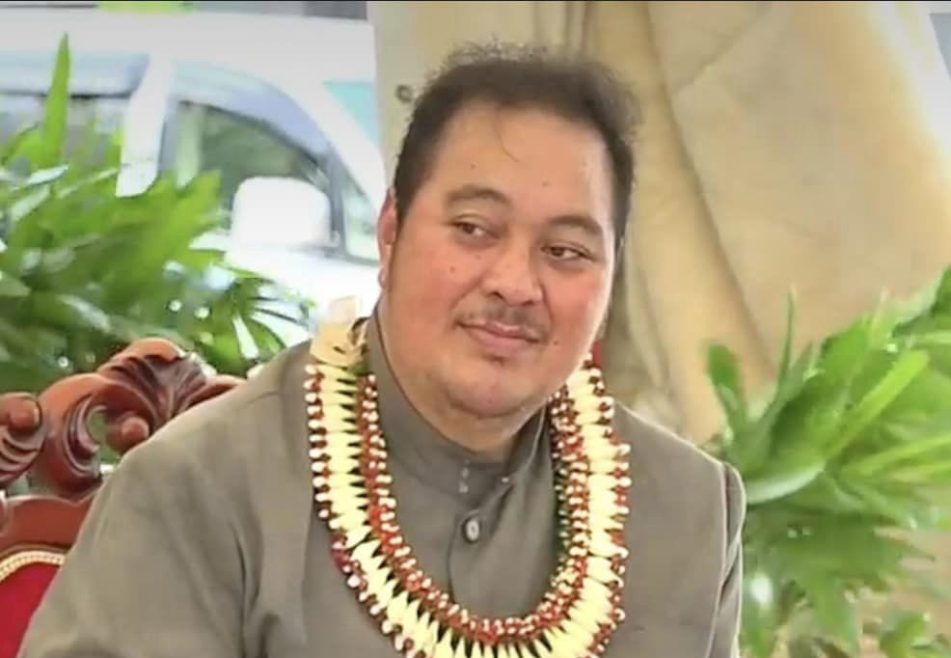
Crown Prince Tupouto’a
Prime Minister ʻAisake Eke revealed the development during a press conference this afternoon, marking the government’s first public response since Kaniva News and other outlets reported Tonga’s inclusion on 36 nations targeted for a potential expanded U.S. travel ban.
The Prime Minister offered no specifics about Tonga’s pending reply, stating only that the Crown Prince holds responsibility for the matter as a foreign minister.
“The Crown Prince is working on our response, and we will follow the proper diplomatic channels,” Eke told reporters, deflecting further questions.
The U.S. has not publicly detailed its grievances with Tonga, leaving officials and analysts to speculate whether the threat stems from gaps in document security, immigration risks, or geopolitical tensions.
The looming deadline has sparked concerns among Tongan diaspora communities in the U.S., where tens of thousands reside, many relying on family reunification visas.
Tonga, a Pacific nation with a population of over 200,000, has about 100,000 residents living in Tonga and more than 100,000 in the diaspora. It has rarely faced such direct scrutiny from Washington.
Diplomatic observers suggest the Crown Prince’s response could require concessions on passport controls or data-sharing agreements to avert the ban.
Kaniva News contacted the US Embassy in Nuku’alofa for comment.
Nuku’alofa, Tonga – The Tonga Ministry of Health’s digital systems were hit by a cyberattack on Sunday, crippling critical services as hackers demanded an undisclosed ransom.
Health Minister Dr Ana ‘Akau’ola confirmed the breach during a press conference this afternoon, apologising to the public but stating that the ministry remains powerless while the systems remain offline.
The attack has disrupted health operations nationwide, though emergency services continue to function manually.
Minister ‘Akau’ola did not disclose the ransom amount and failed to assure the public that no sensitive patient data had been compromised.
In negotiations with the Australian High Commission in Nuku’alofa, the government has enlisted an Australian cybersecurity team, which arrived in the kingdom last night to assist in restoring the systems.
The minister acknowledged the delays in service recovery, urging patience as technicians work to resolve the issue.
Authorities have yet to identify the hackers while investigations are ongoing, according to the Minister.
The incident highlights growing cybersecurity vulnerabilities in the Pacific region, where cybercriminals increasingly target critical infrastructure.
It follows the ransomware attack experienced by Tonga Communications Corporation (TCC), the state-owned telecommunications provider, in the year 2023.
At the time, TCC reportedly said:
“Ransomware attack has been confirmed to encrypt and lock access to part of TCC’s system. This does not affect voice and internet service delivery to the customers, however, it may slow down the process of connecting new customers, delivering of bills and managing customers’ enquiries.”
Nuku’alofa, Tonga – In a decisive move against the illegal drug trade, Tonga Police’s Drug Enforcement Unit (DEU) arrested a 38-year-old man from Ngele’ia on Tuesday, 17 June 2025.
The suspect faces charges of possession of illicit drugs and drug utensils after authorities seized methamphetamine, cannabis, and drug-related equipment during the operation.
The arrest highlights Tonga Police’s unwavering efforts to eradicate the scourge of illegal drugs from local communities.
“This operation underscores Tonga Police’s continued commitment to removing illegal drugs from our communities.” a statement said.
“Members of the public are encouraged to report any suspicious or drug-related activity by contacting Tonga Police at 740-1657 or 922.
“Tonga Police remain committed to a drug-free Tonga and thank the community for their ongoing support in this vital national effort.
The investigation remains ongoing, with further arrests and seizures anticipated as part of the broader crackdown.”
Analysis The reported Trump administration memo proposing a travel ban on Tonga and two other Pacific nations has exposed uncomfortable truths about our nation’s governance—truths we can no longer ignore.
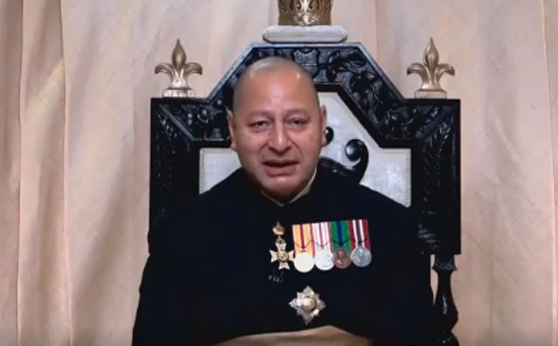
King Tupou VI
The memo’s claim that Tonga is among 36 countries involved in “widespread government fraud” warrants attention.
Widespread Government Fraud
But what does “widespread government fraud” mean? The term refers to systemic, large-scale dishonest or illegal activities within a government that involve deception for financial or political gain. It implies that corruption is not isolated to a few individuals but permeates multiple levels or departments of governance.
This definition leads us to a critical question: Which instances of fraud in Tonga might be sufficiently systemic and severe to warrant consideration of a travel ban by the Trump administration?
It can be determined that among various cases of Tongan government fraud, the widespread illegal passport sales stand out as particularly egregious.
While this government fraud took place over fifty years ago, its detrimental consequences have persisted, creating many of the systemic issues observable in Tonga today—a situation the US administration might have perceived as seriously threatening its national security.
Royal Family Involvement
The ongoing involvement of Tonga’s royal family and nobility in passport issuance—or their greater influence in granting passports to foreigners—amid a deeply flawed and unchecked democratic system, could be the reason the U.S. has no choice but to impose a travel ban.
But what exactly was this passport scam?
It was a secretive passport sales scheme that ran from 1983 until pro-democracy leader ‘Akilisi Pōhiva exposed it in the 1990s, challenging official claims that only Tongan Protected Person Passports (TPPPs)—not state passports—were sold.
TPPPs, it must be noted, are merely travel documents that confer neither Tongan nationality nor citizenship rights. Holders face significant restrictions, including potential denial of re-entry to Tonga and limited international recognition.
However, according to reports, since the TPPP did not grant automatic residence rights in Tonga, a growing number of countries, including Australia and New Zealand, refused to recognise it. This situation prompted the then-King to grant naturalisation to any foreigner of “good character on humanitarian grounds.”This means that the scam also involved selling Tongan citizenship passports.While the official naturalisation fee was US$20,000, additional charges often increased the total cost to more than $35,000.
Passports, Lies, Scandal
The response in Parliament falsely telling Pohiva that only the TPPP was on sale took a turn in the early 1990s after a dramatic surge of Chinese migrants entering Tonga became so conspicuous that it ultimately prompted an inquiry by Pōhiva. He ultimately discovered the shocking truth—authentic Tongan citizenship passports—not just TPPPs—were being illegally sold to Asian buyers, directly contradicting the government’s earlier claims.
The illegal sale originated after the late King Tupou IV sought revenue-raising advice from Tonga’s Honorary Consul in Hong Kong, Mr George Chen Kai-cheng, who subsequently facilitated the scheme. It resulted in 426 Chinese citizens obtaining Tongan citizenship.
Since they had not resided in Tonga for the constitutionally mandated five years prior to application, their acquisition of citizenship passports was unlawful. Pōhiva subsequently sued the government in 1989 over these illegal sales.
Royal Complicity Endures
In response, King Tupou IV acknowledged his government could not revoke the passports or provide refunds to the Chinese recipients. He therefore convened an urgent Cabinet meeting in 1991 to amend the constitutional citizenship provisions, granting legal status to the 426 Chinese nationals.
This Tongan case exemplifies systemic corruption whose enduring patterns not only continue today but directly mirror Trump’s characterisation of “widespread government fraud.”
How and Why?
Although only 426 Chinese nationals were officially identified as having obtained passports through these illegal sales and travelled to Tonga, no documents made available reveal the full scale of the operation, which some estimate reached thousands, if not hundreds of thousands, of passports sold.
Although it was publicly announced that the sales had stopped, later incidents revealed the involvement of the royal family and government leaders in the ongoing sale of passports to individuals from Asia.
Blank Passports, Three Favours
As Kaniva News reported in 2013, the then Prime Minister Lord Tu’ivakano’s office had been asked to respond to a letter from the parliament’s opposition party asking to clarify why 15 Tongan passports were issued to a Chinese couple.
Mr. Sien Lee, the male, was issued with eight Tongan ordinary passports, and Ying Sien Lee, the female, was issued with seven.
The audit report listed the dates each passport was issued from June 2001 to October 2012. The expiry dates range from 2012 to 2021.
In that report, Kaniva said Pohiva told the House he had information that Tongan blank passports were being abused.
He described the mishandling of the Tongan blank passports as a “net that was thrown outside the circle of the Tongan authorities”.
We also reported that citizens of Tonga and China who hold valid diplomatic, official, and public affairs passports are allowed to enter China and Tonga without a visa.
MP Sunia Fili, however, questioned Deputy Prime Minister Sāmiu Vaipulu in the House in August 2012 regarding the Tongan government’s allowing the Chinese to use diplomatic, official, and service passports.
Fili said the deal for free visas between the two countries allows Tongans to enter China without a visa, but when the Chinese come to Tonga, they are given the diplomatic passport, official passport and service passports.
In his response, Vaipulu said the reason why they are given the three passports was to facilitate Chinese diplomats, officials and “service providers” along with the group of architects and planners that come to Tonga for the construction of the St George Palace.
The opposition party said the concern now was over the degree to which the passport would be used only for diplomatic and employment reasons.
It opened a door for the authorities to abuse it.
Notorious Passport Beneficiaries
The Tonga passport scandal became an international disgrace after it was revealed that international criminals exploited these passports for global travel.
Imelda Marcos, wife of former Philippine dictator Ferdinand Marcos, got a Tongan passport. The former Hong Kong Stock Exchange chief, Ronald Li, serving a four-year jail term for bribery, and textile billionaire Chen Din-hwa were also reportedly among the now legal passport holders.
Pōhiva claimed that Asian middlemen facilitated the sales. Whether these intermediaries properly managed the proceeds or all funds reached the Tongan government remains unclear.
Despite pocketing $26 million from the illicit passport sales, the entire sum was lost in 1999 by the king’s court jester, Jesse Bogdonoff, during financial dealings in the United States.
Monarchy, Corruption, and Consequences
The Trump administration’s travel ban memo did not emerge in a vacuum—it reflects decades of the U.S., one of the world’s largest democracies, scrutinising Tonga’s systemic fraud, enabled by a centralised power structure and feeble oversight.
While Tonga has taken steps toward democracy since the 2010 reforms, the lingering influence of royal and noble privilege continues to weaken institutional integrity.
Tonga’s democracy now faces a constitutional crisis, the king is overstepping his authority, reclaiming executive powers that his late brother, King George V, had surrendered. This regression into royal overreach perpetuates systemic corruption, weakens governance, and explains why Tonga remains under international scrutiny—as highlighted by the U.S. travel ban memo.
Now, the king’s son serves as the head of Tonga’s Immigration Department, as Minister of Foreign Affairs, where his decisions on passports can be final. Given the history of passport-related corruption in Tonga—including illegal sales and elite manipulation—the U.S. administration may have seen this concentration of authority in the monarchy as a red flag.
While the Trump administration has not yet detailed the terms of the travel ban, the king should prioritise constitutional reform to fulfil the late King George V’s intent: vesting all executive powers in Parliament and the Cabinet. Such measures are critical to eliminating systemic fraud.