A shipment of root crops from Tonga has arrived in the United States extensively spoiled, prompting sympathy for importers while raising questions about how the container was handled during transit.
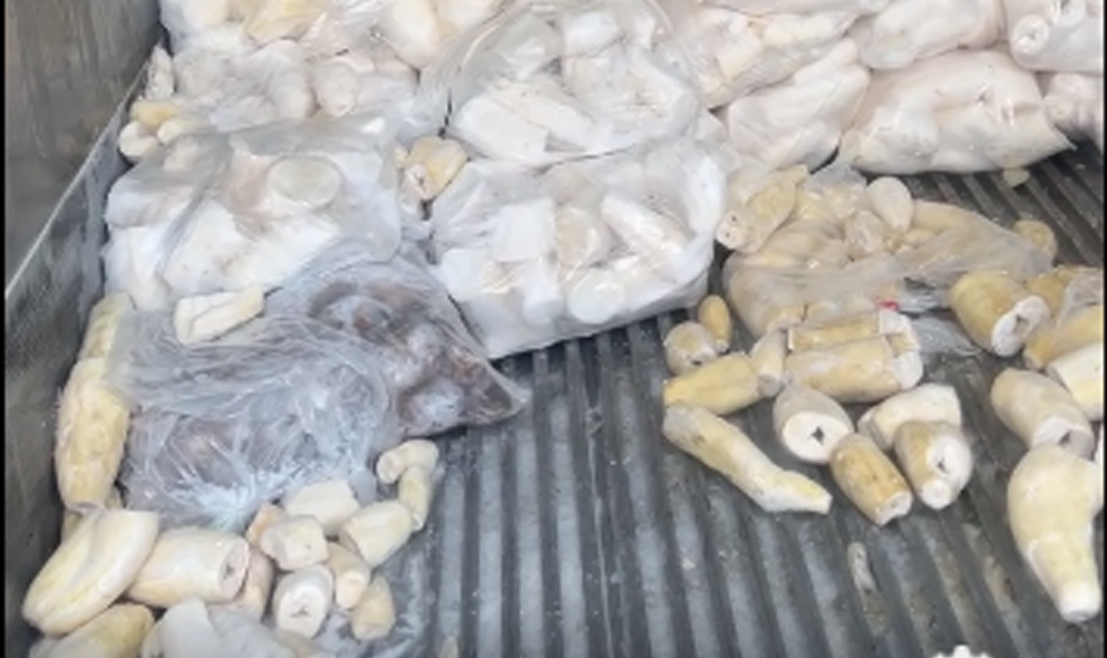
A livestream by the shipment’s receiver on the It’s Simple Food Supply Facebook account revealed that much of the container’s contents—including cassava, taro, and taro leaves packaged in plastic bags—had deteriorated beyond recovery.
The produce, which had been destined for sale and distribution, was reportedly deemed unsalvageable and is expected to be discarded.
The size of the container, its ownership, and the precise cause of the apparent refrigeration failure that led to the spoilage of the produce had not been independently confirmed at the time of publication.
Kaniva News has viewed the video, which shows bags of cassava turning yellow—a discolouration commonly associated with spoilage in what is normally white-fleshed cassava.
The footage also shows what had been described during the livestream as taro leaves losing their natural green colour, with the livestreamer stating that they had rotted during transit.
Community Reacts To Loss
It is understood that the produce had been purchased from multiple growers across Tonga with the intention of being marketed and sold in the United States.
The footage quickly circulated across social media, generating a range of reactions from members of the Tongan diaspora and wider online community. Many expressed sadness and concern, noting the effort, expense, and expectation invested in preparing and exporting the shipment from Tonga.
Several commenters focused on the financial impact on growers, suppliers, and families who had invested significant time, labour, and resources into producing the crops. For some, the shipment represented an anticipated source of income that has now been lost.
“This is more than just spoiled food—it’s people’s livelihoods,” one commenter wrote, reflecting a sentiment widely shared online.
Others criticised what they viewed as negligence in the handling of the container and called for greater accountability to prevent similar incidents in the future.
Some community members, however, argued that not all of the produce should necessarily be discarded, suggesting that portions of the cassava could still be grated for baking or used as animal feed, including for pigs.
The incident has also reignited discussion about the importance of proper cold-chain management in international food transportation and the vulnerability of exporters to logistical failures beyond their control.
Calls are growing for stronger safeguards and monitoring systems to ensure refrigerated shipments are properly managed throughout their journey.