This year’s Tongan Language Week theme in Aotearoa has brought renewed attention to King George Tupou II’s contribution to hiva kakala or kakala songs, an important creative legacy that appears to have received limited scholarly attention compared with that of his daughter, Queen Sālote Tupou III.
The theme, “Ko ʻetau hiva, ko e feʻunu mahuʻinga ia ki he moʻui ʻa e Tonga’—Our music is a vital strand of our Tongan culture,” was chosen as part of the Ministry for Pacific Peoples’ efforts to preserve and sustain Pacific languages in Aotearoa.
One composition that illustrates the importance of songs as rich repositories of language and artistic creativity is the King’s well-known ʻIseʻisa, also known as Louʻenisolo.
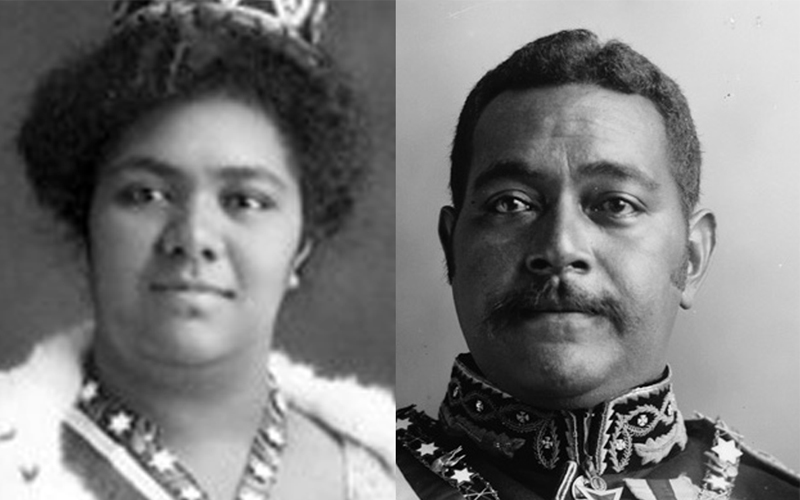
King George Tupou II originally composed the five-verse song with no chorus for his Queen Consort, Queen Lavinia, the mother of Queen Sālote in 1903, a year after Queen Lavinia’s death in 1902.
Its verses express King George Tupou II’s longing for his beloved wife.
Years later, Queen Sālote added a chorus expressing her inability to remember her mother clearly, former Royal Palace Office records keeper Masiu Moala said in an interview.
Queen Lavinia died when Sālote was only two years and one month old.
The chorus read:
Taumaiā ko ha siopau
If only I had truly seen
Ho‘o ma‘ali he‘eku manatu
As your image flickers through my memory
Kau talia pe ā he hauhau
Yet I wait amid the flowering trees of royal duty
Tangitangi ‘i he faka‘ānau
Their buds beginning to open only in dreams
While Queen Sālote is widely recognised as Tonga’s greatest punake, ʻIseʻisa also reveals her father’s remarkable creative and musical talent.
This is particularly evident in his skilful transliteration of foreign terms in the lyrics, including moniumēniti from “monument”, tilani from “tillandsia”, and lēveni losa from “raven rose”. He also published his own music booklet.
The king also composed several anthems, including Sikaiona, a transliteration of “scion”—a shoot or twig cut from a plant for propagation—and ʻAlamoti, transliterated from “alamoth”, meaning “maidens”.
ʻIseʻisa reflects the royal household’s important involvement in the genre, while also showing how Queen Sālote inherited and further developed her father’s exceptional musical and lyrical talents.
Its revival during Tongan Language Week highlights both a celebrated composition and the shared musical legacy of King George Tupou II and Queen Sālote.
‘Ise’isa (also known as Lou’enisolo) by King George Tupou II and her daughter Queen Sālote Tupou III
You can listen to the song here: