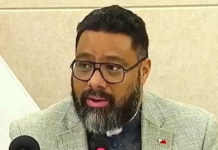
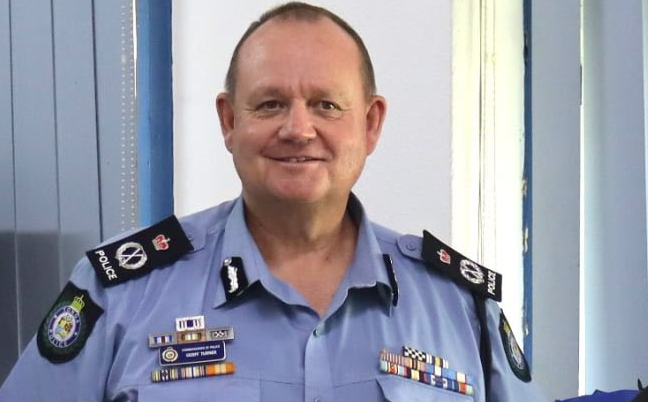
Explainer – When Police Commissioner Geoff Turner recently raised the idea of sewage drug testing, many Tongans questioned why it is needed when police already test for drugs.
Prime Minister and Police Minister Lord Fakafanua has recently indicated support for the Police Commissioner’s move to use sewage testing.
This follows Parliament’s approval of a voluntary drug‑testing measure for Members of Parliament, aimed at demonstrating their commitment to combating illicit drug use.
However, in a country now confronting the emerging realities and risks of illicit drug use and trafficking, any confusion around new approaches demands clear explanation and careful clarification.
The confusion stems from the mistaken belief that sewage testing and police drug testing do the same job — they do not.
Police testing is about catching individuals — people stopped, arrested, or investigated. It is essential for enforcing the law, but it only shows what police can see.
Community Drug Use Revealed
Sewage testing does something different. It measures drug use across the whole population by analysing wastewater.
It does not identify anyone. Instead, it reveals how much drugs are being used in a community — including by people who are never caught.
That is its key advantage: it shows the full picture, not just the visible part.
This kind of information can also make policing more effective.
Wastewater Guides Police Operations
In New Zealand, wastewater results have already been used to guide operations on the ground.
As reported by New Zealand Police in December 2025, unusually high levels of methamphetamine detected in Hawke’s Bay wastewater prompted a six-month covert investigation, codenamed Operation Tukutuki.
According to Detective Inspector James Keene, the operation directly responded to those wastewater findings.
Police then executed search warrants across Central Hawke’s Bay and Hastings, targeting properties linked to supply.
The operation led to the arrest of two gang members and an associate, along with the seizure of methamphetamine, cash, a 3D-printed firearm and stolen goods.
As police noted, wastewater testing had revealed the drug’s “increasingly strong grip” on the region — and helped direct efforts to “crush the supply”.
This example highlights the real value of sewage testing. It does not replace police work — it strengthens it. It tells authorities where the problem is growing, so they can act faster and more precisely.
For Tonga, the issue is not choosing between the two systems. Police testing will always be needed to enforce the law. But without sewage testing, the country is relying on partial information.
Sewage testing fills that gap. It provides a clearer, nationwide picture of drug use — and that is why it is now being treated as an urgent priority.