Months after Tonga and New Zealand strengthened their cooperation against transnational drug trafficking, Tonga Police have yet to disclose the contents of suspicious packages recovered in two separate discoveries in Vavaʻu in June.
On 18 March, Tonga and New Zealand signed an updated Pacific Detector Dog Working Arrangement extending cooperation until 2030.
The agreement was accompanied by New Zealand’s announcement that it would fund Tonga’s access to maritime-surveillance technology capable of monitoring suspicious vessels in real time.
It was intended to strengthen Tonga’s ability to intercept illicit drugs, undeclared cash and firearms at its borders, particularly in Vavaʻu, which authorities have identified as a transit route for transnational organised crime.
However, approximately two months after the agreement was signed, Kaniva News reported that packages suspected of containing illicit drugs had washed ashore at Hōleva and Koloa in separate incidents before being taken into police custody.
Kaniva News subsequently asked Tonga Police in June to confirm whether the packages had been tested and whether they contained illicit substances, but no response has been received.
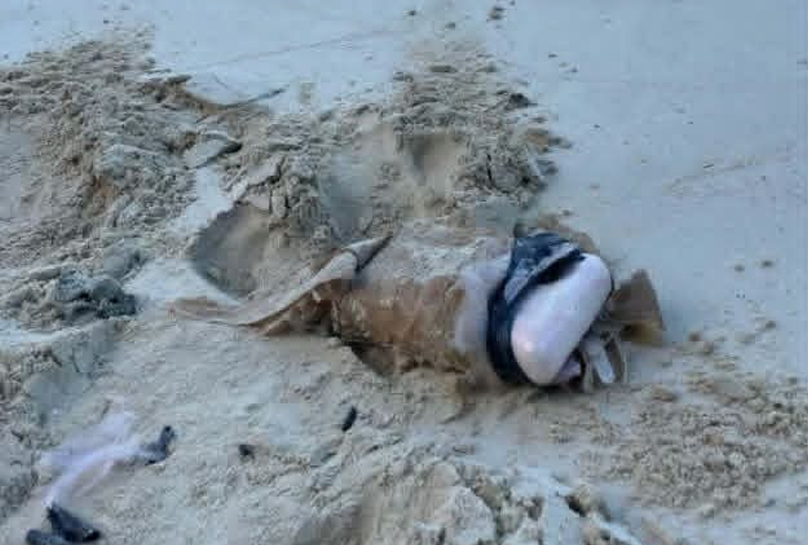
As we reported at the time, photos provided to Kaniva News show what appears to be a package partially embedded in the sand on a beach in Koloa.
About two weeks before the Koloa discovery, similar packages were reportedly found washed ashore on Hōleva Island, approximately one kilometre from Koloa.
The Neiafu Town Officer Vava Lapota confirmed that Police had taken possession of the packages, but no further information has been released.
Authorities have not publicly confirmed the contents of those packages or whether they were connected to the items later recovered at Koloa.
The incidents have revived memories of a significant drug find in the area in 2021, when approximately 14 kilograms of cocaine washed ashore at Holeva Beach.
New Zealand–Tonga Security Agreement
Under the March arrangement, New Zealand committed to supplying detector dogs, specialist training, equipment, operational advice and handler development to Tonga Police and Customs.
A secure, purpose-built detector-dog facility is also planned for Vavaʻu, with construction expected to begin in 2026.
The facility will accommodate up to two detector-dog teams.
Once it is completed, New Zealand is expected to provide two additional teams—one for Tonga Police and another for Tonga Customs.
Why Vavaʻu Was Prioritised
Vavaʻu was singled out because it receives many visiting international yachts and is regarded as a known route used by transnational organised-crime networks.
The renewed arrangement followed New Zealand Prime Minister Christopher Luxon’s warning that the Pacific had become a drug “super highway” used to move cocaine and methamphetamine from overseas sources towards lucrative markets in New Zealand and Australia.
The discovery in Vavaʻu also came amid similar incidents elsewhere in the Pacific. Fiji authorities confirmed in July that packages recovered from several coastal locations had tested positive for cocaine, while suspected cocaine was later found washed ashore on Mitiaro in the Cook Islands.
There is no confirmed evidence connecting those discoveries to the Vavaʻu packages.
Vavaʻu has previously experienced major cocaine wash-ups. In 2021, packages containing cocaine were recovered from beaches at Hōleva and Haʻalaufuli, leading to an extensive police investigation and the prosecution of several people who possessed or attempted to distribute the drugs.
The latest case remains unresolved publicly.
Despite Tonga’s strengthened border-security partnership with New Zealand and the regional concern over drug trafficking, the public has not been told whether the packages collected by Police contained dangerous illicit substances or posed a continuing risk to communities in Vavaʻu.