The US Securities and Exchange Commission (SEC) has charged two companies behind the collapsed BG Wealth Sharing cryptocurrency investment scheme with an alleged US$130 million fraud, revealing details of an extensive recruitment network in Hawaiʻi, Utah and California, where Tongan promoters had actively encouraged investment.
The revelations bring renewed attention to Kaniva Tonga News’ earlier investigations into the scheme’s promotion among Tongan communities in the United States, New Zealand, Australia and Tonga despite repeated regulatory warnings.
The SEC filed its civil complaint against BG Wealth Sharing Ltd and DSJ Exchange PTY Ltd in the US District Court for the Northern District of California on 29 October 2026, alleging investor losses exceeding US$100 million.
SEC reveals US recruitment network
According to paragraphs 39–43 on page nine of the SEC complaint, a BG Wealth promoter based in Concord, California, allegedly recruited approximately 5,000 downstream investors.
The complaint details promotional roadshows in Lāʻie, Hawaiʻi, on 15 December 2025 and Salt Lake City, Utah, on 15 April 2026, alongside recruitment activities in San Leandro, California, and an event in Las Vegas.
The SEC alleges that high-level US-based promoters participated in regular Zoom meetings with the scheme’s purported founder, known as Professor Stephen Beard, whose true identity and whereabouts remain unknown.
Promoters were allegedly rewarded with commissions, bonuses and additional trading signals for recruiting investors, creating financial incentives to expand the operation.
Tongan promoters and repeated warnings
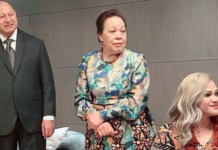
Hawaiʻi, Utah and California are home to substantial Tongan communities, with Kaniva Tonga having previously documented the scheme’s promotion by Tongans in the United States through social media and community networks.
In February, Kaniva Tonga reported that Tilila Siolaʻa Walker, a Tongan woman facing separate US federal fraud-related charges, had resurfaced on social media promoting BG Wealth Sharing.
Walker announced plans to use her Facebook group to guide followers through participation in the investment programme. Her earlier criminal proceedings concerned a separate alleged investment operation.
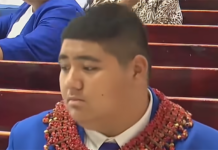
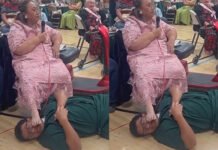
In March, Kaniva Tonga reported on a promotional gathering at the Tonga Tauʻatāina Church hall in Haʻateiho, with footage of the event circulating on social media.
Recruitment continued despite warnings from the National Reserve Bank of Tonga, Tonga Police and financial regulators overseas.
New Zealand’s Financial Markets Authority had specifically identified Tongan communities across the four countries as being particularly affected by the scheme.
Alleged Southeast Asian origins
US financial news outlet Crowdfund Insider, reporting on the SEC case on 30 October, said reports indicated that the operation originated in Southeast Asia and involved complicit actors based in the United States.
The SEC describes BG Wealth Sharing and DSJ Exchange as foreign-operated companies but does not specify their geographical origins.
BG Wealth allegedly presented itself as the world’s largest hedge fund and an SEC-licensed investment adviser, promising guaranteed monthly returns of 60 percent through an artificial intelligence-powered cryptocurrency trading programme.
The companies allegedly submitted misleading filings to the SEC’s public database and circulated fabricated certificates to create the appearance of regulatory approval.
They advertised the investment opportunity through Facebook, YouTube, TikTok, Instagram and Telegram, alongside online presentations and in-person events.
Collapse leaves investors facing losses
The SEC alleges that the operation collected more than US$130 million between March and June 2026, using some investor funds to pay existing participants and sustain the appearance of profitability.
When withdrawal problems emerged, those behind the scheme allegedly blamed a Chinese cyberattack and demanded additional payments described as taxes before investors could recover their money.
US authorities had already intervened before the October lawsuit, including seizing the BG Wealth website.
In May, Kaniva Tonga reported that approximately US$41 million in cryptocurrency had been frozen in connection with the investigation.
Washington State financial regulators subsequently warned that former investors were being directed towards another platform, HQI Exchange, or HQIEX, where some were allegedly encouraged to deposit further funds.
The total financial losses suffered by Tongan investors worldwide remain unknown.
The SEC is seeking permanent injunctions, recovery of allegedly unlawful gains and civil financial penalties against the defendants.
The allegations have yet to be determined by the federal court.