An Aucklander has won $44 million in Saturday’s Powerball draw, the biggest win in Lotto NZ’s history.
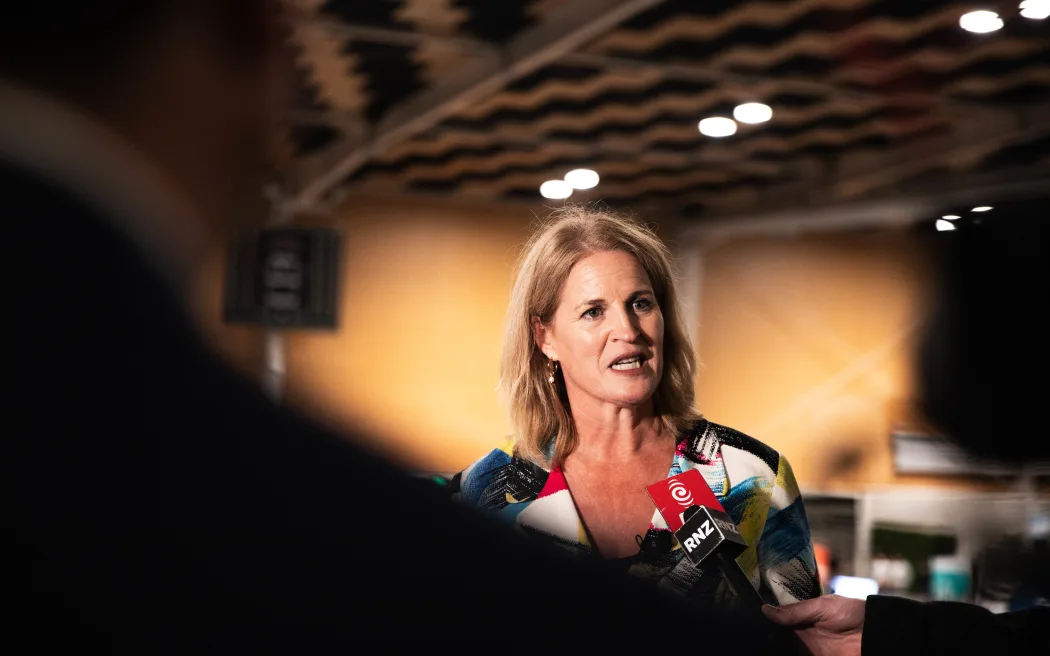
(File image) Photo: RNZ / Cole Eastham-Farrelly
Lotto said the winning ticket was bought online, with the winner snagging $44.06 million from Powerball First Division and another $66,667 from Lotto First Division.
The $44.06 million prize is tied for the biggest single prize in Powerball history, matching the winnings of another Aucklander in 2016.
While the jackpot has gone higher in the past, it was split between multiple winners on those occasions.
“We can’t wait to meet our new winner and support them as they process this life-changing news,” Lotto NZ’s head of corporate communications Lucy Fullarton said in a statement announcing the win.
Fourteen more players won the $66,667 Lotto First Division Prize, and two others won $250,000 from Strike Four.
A red severe thunderstorm warning has been issued for the lower North Island with strong wind warnings and watches also affecting parts of the country.
Storm clouds roll into Wellington on 12 August, 2024. Photo: Supplied / James Bass
MetService’s weather radar detected severe thunderstorms near Martinborough, the Aorangi Mountains and Ruakokoputuna at 3.30pm.
They were forecast to move northeast towards Masterton, Tayweru, Gladstone, the hill country east of Martinborough, Bideford, Carswell, Wainuioru, Westmere and Longbush at 4pm, before heading to Pongaroa, Tinui, Tiraumea, Waihoki, Castlehill and Blairlogie at 4.30pm.
Severe thunderstorms were also expected to hit offshore Castlepoint and Mataikona at 4.45pm.
“Due to the fast moving nature of this line and the embedded storms, there is a risk of severe thunderstorms with damaging wind gusts of around 130km/h. Wind gusts of this strength can cause some structural damage, including trees and power lines, and may make driving hazardous,” MetService said.
A severe thunderstorm watch remained in place for Tararya, Wairarapa, Wellington, Marlborough, Canterbury Plains, the Canterbury High Country and Hawke’s Bay.
MetService has also issued a strong wind warning for coastal Wairarapa north of Flat Point, with a strong wind watch for coastal parts of the Hawke’s Bay and the Tararua District.
Fire and Emergency said it has received about a dozen calls for damage caused by strong winds in Wellington and Wairarapa.
The calls were mainly coming in from Lower Hutt, with reports of trees and powerlines down, a spokesperson said.
According to Wellington Electricity, there were 90 customers without power in Horokiwi, expected to be restored by 7pm on Monday, with another 32 customers in Waitangirua, expected to have their power back on by 8pm.
Earlier warnings and watches for Wairarapa, Wellington, Marlborough, and the Hawke’s Bay have now been cancelled.
In a statement, MetService said the changing winds would bring fluctuating temperatures this week.
Meteorologist Clare O’Connor said: “A ‘southerly buster’ is a particularly strong cold front, characterised by blustery wind changes and a large drop in temperatures. A drop of 10C in a matter of minutes and winds suddenly gusting 90km/h is not unusual with the passage of these fronts.”
There was also a risk of thunderstorms and hail for eastern areas on Monday afternoon and into the evening.
The windy weather was expected to create heavy swell, up to six metres, off the east coast of the North Island and the Chatham Islands, MetService said.
“Elsewhere it will be the beginning of the calm after the storm as high pressure builds over the country. Wednesday wakes to a cold morning, especially about the central North Island where forecast minimum temperatures are sub-zero, below the average for this time of year.
“The cold snap is short lived with above average temperatures expected from Wednesday afternoon as milder westerly winds develop about the lower half of the South Island, then spread northwards over Thursday. Another swing to the lower end of the temperature scale, and a burst of heavy rain could be seen over the weekend.”
The government will double how long breaches count against beneficiaries, as the traffic light system for sanctions comes into effect today.
Prime Minister Christopher Luxon and Social Development and Employment Minister Louise Upston announced the changes in Auckland after the weekly Cabinet meeting.
They said Cabinet had agreed to a range of changes including:
Extending the period a failure to meet obligations counts against a beneficiary from one year to two years
Requiring Jobseeker Support recipients to reapply every six months
Requiring all beneficiaries with work obligations to have a jobseeker profile before receiving a benefit
Half of the benefit will go onto a payment card that can only be used for a limited range of essential products and services
A new community work sanction requiring beneficiaries to “build skills and confidence”
Upston said the traffic light system National announced in September would also be in effect from today. Legislation to expand the system would be introduced by November and come into force early 2025.
Costs arising from introducing the traffic light system and six-monthly reapplications would be met through the Ministry of Social Development’s baselines, she said.
“Our welfare system will always be a safety net that catches people if they fall. But in the past few years it has become a drag net that has captured too many people who can work and allowed them to languish on Jobseeker Support for too long,” Upston said.
“Our government will not tolerate people who accept the Jobseeker Support benefit but refuse to uphold their obligation to seek a job – it is not fair on hardworking Kiwis who pay their taxes that go towards those benefit payments.”
When announcing the traffic light system ahead of the election, Upston said it would make obligations under the benefit clearer to unemployed people and the consequences they would face if they failed to meet them.
The scheme included three levels:
Green (compliant) – Meeting obligations to prepare or find work. No change to benefit
Orange (some risk) – First or second breach of obligations, resulting in additional requirements and support like more regular check-ins or attendance at job workshops
Red (high risk) – A third breach of obligations, with consequences including benefit reductions, benefit suspension, money management and/or mandatory community work experience
Upston at the time promised a rule preventing sanctions from cutting benefit pay by more than 50 percent if jobseekers had children would also remain in place. Beneficiaries who remained off the benefit for more than a year would also become eligible for a $1000 bonus.
She had pointed to a report from the Welfare Expert Advisory Group (WEAG), claiming it said sanctions could be effective in encouraging movement from benefits and into work, and a lack of sanctions only entrenched benefit dependency.
However, that quote did not appear in the report, and several former members of the group disagreed with Upston, saying she was referring to a minority of views while the majority of research showed increasing sanctions was counterproductive for low-income families.
The body of a five-year-old boy missing near Gisborne has been found in a farm pond near his home.
Kaizer, went missing from his home in the rural Hangaroa district of Gisborne and had not been seen since about 2pm on Sunday.
Police dive squad search a pond looking for missing boy Kaizer. Photo: RNZ / Alexa Cook
Kazier’s family have taken him home and have requested privacy to mourn.
Specialist search teams, rescue dogs, a helicopter and up to 300 people from the area were involved in searching for him.
An RNZ reporter at the scene said the pond was about 100 metres from the house.
The police dive squad spent about an hour searching before he was found.
Tai Rāwhiti area commander Inspector Darren Paki on Monday said there had been an “overwhelming outpouring of support from the community, with many people turning up wanting to help”.
Kaizer went missing from his home on Sunday afternoon. Photo: SUPPLIED
Australia urged China to avoid “coercion” in the Pacific Islands and to be “more transparent in the aid” it provides Wednesday, acknowledging a “state of permanent contest” between Beijing and the West.
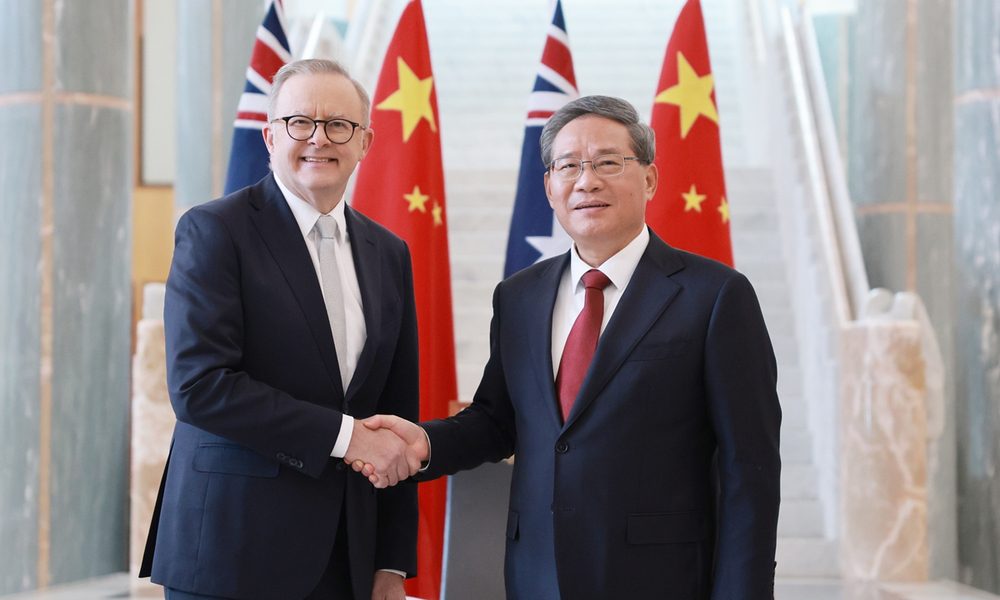
Chinese Premier Li Qiang and Australian Prime Minister Anthony Albanese shake hands at the ninth China-Australia Annual Leaders’ Meeting in Canberra, Australia, on June 17, 2024. (Xinhua)
Australia’s Pacific minister Pat Conroy said new economic opportunities for Pacific Island nations should not be “accompanied by coercion and interference”.
“We want to see a region where states can exercise sovereignty, free from coercion, and in accordance with international law,” he said in a speech to a public policy think tank in Australia.
“We want a region that is peaceful and stable,” he said ahead of a Pacific Island summit in Tonga later this month.
“China should be more transparent in the aid it is giving, and should treat infrastructure projects as opportunities for the Pacific to grow local employment, skills and procurement.”
In the South Pacific, Canberra and Washington have been jolted into strengthening their ties with island nations since Beijing signed a secretive security deal with Solomon Islands in 2022.
Beijing has in more recent months embarked on its own flurry of influence-building endeavours, including injecting $20 million into Solomon Islands’s budget.
The leaders of both Solomon Islands and Vanuatu were hosted in Beijing earlier this month for meetings with Chinese President Xi Jinping.
The United States last year re-opened its long defunct embassy in Solomon Islands, followed by the establishment of an embassy in the Kingdom of Tonga.
Several important maritime routes run through the vast but sparsely populated South Pacific, a potentially crucial gateway should flashpoints in the Taiwan Strait and South China Sea one day spiral into conflict.
The Philippines launched on Wednesday two days of joint sea and air exercises with the United States, Canada and Australia in the South China Sea.
A prison officer at Hu’atolitolu prison has been arrested while more officers are under investigation following seizure of illicit drugs and drug paraphernalia.
Prison Commissioner Sēmisi Tapueluelu
A utensil and a packet of illicit drugs had been found in a vehicle in Hu’atolitoli Prison that allegedly belongs to or was used by a Recruit Prison Officer, a statement said this morning.
The arrest came after a recent public debate in Parliament rejected a suggestion that the death penalty be used to deter drug offenders.
Tonga has been combatting a growing drug problem for the past several years, leading to the Speaker of Parliament, Lord Fakafanua, calling for a debate on the topic, ‘Capital punishment is the best deterrent for illicit drugs offences.’
The statement said the suspect was called to the prison before he was searched, and packets of illicit drugs were found in the vehicle.
The officer was previously arrested and detained by HM Prisons before he was handed over to Tonga Police for further criminal investigation.
“We are currently investigating Other officers who are involved in illicit drug offences”, it said.
The prison authorities have appealed to the public for any information about prison officers involved in the unlawful possession, manufacture, cultivation, use, and/or supply of illicit drugs.
The heartbroken family of a young German tourist who was killed in a horror bus crash in Australia are seeking answers over her death as they struggle to come to terms with the tragedy.
Aliya Tonga, 21, (pictured) was killed in a bus crash last month while travelling around Australia
Aliya Tonga, 21, was travelling on a Greyhound bus when it collided with a car towing a caravan on the Bruce Highway at Gumlu, in Queensland‘s Whitsundays region, on June 30.
Ms Tonga and two other women – Emma ‘Alli’ Sailor, 56, from Townsville and another German national, aged in her 30s – died at the scene while 27 others onboard were injured.
The driver of the north-bound bus, which was travelling from Brisbane to Townsville with 33 passengers, and the elderly couple in the four-wheel drive all miraculously escaped with minor injuries.
Ms Tonga’s body was repatriated back to Germany, where she was laid to rest in her hometown of Wesel on July 18.
Just days after the crash, her cousin flew to Australia on behalf of the family in a bid to find out more about the circumstances surrounding Ms Tonga’s death.
Now, the family are hoping to speak to people who were involved in the bus crash or witnessed the accident who may be able to answer their questions as they seek closure.
‘I was in Australia seven years ago with a working holiday visa. Three and a half weeks ago, I returned, but for a different reason,’ Ms Tonga’s cousin Dilan Gungor wrote on Facebook.
‘Her parents have endless questions…
‘My question is whether there might be anyone here who was possibly unscathed or who knows any of the 33 passengers of the bus and might be able to answer some questions.’
Ms Tonga’s uncle Haki Baba also posted online, urging anyone who may have information to come forward.
‘We can’t do much from Germany.. I would like your help,’ he wrote.
‘Please get in touch.’
While detectives are still investigating the circumstances surrounding the crash, police have said the bus allegedly veered into the wrong lane of traffic.
The driver of the car has been praised as a ‘hero’ for his quick-thinking actions on the road, which witnesses say saved other lives.
Earlier this month, US tourist Piezy Marie, who was travelling on the bus, revealed she had a last-minute seat change – which likely saved her life.
‘The driver upon checking my ticket looked at me and said, “I remember you”,’ Ms Marie said.
She just smiled and nodded and the driver switched her from her assigned seat of 1C – which was behind him – to the 2A window seat in the second row across the aisle.
‘The passengers who took my original seat were badly hurt and eventually died,’ Ms Marie said.
Ms Marie said the impact with the caravan ‘felt like the blow of a cannon’, with glass flying all around.
‘I heard loud screams and bawling from passengers. It felt like the bus was moving up and down in a slow motion until it landed past the railroad track,’ she said.
Ms Marie said from now on she would always remember that a person’s life could end in a split second and to ‘live for each second without hesitation’.
‘I’m not very religious but I think the gentleman upstairs is looking out for me so I can continue teaching my kids and to tell my stories,’ she said.
‘I am protected, blessed and I am grateful to him and to my ancestors.’
The Bruce Highway stretches more than 1,670km from Brisbane to Cairns and is a major transportation corridor for freight, local communities and other motorists.
For years, the road has been plagued with safety concerns, congestion, flooding and funding issues and has claimed hundreds of lives.
It is the most dangerous road in Australia and responsible for one in six of all traffic accidents across the whole country.
A record one in five children around the world are overweight or obese, a major review suggests.
In the ‘most comprehensive study to date,’ researchers in China analyzed more than 2,000 studies involving nearly 46million children and teens from over 150 countries or regions between 2000 and 2023.
Puerto Rico topped the list, with 28 percent of children qualifying as obese. The US territory was closely followed by South Pacific island French Polynesia (22 percent), the Bahamas (21.3 percent), Kuwait (20.5 percent), and Samoa (19.3 percent).
The US, meanwhile, came in with 18.6 percent, making it number seven on the list. In the UK, 7.6 percent of children were obese, putting it in the bottom half of countries.
The data only looked at children who were obese rather than obese or overweight.
However, in Vanuatu, a small island off the eastern coast of Australia, just 0.4 percent of kids are obese.It was followed closely by south Asian country Bhutan (0.5 percent), Senegal (0.8 percent).
In terms of regions, Polynesia – which encompasses countries like French Polynesia, Tonga, Somoa, and New Zealand – topped the list, with nearly 20 percent of children qualifying as obese.
The data confirms earlier findings suggesting that Polynesian countries have higher obesity ratings, though other reports looking at overweight children ranked the US significantly lower.
The researchers blamed higher obesity rates on diets filled with ultra-processed food, particularly in the US and territories like Puerto Rico.
‘European countries and the US often embrace a diet preference of processed food, which are typically abundant in unhealthy fats, added sugars, and refined carbohydrates,’ the team wrote.
‘In contrast, diets rich in whole grains and vegetables, which are generally regarded as healthier options, have historically been prioritized in Southeast Asian countries.’
In Japan, for example, just four percent of children qualify as obese.
Sedentary lifestyles, skipping breakfast, and not getting enough exercise were also theories behind higher rates.
Skipping breakfast has been shown to lead to less fullness throughout the day, which can cause overeating.
However, the team also noted that mothers who were obese or smoked during pregnancy were more likely to have overweight children.
The findings come after a report warned that deaths from obesity-related diseases like heart conditions and stroke have risen by 50 percent in the last 20 years.
In the study, the average participant age was 10, and there were nearly equal numbers of boys and girls.
Of all 46million participants, about 4.5million were diagnosed with obesity, or 8.3 percent.
The team found that high-income countries had an average obesity rate of 9.3 percent, while low-income nations came in at 3.6 percent.
They also noted that race played a role, with Hispanic children most likely to be obese and Asian children least likely.
As for countries on the lower end of the spectrum, many of these are low-income nations with less food available.
In many of the countries, such as those in Africa, children are more likely to be active, such as working in agriculture or walking to school and other places.
Limitations of the study included several countries having limited data and differing criteria for defining obesity.
The jury have reached a unanimous verdict after a nearly three-month long murder trial into the death of Rau Tongia.
Shayde Carolyn Weston, Breeze Hunt-Weston, Louise Kelly Hume and Pania Ella Waaka. Photo: Stuff / Juan Zarama Perini
Shayde Weston, Breeze Hunt-Weston, Louise Kelly Hume, and Pania Waaka all pleaded not guilty to the murder of Tongia, who the Crown allege was shot in the back while he slept at a house in Wellington’s Karori in December 2020.
Hunt-Weston also faced two other charges.
For Weston, the jury reached a verdict of guilty of murder.
For Hunt-Weston, the jury has found her guilty of wounding with intent to cause grievous bodily harm and of accessory after the fact to murder, but not guilty to murder.
For Waaka, the jury has found her guilty on the charge of murder.
For Kelly Hume, the jury has found her not guilty of either murder or manslaughter.
A fifth woman was also set to go on trial charged with murder but was excused due to health reasons. Her name is suppressed.
Sentencing will be on 19 September.
The trial was initially scheduled to begin on the 13 May and was set down for eight weeks.
After two weeks of delays, the Crown kicked off its case on 27 May, spearheaded by Crown Prosecutor Sally Carter.
The Crown alleged in the hours before Tongia’s death, he assaulted Weston and his death was a revenge killing.
What happened in the hours before Rau Tongia was killed?
The Crown said in the hours before Tongia’s death, Weston was with the fifth woman.
Witnesses reported seeing the two women and Tongia at a party, where Weston and the fifth woman were seen kissing.
Witnesses said she appeared to be trying to get a rise out of Tongia.
Tongia is then alleged to have assaulted Weston while she was sleeping alone in the woman’s bed.
Witnesses testified to seeing Weston with black eyes after the attack and reported a second confrontation then happening in the driveway of Tongia’s Percy Dyett Drive address.
Evidence was given that Weston’s sister Hunt-Weston and cousin Phoenix Colvin came to the address from Halswell Lodge to get her, along with another person.
There Hunt-Weston admitted to hitting Tongia in the head with a hammer.
She maintained it was in self-defence in response to Tongia attacking Weston again.
CCTV footage tracked Colvin’s car between Halswell Lodge and Percy Dyett Drive, then out to Onslow Road – where the Crown alleges that the gun that was used was collected.
Tongia’s death
The Crown alleged Tongia was shot in the back while he slept shortly after 4.30am.
CCTV footage tracked Hunt-Weston’s car going from Halswell Lodge back to Karori shortly before 4.30am.
The Crown alleged Hunt-Weston had told Waaka to drive the car, and that a witnessed had seen a person, alleged to be Weston, with a shotgun by the side of Tongia’s house.
Google Maps data from Waaka’s phone placed it outside the address on Percy Dyett Drive around the same time.
The Crown believed Weston either pulled the trigger or assisted in the shooting, Waaka drove Weston to the address, Hunt-Weston lent them the car to get there, and Hume supplied the gun used.
Waaka has admitted to driving the car.
The Crown said the fifth woman was also believed to have been in a bedroom the night Tongia was shot while he slept.
Tonga’s Prime Minister Hu’akavameiliku Siaosi Sovaleni has rejected claims that there is a foreign affairs ministerial portfolio standoff which poses a threat to the upcoming Pacific leaders meeting.
Tonga’s Prime Minister Hu’akavameiliku Photo: RNZI/ Koro Vaka’uta
Tonga is hosting Pacific Islands Forum Leaders’ Summit at the end of this month.
Earlier this year, Tonga’s King Tupou VI disapproved of the government’s appointment of the Minister of Foreign Affairs.
As a result, the then-minister, Fekita ‘Utoikamanu, stepped away from the post in April and a replacement is yet to be named.
RNZ Pacific’s Tonga correspondent, Kalafi Moala, said two weeks ago the matter was not resolved at all.
“There is a court case in which the royally appointed secretary to Foreign Affairs is suing the government and suing the Public Service Commission, as well as the secretary to government, for trying to get rid of him I don’t know what,” Moala said.
However, Hu’akavameiliku told RNZ Pacific this week that he is the acting minister of foreign affairs.
“When there is a vacant ministerial position, it is normally the Prime Minister [who] will take up their portfolio unless he [has] delegated to someone else,” he said.
He stressed there were no issues concerning the portfolio, as was being reported.
“I’m heading down to the Foreign Ministers meeting on Friday in Suva to give them an update in my capacity as Acting Minister of Foreign Affairs, so we are okay…things are lining up.”
He confirmed that he will update Forum Foreign Ministers about the preparation for the 53rd Forum Leaders Meeting, including progress on logistics and accommodation.