Home Blog Page 231

Princess Mele Siu‘ilikutapu dies aged 75

Princess Mele Siu’ilikutapu, a first cousin of King Tupou VI has died aged 75 at an Auckland hospital this morning at 7.15am Sunday May 28.

Princess Mele Siu’ilikutapu. Photo/Sreenshot

A vigil has been held in the hospital by Prince Tu’ipelehake and her son’s kāinga, the Palace Office said.

Princess Siu’ilikutapu was deeply involved with the Tongan community in Auckland. She supported Covid-19 vaccinations and recently appealed to her people to get immunised.

“Kāinga Tonga I appeal to you who have yet to do your first dose. It is very dangerous to our family and our people in Aotearoa,” the Princess said.

“I ask the youth and those between 12 to 29 years old to join in so it could encourage your generation to get vaccinated”.

The Princess represented the Tongan community during an event in 2021 in Auckland in which former Prime Minister Jacinda Ardern gave a formal and unreserved apology on behalf of the government for the Dawn Raids which she said left Pacific communities feeling “targeted and terrorised”,

Siu’ilikutapu said she vividly recalled the Dawn Raids and the injustice of the treatment applied specifically to her community.

She said she accepted the government’s gifts which she described as “very significant indeed” saying it signalled the government’s desire to mend the rift.

The Royal Palace in Nuku’alofa said the Princess’ body is expected to be returned to Tonga.

The Princess first married to late Tu’iono Liava’a, a Tongan Police sergeant in Auckland in 1969.

The wedding was forcibly annulled by King Tupou IV the same year, in accordance with his constitutional prerogative, after Siu’ilikutapu returned to Tonga.

After the marriage was made illegal, Princess Siuʻilikutapu was married to Late Hon. Kalaniuvalu Fotofili, who was born as Siosiua Ngalumoetutulu Kalaniuvalu-Fotofili. He died in 1998.

They had two sons. The eldest died in 2010 leaving the youngest a chance for the king to give him two chiefly titles, Kalaniuvalu and Fotofili. He is the current Prince Kalaniuvalu Fotofili.

In 1975 Siu’ilikutapu was elected to the Legislative Assembly, becoming its first female member.

Primary school teachers call off proposed strike action

By rnz.co.nz

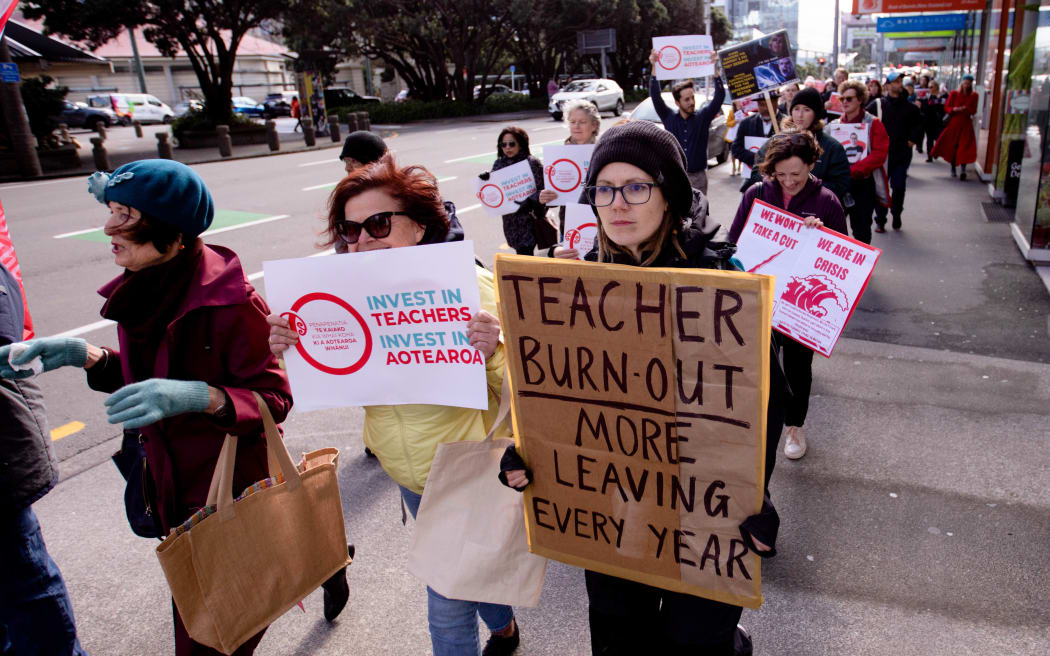
Primary school teachers have called off strike action proposed for Wednesday, as they wait for a revised offer from the government.

A protest by Wellington secondary school teachers in March 2023. Photo: RNZ / Angus Dreaver

In an email sent to teachers, the NZEI said the Minister of Finance Grant Robertson has agreed to meet with the union on Tuesday, to discuss the settlement.

It expected to receive the terms of the agreement later in the day, to take to teachers on Wednesday.

The union said schools may still close on Wednesday afternoon so that staff can attend a paid union meeting.

It said if the offer was rejected, union members will be balloted on whether industrial action should resume, with any new strikes starting in mid-June at the earliest.

What to do with a loved one’s social media accounts when they die

By dailymail.co.uk

Any death, whenever it occurs and whomever to, sends shockwaves through familial and social units who are often completely blindsided by the loss no matter the circumstances of the departure. 

But in and amongst the blur of those grey days and weeks spent planning funerals and memorial services, one crucial aspect of the deceased lives almost always gets neglected: namely, what on earth are we supposed to do with their social media?

It’s a sad truth that social media has fundamentally changed the way we live and interact with the world and our loved ones. 

Many of us live our life through our phones and when we’re gone we leave behind a vast digital footprint that can seem impossible to control or erase which can cause your loved ones unexpected stress alongside their grief.

Luckily, there are ways to get a hold of your online presence before you kick the bucket. But you’ll need to have a few awkward conversations first!

When a person dies they leave behind an online legacy that can be hard to remove 

How to take control of your a dead person’s social media when they’re gone

Facebook, Twitter and Instagram all offer users the option of nominating someone to look after their social media pages once they’ve passed. 

Facebook

From your main profile, click your profile photo in the top right of Facebook.

Select Settings and privacy, then click Settings.

Below General profile settings, click Memorialisation settings.

Type in a friend’s name in Choose a friend and click Add.

To let your friend know they’re now your legacy contact, click Send.

To change or remove a legacy contact, follow steps 1-3 above, then click Remove. From there, you can add a new legacy contact if you’d like.

If your main profile is memorialised, your legacy contact will be notified.

Twitter

Twitter are unable to provide a family member or friend access to the deceased’s account for security reasons. 

You can request the removal of a dead person’s account. 

You will need:

  • Information about the deceased
  • A copy of your ID
  • A copy of their death certificate

Instagram 

Instagram allows users to memorialise or delete a dead persons account. 

As with other platforms, you will need to provide proof of death. 

Should you wish to remove a person’s profile you would use this form. 

To memorialise, you would need to use this request form. 

She told the MailOnline: ‘Social media can be a positive thing and a hugely negative thing. 

‘For some people it isn’t useful to have reminders of the departed person due to a variety of delicate and sensitive reasons.

‘On the other side, there’s a sense of community in grieving together.

‘Of course the level of which you would like to be memorialized is up to you. 

‘There are steps people can take before you die to set the boundaries of how you will be remembered.’

Getting access to a person’s social media once they’ve passed can be a strenuous and emotionally exhausting task. 

Most platforms now allow people to select a legacy contact to pass control over to in the event of their death but the chosen party will still need to send off a death certificate to be granted access.

Dipti continued: ‘It’s important to talk to your close ones before you pass so they avoid the bureaucracy of dealing with the social media companies. 

‘Sometimes it can be hard to get your message across which can cause unnecessary grief.

‘It’s a strange conversation to have but it’s one worth having.’

According to Dipti, whose book Planet Grief touches on a variety of emotional and practical responses to death, there are some instances when having any reminder of a loved one online can be a negative. 

She continued: ‘For some, the reminders  of the people no longer with us can be untimely and provoke a reaction in a place that we feel is inappropriate. 

‘This can affect us when we have not fully accepted the reality of the death or the loss, and we may react by pushing down our emotions quickly so that the grief feels contained.’

One person who knows all to well the comfort social media can bring to those we leave behind is branding expert Sonya Dhillon who was forced to suddenly come to terms with the loss of her close cousin. 

When he passed away from cancer, aged just 22-years old Sonya said that his planning ahead had made the grieving process – online at least- far more streamlined. 

She said: ‘There are settings involved where you can appoint someone when you pass away who can make it a memorial or deactivate it.

‘When my cousin passed away there wasn’t that option, he had to give his dad his password so he could get it set up.

‘We made him a memorial, we like to have it there so we can talk to him and wish him a heavenly birthday.

‘For me it’s nice to know that your socials will be looked after. Nowadays if someone dies all people do is go there to reminisce.’

‘Have courage’: Tokelau records its first four community Covid-19 cases

‘Oku taupotu ‘i lalo ha fakamatala faka-Tonga

Tokelau remains in lockdown following the announcement of its first Covid-19 community cases.

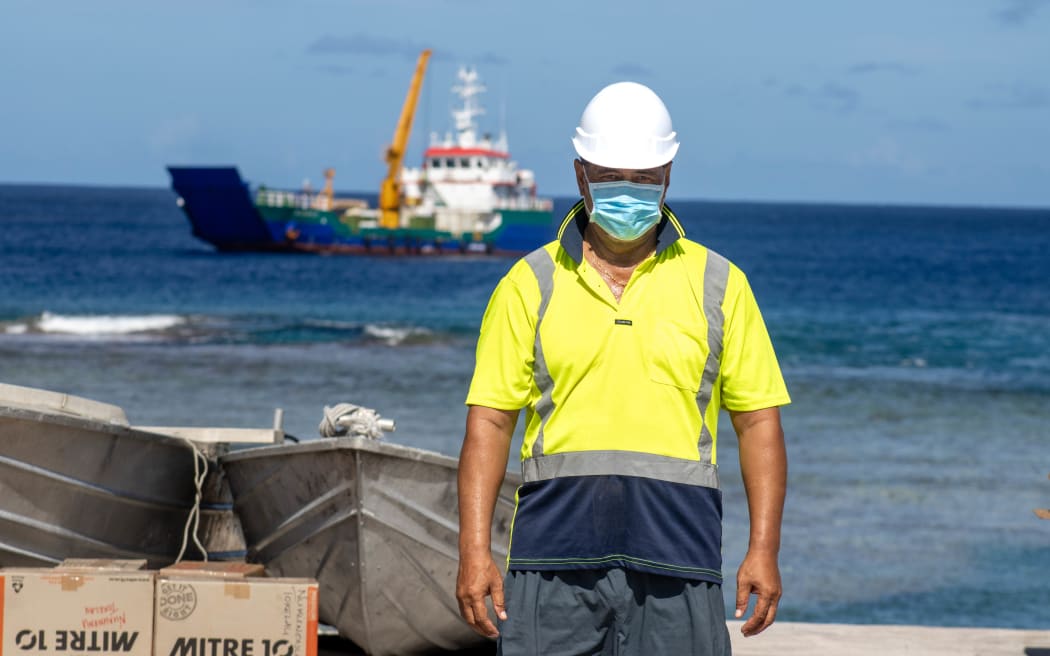
The General manager of the Office of Tokelau in 2023, Aukusitino Vitale. Photo: Supplied, Elena Pasilio

“We knew that it would eventually get to Tokelau, so we prepared,” Tokelau Government General Manager Aukusitino Vitale said.

Between 15 and 26 May, four community cases were recorded in Nukunonu.

Tokelau is now officially the second to last country in the world to experience community transmission of Covid-19, with Turkmenistan still at zero cases as of 26 May according to the WHO.

On top of the four community cases in Nukunonu, which is the largest atoll in Tokelau, there was one border case and two recorded at the border on Fakaofo.

Vitale said the index border case arrived on the Lady Samoa with more than 70 other people in Tokelau on Sunday, 14 May.

They stopped off in Atafu and Fakaofo and all passengers who disembarked on Nukunonu tested negative on day one but on day three, a 48-year-old male tested positive.

One week later on Sunday, 21 May, the man’s son tested positive, becoming the first community case in Tokelau.

Vitale, who was also on the voyage, said the five-day lockdown which is only in place in Nukunonu ends on 28 May local time.

“Have courage, we have a very good, high herd immunity rate which is really helping with the positive cases, it’s just been flu symptoms, fever is of course the most difficult one but apart from that people are recovering.”

The restrictions in place mean Matiti School on Nukunonu is closed, as well as all government offices.

Essential services like the hospital, co-op store and finance are open with special arrangements in place to minimise people moving about in the village.

People are allowed to feed their livestock between 7am to 9am.

By RNZ

FAKAMATALA FAKATONGA

Oku kei loka ‘a Tokelau hili e fanongonongo ‘enau fuofua keisi Koviti-19.

Ne tokamea’i pe ‘e he kainga ‘e iku pe o a’u ange pea ne nau teuteu pe ki ai.

Na’e lekooti ai ‘a e keisi ‘e fa he komiunitii ‘i he vaha’a taimi ‘aho 15 ki he 26 ‘o Mee i Nukunonu.

Kuo hoko ai ‘a Tokelau ko e fika ua ia ki he muimui taha ‘o ha fonua ‘i mamani ke ne ma’u ‘a e Koviti 19, kae kei hao pe ‘a Turkmenistan heene a’u mai ki he ‘aho 26 Mee’ fakatatau ki he  WHO.

Kehe mei he keisi komiuniti ‘e faa ‘i Nukunono ‘a ia ko e motu lahi taha ia ‘i Tokelau ne ‘i ai ‘a e keisi ‘e taha he potaa’ mo e ua ne lekooti ‘i he pota ‘o Fakaofo.

Pehe ko e keisi he potaa ne tu’uta ange ia ‘i he vake Ha’amoa ko e Lady Samoa mo ha kakai ‘e toko 70 ‘i Tokelau he Sapate ‘aho 14 o Mee.

Ne nau tau ai ‘i Atafu mo Fakaofo pea ne nekativi pe kau pesese ne nau hifo i Nukunonu he uluaki ‘aho ka ‘i he ‘aho hono tolu ne tesi positive ai ha tangata ta’u 48.

Hili ha uike ‘e taha ki mui i he Sapate ko hono 21 o Mee ne tesi positivi ai ‘a e foha e tangata ne puke pea ko e fuofua keisi ia i he komiunitii i Tokelau.

Na’e pehē ‘e Vitale, ‘a ia ne kau foki mo ia ‘i he fononga, na’e ngata ‘a e loka ‘aho nima ‘a Nukunonu ‘i he ‘aho 28 ‘o Mee taimi fakalotofonua’.

Na’a ne poupou ki hono kakai ke nau loto lahi he oku lelei ‘aupito ‘enau ‘imiunti rate ‘a ia ‘oku tokoni lahi ia ki he ngaahi keisi positive, ko e faka’ilonga pe ia ‘o e fuluu, ko e mofi ‘a e konga faingata’a taha kae makehe mei ai kuo ake mai ‘a e kakai.

Koeuhi ko e ngaahi fangatangata kuo hoko ‘oku ‘uhinga ia ‘oku tapuni ‘a e ako’anga Matiti ‘i Nukunonu pea ngaahi ‘ofisi fakapule’anga.

Ava pe ngaahi sevese fiema’ua hange ko e fale mahaki, ngaahi fale koloa mo e pa’anga ‘i ha fokotu’utu’u makehe ki ai ke fakasi’isi’i e feō’aki ‘a e kakai.

‘Oku ‘atā ‘a e kakai ke fafanga ‘enau fanga monumanu’ he vaha’a e 7am ki he 9am.

Pope Francis, 86, suffers major health setback

By JAMES REYNOLDS  and AFP

Pope Francis has been forced to clear his schedule after suffering with a fever, the Vatican has said.

The pope’s agenda was not made public this morning, as it usually is on a Friday. Vatican spokesman Matteo Bruni said: ‘Due to a feverish state, Pope Francis did not receive an audience this morning.’

Francis spent five days in a Rome hospital at the end of March for bronchitis.

Pope Francis recovered quickly from the illness after taking antibiotics and was able to go on a three-day trip to Hungary at the end of April.

But the Pope, born Jorge Mario Bergoglio, was forced to miss the ‘Way of the Cross’ procession on Good Friday due to cold weather.

He instead attended an indoor Good Friday service in St Peter’s Basilica.

It was the first time the Pope did not preside at the ‘Via Crucis’ service since he was elected in 2013. 

He did manage to take part in Maundy Thursday duties, gathering with dozens of cardinals and bishops, and some 1,880 priests, in St Peter’s Basilica.

The Pope later travelled to the jail of Casal del Marmo on the outskirts of the city, where he washed and kissed the feet of 12 young inmates in a gesture meant to commemorate Jesus’ humility towards his apostles on the night before his death.

He seemed, at the time, to have recovered from bronchitis.

Francis, who became pope ten years ago, is missing part of one lung. It was removed when he was a young man in his native Argentina.

None of the Pope’s scheduled events have been cancelled and he is due to preside at a Mass marking Pentacost on Sunday in St Peter’s Square.

Two-year-old sentenced to life in prison in North Korea

By Michael Havis of Daily Mail

North Korea has sentenced a two-year-old to life in a prison camp after the toddler’s parents were found with a Bible.

The plight of the child, whose entire family was also jailed, was revealed in the International Religious Freedom Report from the US State Department.

The publication also exposed multiple cases of North Koreans being killed for their Christianity, such as the execution by firing squad of a Christian woman and her grandchild in 2011.

In another case, a member of the ruling party was executed in front of an audience of 3,000 at Hyesan airfield after they were found in possession of a Bible.

Other believers faced pigeon torture, whereby they were suspended with their hands tied behind their backs, unable to sit or stand for days on end.

‘It was the most painful of all tortures,’ one victim recalled. ‘It was so painful that I felt it was better to die.’

Others were tortured with sleep deprivation.

One Christian woman in solitary confinement was driven to suicide in 2020 after prison guards refused to let her sleep, according to the report.

Other horrors endured by Christians include starvation, dehydration, tainted food, beatings, and forced adoption of agonising positions for prolonged periods.

The report – which summarises the findings of various non-governmental organisations, human rights groups, and the UN – paints a disturbing picture of Christian life in North Korea.

It cites one estimate that up to 70,000 Christians are imprisoned for their faith under Kim Jong-Un’s regime, out of a possible population of 400,000.

Ostensibly, North Korea guarantees its people religious freedom in its constitution – and the regime highlights the churches it has built in Pyongyang as proof.

But the publication said these churches operate only as ‘showpieces for foreigners’.

It cited the testimony of one defector, who said people could be arrested for lingering too long outside the churches and listening to music from within, or even consistently driving past them.

Choristers at the Pyongyang church. American Ray Cunningham visited the church and said: ‘I came away wondering just how real this is’

    Chilgol Protestant Church in Pyongyang. North Korea highlights the churches it has built in Pyongyang as ‘proof’ of its religious tolerance

    Ray Cunningham, from the US state of Illinois, visited Chilgol Protestant Church in Pyongyang during a service.

    He said: ‘I came away wondering just how real this is.

    ‘Are the services regular? The church seems maintained but is it a regular event? In the society you see no evidence of religious activity – except for Buddhism.

    ‘It feels real but like many things indeed it may be somewhat a show for tourists. In this case it might be a mixture of showmanship and a few elderly Christians in the area.’

    He also noted something that was highlighted in the report – no children attend the services.

    ‘The congregation was made up of older men – all seemingly over 65 – and women over 40,’ he said.

    ‘What you did not see were children or young working-age people.’

    The US State Department’s publication said many North Korean Christians hide their faith from their children.

    It cited the finding of one NGO, Open Doors USA, which said: ‘A Christian is never safe.

    ‘Children are encouraged to tell their teachers about any sign of faith in their parents’ home.’

    Another NGO, Korea Future, said children were taught in school about the ‘evil deeds’ of Christian missionaries, including ‘rape, blood sucking, organ harvesting, murder, and espionage’.

    The report said: ‘One defector told Korea Future that the government published graphic novels in which Christians coaxed children into churches and took them to the basement to draw their blood.’

    And while most of the cases of religious persecution documented by Korea Future targeted those pracitising shamanism, it was Christians who normally received the harshest punishments.

    This is because they are perceived as a ‘hostile class’ and a ‘serious threat to loyalty to the state’, the report said.

    For followers of shamanism, punishments range from six months in a forced labour camp to three or more years in a re-education facility.

    Christians, meanwhile, can be executed, or face anything from 15 years to life in a prison camp, imposed on up to three generations of the immediate family of the person found guilty.

    The report repeated the conclusion reached by Open Doors USA, that ‘life for Christians is a constant cauldron of pressure; capture or death is only a mistake away’.

    In place of religion, the Kim family demands worship for itself and its ideology of Juche – meaning national self-reliance, the publication said.

    These offered a ‘form of state-sponsored theology’, it said.

    The report explains: ‘Although the ideology makes no explicit claim that the leaders are gods, they are described as “extraordinary beings” capable of supernatural feats.’

    One defector described being taught that bullets would change course rather than hit Kim Il-Sung, the country’s founder and Kim Jong-Un’s grandfather.

    China braces for new Covid 19 wave, may peak at 65 million cases per week

    ‘Oku taupotu ‘i lalo ha fakamatala faka-Tonga

    China faces yet another wave of COVID-19 infections that could lead to millions of new cases nationwide.

    The grim forecast was revealed by Zhong Nanshan, a respiratory disease specialist, at a medical conference this week in China’s southern city of Guangzhou.

    Zhong was reported by Chinese state media saying that China could be approaching 40 million infections per week. By the end of June, the weekly number of infections could surge to 65 million, NBC News reported.

    The surge comes about six months after the country dismantled its sprawling infrastructure for dealing with Covid, including harsh lockdowns, mass testing, stifling quarantines and strict mask requirements.

    “People feel differently about this wave,” said Qi Zhang, 30, who works at a finance company in the northern city of Tianjin. “The last time, everyone was terrified, but now they don’t think it’s a big deal,” she told NBC News on Thursday.

    According to state media, he told the audience that the wave that started in late April was “anticipated,” and that his modeling suggested China could be approaching 40 million infections per week. By the end of June, he said, the weekly number of infections will peak at 65 million.

    The United States, by comparison, was reporting more than 5 million cases a week at its peak last January. Like the U.S., China stopped providing weekly case updates this month, making it difficult to know the true extent of the current outbreak.

    The State Department said the U.S., which imposed a testing requirement on travelers from China in January before lifting it in March, was discussing China’s second Covid wave with allies and partners but declined to say whether travel restrictions were under consideration. Spokesperson Matt Miller said the department would monitor the situation in conjunction with the Centers for Disease Control and Prevention before updating travel guidelines.

    “We don’t want to see people anywhere, obviously, suffering from Covid-19,” Miller said Wednesday. The U.S. government remains committed to working with China “on transnational challenges, including on global health matters and maintaining open lines of communication,” he added.

    FAKAMATALA FAKATONGA

    Kuo toe fehangahangai ‘eni ‘a Siaina mo ha toe ākenga fo’ou ‘o e Koviti-19 ‘e ala uesia ai ha laui miliona he fonua fakakātoa.

    Ko e vavalo fakamanavahē ko eni ne fakaha ia ‘e Zhong Nanshan, ko ha taukei makehe ‘i he mahaki ki he ma’ama’a ‘i he konifelenisi fakametikale he uike’ ni ‘i he citi ko ia ‘i he saute ‘o oSiaina ko Guangzhou.

    Pehē ‘e Zhong ‘e a’u ki he kakai ‘e toko 40 miliona ‘e uesia heni he uike. ‘I he faka’osinga ‘o Sune’ ‘e a’u ‘a e pihia fakauike ki he toko 65 miliona.

    Ko e matua mai ko eni hili ia ha mahina ‘e ono hili hono veteki ‘e he fonua ‘a e ngaahi ‘inifalakisā ne langa ke tau’i’aki ‘a e Koviti, kau ai ‘a e ngaahi loka, tesi fakatokolahi tu’utu’uni’i fefeka, ko e kolonitini mo e tu’utu’uni fefeka ke ‘ai ‘a e masaki.

    Na’a ne fakaha ki he mitia ko e akenga ko ‘eni ne kamata ia ‘i he konga ki mui ‘o ‘Epeleli pea na’e ‘osi fai pe ‘a e ‘amanaki ki ai pea ko hono motolo kuo fa’u ko eni kuo ne fokotu’u mai ‘e ofi ‘a kinautolu ‘e pihia ‘i  Siaina ‘i he toko 40 miliona he uike. I he uike faka’osi ‘o Sune ‘e a’u ‘a e phia ki he 65 miliona.

    Fakahoa ‘eni ki ‘Amelika’ na’e lipooti ‘a e keisi  laka hake ‘i he toko 5 miliona he uike ko e lahi taha ‘i Sanuali. Hange pe ko Amelika, na’e ta’ofi ‘e he Siaina hano toe fakalamuiaki fakauike ‘enau ngaahi keisi ‘i he mahina ni  ‘o faingata’a ai ke ‘ilo ‘a e tu’unga totonu oku lolotonga ‘i ai ‘a e to’umahaki.

    Pehe foki mei he State Department na’e hilifaki ‘e US ‘a e fiema’u ke tesi ‘a e kau folau mei Siaina ‘i Sanuali ki mu’a pea to’o ‘i Ma’asi. Pehe foki mei US na’a nau lolotonga alea’i mo Siaina ‘enau akenga hono ua fakataha mo e ngaahi ‘ālai mo e ngaahi paatinaa’ ka ne ‘ikai tali ha tali ki he fehu’i pe nau toe fakakaukau’i ha loka fakavaha’afonua.

    Pehē pe mei he tipaatimeni oku fai hono monitoa ‘o e me’a ‘oku hoko’ fakataha mo e Centers for Disease Control and Prevention ki mu’a hano tuku mai ha talamuiaki fekau’aki mo e kau fefolau’aki.

    Police to the rescue as baby nearly born on Auckland motorway

    A baby narrowly avoided being born on the side of a gridlocked Auckland motorway on Thursday, with his panicked parents getting a surprise police escort to hospital.

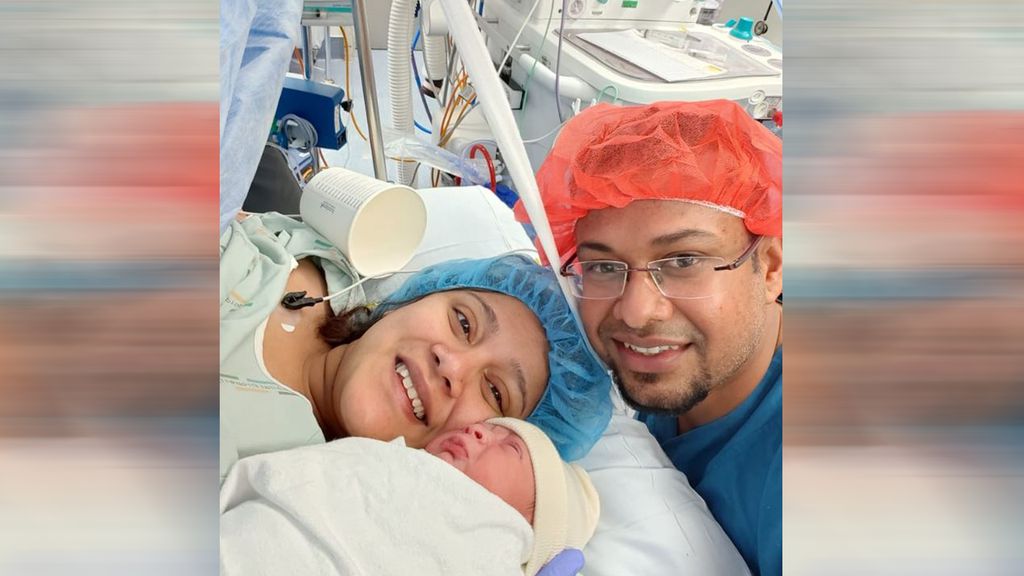
    Shradda and Gaurav Patil with their son Aarav. (Source: Supplied)

    Constable Shaw (no first name provided) was driving on the Northern Motorway on Thursday afternoon, heading back to Orewa station after finishing his shift, when he saw a vehicle parked in the emergency stopping lane.

    “I went and spoke to the driver to make sure everything was okay,” he said in a statement released by police today. “There was a woman in the backseat, clearly in labour.”

    The distressed first-time parents, Shradda and Gaurav Patil, had missed the turnoff to North Shore Hospital.

    “Unfortunately the motorway was just jam-packed,” said Gaurav. “I started sweating and I called 111. The next minute, Constable Shaw stopped for us.”

    After escorting their vehicle a couple of kilometres, Shaw realised the “ridiculous” traffic meant there was a good chance the baby would arrive before they could get to the birthing unit – so he pulled them over and told them to hop in, turning on the lights and siren.

    “I walked them up to the suite and left. It was quite cool – a once in a career opportunity,” said Shaw.

    Baby Aarav, completely unaware of the commotion he had created, did not end up arriving until 7.30am Friday.

    Gaurav said he did not get much time to thank Shaw for his efforts.

    “I cannot express how relieved we were to see him. The way Constable Shaw helped us, it was just amazing.”

    rnz.co.nz

    NZME fined more than $80,000 for supplying unsafe magnetic toys

    By rnz.co.nz

    NZME Advisory has been fined just under $88,000 for supplying unsafe magnetic puzzle toys that a child swallowed and had to have surgically removed.

    The Commerce Commission took the company to Auckland District Court where it pleaded guilty and was fined $87,750. Photo: RNZ / Cole Eastham-Farrelly

    The toys – known as buckyballs – were made up of small, high-powered magnetic balls and sold via the company’s previously-owned GrabOne website between October 2020 and September 2021.

    The company, which has since sold the site, sold 213 of the magnetic toys, which breached an unsafe goods notice which bans the supply of any magnets, sold in sets of two or more, that are a particular size and strength.

    NZME recalled the sets and contacted customers to notify them of the recall after being contacted by the Commerce Commission.

    The commission’s general manager of fair trading Kirsten Mannix said the magnets were banned for health and safety reasons.

    “The ban exists because if more than one of the magnets are swallowed, they can attract to each other within the body which is extremely dangerous,” she said.

    “Tragically, we are aware of one case in New Zealand where a child did swallow two of the magnets from one of the magnetic toys supplied by NZME, and significant surgery was required to remove them.”

    The commission took the company to Auckland District Court where it pleaded guilty and was fined $87,750.

    Mannix said it was vital that businesses understood their obligations when advertising and supplying products for sale.

    “Every year we carry out unannounced visits to retailers engaging with them about the product safety laws in place and checking that the toys on the shelves are compliant,” she said.

    “Since 2017 we have prosecuted 30 businesses and issued formal warnings to another 32 businesses, relating to the supply of non-compliant products.”

    Concern for shareholders as meeting attendence drops

    By rnz.co.nz

    There is concern about shareholder engagement after new research has revealed a sharp fall in attendance at shareholder meetings.

    New Zealand Shareholders Association says there are a number of factors which have contributed to falling attendance. (file image) Photo: 123RF

    A New Zealand Shareholders Association (NZSA) survey showed the overall average attendance for meetings fell 24 percent since 2019.

    It said falling attendance had not been offset by an increase in virtual attendance.

    Hybrid meetings, where shareholders can join in person and virtually, have become more common since the Covid-19 pandemic.

    NZSA chief executive Oliver Mander said a shareholder meeting remained “a key interaction between a company and its shareholders”.

    “For investors, it’s always important to be represented – even if you’ve outsourced your investment decision-making to a [discretionary investment management service] provider, it’s important to be an informed customer,” he said.

    Mander said there were a number of factors which had contributed to falling attendance.

    “Part of it is you’ve seen an increase in how investors choose to make their investments [by outsourcing investment decisions],” Mander said.

    “Another part of the reason actually is that the corporate governance standards in New Zealand have improved over the past two decades. There’s arguably more trust in the corporate environment than there has been in the past.”

    But he said engagement remained important both for companies and shareholders.

    “For issuers, we think it’s important that the shareholder meeting is regarded as a ‘good cost’ – a cost that shareholders are willing to bear to provide assurance and representation.”