By Anusha Bradley, Investigative Reporter of RNZ and is republished with permission.
He was lured to New Zealand with promises of money and a better life, but instead he was kept as a slave, repeatedly assaulted and cut off from his family. For the first time, he tells his story.

Junior worked all day, before doing housework into the night for the man who enslaved him (illustration) Photo: Unsplash / Tim Mossholder – RNZ / Cole Eastham-Farrelly
Warning: This story contains details of slavery and assault
A cold slap of winter air snaps Junior* out of his sleepiness as he steps off the plane from Apia. It’s just after 1am but he’s grateful to finally be in Auckland where two years of work and good wages await.
It’s 30 July 2015. Junior is 53 years old and today his dream comes true, he thinks. A man called James*, who he met on the plane, has also come to work for the matai – the chief that recruited them from Samoa. Together they breeze through customs into the arrival hall where the matai and his wife are waiting.
They all clamber into the chief’s conspicuous sedan – a brightly-painted New Zealand flag covers one side of the car entirely, a Samoan flag covers the other – for the journey to Hawke’s Bay. Junior admires the shining lights of Auckland as they exit the city; he’s never seen anything so bright and beautiful before, he thinks.
His eyes remain open the whole trip so he can take in every detail as the car snakes its way through the darkness of the North Island. “I was feeling very proud and happy to be in a country that I’ve long dreamt about,” he recalls.
As the first blush of a new day emerges over the horizon, they pull up outside the chief’s home in Hastings, where he hops out of the car and unlocks the metal gate in the tall, barbed wire-topped fence surrounding his two-house compound.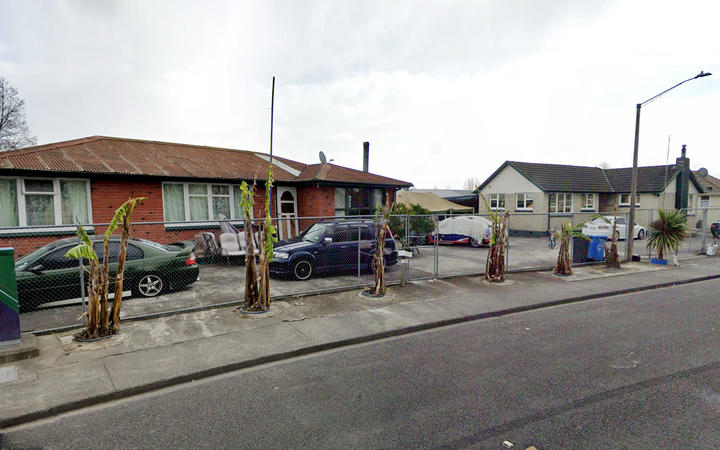
The Matamata family property where his 13 victims lived Photo: Google Earth
Once inside, Junior’s shown the garage where he’ll be sleeping and then a room full of clothing, where he’s told to grab something warm. He picks a thick yellow hoodie to pull over the four t-shirts he’s wearing to guard against the cold. He gives the chief the gift of taro he’s brought from home to show his appreciation, then they all get back into the car and drive to a vineyard. It’s time to “start training for work,” the chief tells Junior.
They work all day pruning the vines, but Junior is happy. He’s so grateful to have a job. “I was quite pleased I had a job and was getting some money,” he says.
But he is not paid for the work he does that day. He’s not paid for a single day he works over the next 17 months, apart from a couple of hundred dollars he’s given at Christmas and the occasional cash he receives to buy cigarettes.
He later learns he doesn’t have the work permit he was promised, which makes him an overstayer and an illegal worker. The chief constantly threatens to report him and get him deported if he tells anyone about not being paid or the brutal beatings he dishes out.
Forbidden to leave the chief’s house without permission, or talk to anyone at work or church, and subjected to cruel punishments, Junior becomes so “broken” he eventually begs to be deported.
When his wish is finally granted, his escape sparks Operation Star, the largest and most complex investigation Immigration New Zealand has ever been involved in, and uncovers a web of offending covering more than 25 years.
***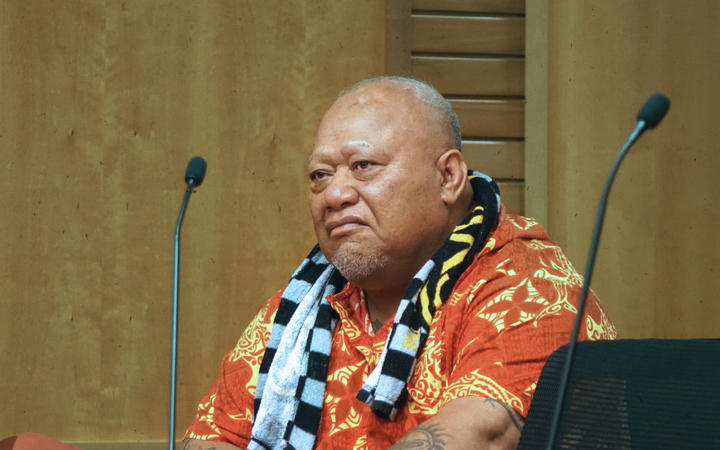
Joseph Auga Matamata was sentenced to prison for human trafficking and enslaving 13 people Photo: RNZ / Anusha Bradley
Three years later, on 16 March 2020, the chief stands in the dock in the High Court in Napier and is convicted of enslaving 13 Samoan nationals. He’s also found guilty on 10 counts of human trafficking between 1994 and 2019. Junior is the chief’s eldest victim. The youngest is just 12.
After a gruelling five-week trial, the jury took seven hours to deliver the guilty verdict to the chief, Joseph Auga Matamata, 65, who stands silently in the dock. He’s the first person in New Zealand to be simultaneously convicted on both charges and is now serving 11 years in prison.
During the trial, his victims had recounted their eerily similar stories to the court. They go like this: Matamata meets them in Samoa and woos them with stories of a better life in New Zealand. He pays for their flights and visas and promises work or schooling. But when they arrive, they find themselves working 14-hour days in orchards and vineyards across Hawke’s Bay, followed by chores around Matamata’s home until late into the night. They see bags of cash being handed to Matamata for their labours, but it is never passed on.
Nearly all of Matamata’s victims are subject to vicious beatings, their freedom is severely restricted and their passports are taken away. At the trial, Crown prosecutor Clayton Walker tells the jury Matamata abused his chiefly status for his own financial gain, and speaks of Junior’s experience.
“[Junior] trusted Mr Matamata. He trusted him completely because Mr Matamata was, and is, a matai, a Samoan chief, someone who has controlling authority, someone who commands, by virtue of the title, respect and obedience.
“Respect for and obedience to a matai is a fundamental part of Samoan culture,” Walker says.
Over the next two years, Matamata appeals his conviction all the way to the Supreme Court, but last month his final attempt was thrown out. And so, more than five years after Junior escaped his enslaver, his ordeal is finally over.
A month later he sits in a cream corner office high above Lambton Quay where, for the first time outside the courtroom, he can finally tell his story.
***
That story starts in Samoa where Junior spends the first 53 years of his life in a sleepy village on the island of Upolu. He works his family’s land growing vegetables to eat, and while they have enough to meet their basic needs, he wishes he could provide more for his children.
He dreams of owning a car and a proper house with walls, rather than the open air fale they sleep in. “But you don’t get that kind of money working a plantation,” he says.
Others who have worked in New Zealand tell him it’s “a land of milk and honey” and he dreams of going too. “Money was the main driver, you know, just to be able to provide for my family. Not just the basic needs but more than that.”
When Junior meets Matamata in Samoa he thinks the dream is going to become a reality. “He said, ‘If you work hard you will get a lot of money’.” Matamata tells him he’ll take some of the money he earns but Junior “will take the rest”.
But when he arrives, Junior works six, sometimes seven, days a week, and the days are long. He rises at around 5am and trudges into the kitchen to prepare sandwiches and coffee to have while he works in the fields, alongside the others Matama has enslaved. Then he prepares breakfast for anyone who wants it before heading to the orchard, farm or vineyard they’re working at for the day.
Junior doesn’t mind the horticultural work, even if he isn’t allowed to talk to any of the other workers he meets. He doesn’t speak English anyway so it doesn’t matter much, but Matamata tells him to say his name is Nixon if anyone asks.
He likes apple picking the best because he’s fast and Matamata is happy. He likes vineyards the least because the work is fiddly, slowing him down, which makes Matamata angry.
“When I was working in the vineyard almost every day I would get beaten up because I was slow,” he says.
Matamata swears at him, calls him stupid and throws tools at him. Once a pair of secateurs struck him in the head. “He said to me, ‘Give me your head’ and he punched me with the tool and blood came out of my head. It happened often,” he told the jury at Matamata’s 2020 trial.
If he cries out in pain, Matamata gets angrier. Sometimes, during the “many” beatings, Junior wants to fight back. But then he remembers there’s no point. “What good would it do,” he thinks.
He thinks of his family in Samoa depending on him to earn money, and he’s hopeful he will eventually be paid, so he keeps quiet, works even harder and tries to keep Matamata happy.
Upon returning home from the fields, Matamata and his wife sleep while Junior and James cook dinner. They often have to prepare several different dishes.
There’s other work to be done too: weeding, cleaning or chopping wood, and if it isn’t done to Matamata’s liking, he will use a piece of the wood he’s just chopped to hit Junior over the head. Sometimes he’s hurt so badly he wants to go to the doctor, but Matamata won’t allow it.
When Matamata wakes from his nap, often at around 10pm or 11pm, they eat dinner. By the time Junior cleans up the dregs of the meal, it can be 1am when he finally crawls into his bed in the garage.
***
The thought of his family propels Junior through this exhausting routine for months, and then he starts becoming anxious about not being paid. He’s too scared to ask Matamata about his wages .
He and James often discuss how they should ask for the money, but they never do. They do know Matamata has money to spare. Junior sees Matamata shouting large feeds at church and social events and others think he’s wealthy too. People sometimes come to the house to buy meat from one of the three deep freezers Matamata keeps stocked at the house. Junior just keeps hoping that one day he’ll be paid.
After nine months without any pay he starts to lose hope and he asks Matamata if he can go home. “He says, ‘No’.”
Then, on New Year’s Day 2017, Junior wakes to find James has fled in the night, and Junior decides he must go too. A few days later, while working in a field, he seizes his chance. He spots a group of eight Samoans and approaches them for help. He doesn’t know them, but at least they’ll be able to understand him, he thinks.
He tells them he needs to get out of Matamata’s house and one of the elders in the group nods in understanding. But the elders know Matamata from church and are reluctant to get involved, he tells Junior. The next day, one of the elder’s son takes Junior aside and tells him he’ll help him. “He told me to be patient and to wait,” Junior says.
What Junior doesn’t know is that James, who clambered over the barbed wire fence on New Year’s Eve, has made his way to the police. On 17 January 2017, four police cars and a black, unmarked Immigration New Zealand car pull up to Matamata’s house to arrest Junior for overstaying his three-month holiday visa.
When Matamata sees the police, he tells Junior to run, but Junior doesn’t. He calmly walks towards them, is arrested, and put in prison for three days. “I was just so very grateful that my prayers were answered and that I was leaving,” he remembers.
A few days later, Immigration officers tell him he’s going to be deported, but before he’s put on a plane they want to ask him some questions. Junior doesn’t stop talking. He tells them everything. His deportation is put on hold, senior investigators are called in, and Operation Star is born.
The investigators help Junior call his wife, who hasn’t heard from her husband in nearly two years. “Where have you been all this time,” she asks him over a crackly phone line.
“I thought you were dead.”
***
Many of Matamata’s other victims are so ashamed of what happened to them in New Zealand, they are initially reluctant to tell anyone about it, and even years later, don’t want to plough through their memories of that awful time. Junior is still angry at Matamata, but he’s also grateful for the opportunity to talk about it because he couldn’t for so long, and he wants others to learn from his experience, he says.
“I don’t want this evil to happen to anyone else.”
He urges anyone planning to work in New Zealand to be cautious if their work is being arranged by another person.
“Especially for younger people, be aware of what you are getting yourself into. If someone has come from New Zealand, looking to bring you to New Zealand, don’t always believe what they’re saying. Try to understand whether they’re a good person, an honest person and a trustworthy person.”
This was his own downfall, he says.
“I put too much trust in him [Matamata] because at the time I just wanted to get to New Zealand and I was willing to do anything.”
***
Photo: Supplied
Matamata’s crimes are some of the worst Immigration New Zealand Chief Operating Officer Stephen Vaughan has ever come across, including during his 33 years as a policeman.
As the agency’s former general manager of compliance, he’s been closely involved in the case throughout and he doesn’t mince his words about Matamata’s offending.”Mr Matamata was a bully, he was violent, he was a thug,” he says.
His modus operandi was to blame his victims for his own “appalling” behaviour, Vaughan says.
“When people that he had in his employment started to resist the slavery that he had inflicted on them, he would make up lies about them, say that they were misbehaving and then make them liable for deportation.
“These people had been promised a dream by Mr Matamata, a different sort of life, a lifestyle where they could come over to New Zealand to work to earn money.
“One of the biggest impacts of this offending on them was they went home broken, beaten in spirit and ashamed, because for many of them they had been deported.”
Vaughan says the case helped shape significant changes and a $50 million investment in Immigration New Zealand last year to try to prevent anything similar happening again. This includes the creation of a Migrant Exploitation Protection Work Visa that’s helped 83 migrants leave potentially abusive employers since July 2021. Investigations, compliance and enforcement teams have also been boosted, a new dedicated 0800 number to report migrant abuse has been launched, and staff training has increased.
Further protections are expected in the Migrant Exploitation Bill, which is expected to be introduced to Parliament later this year, and just yesterday, a cross-government, business and non-governmental organisation taskforce announced a raft of proposals to crack down on modern slavery.
Despite 910 complaints of potential migrant exploitation or trafficking to Immigration or the Labour Inspectorate between July 2021 and March, Vaughan believes it’s still an underreported crime, and educating migrant communities to identify what modern slavery looks like is a key part of efforts to bring it to light.
“This helps us inform people in the community that people like Mr Matamata may be out there and may actually prey on them.”
For the first time, Immigration has successfully obtained an instrument forfeiture through the courts, which requires Matamata to pay reparation to his victims. “It’s the first time this has occurred so it’s a tremendous thing that we were able to do for the victims,” says Vaughan.
Now his appeal options are exhausted, Matamata’s victims will each receive a share of the $183,000 reparation – a smidgeon less than the $184,400 legal aid bill he’s accumulated over the last five years.
***
Junior, who is estimated to be owed at least $233,000 in unpaid wages from Matamata, says he doesn’t want a cent of reparation money.
He still feels very angry when he thinks about how Matamata treated him. He remembers giving evidence in court, spending hours in the witness stand, and consciously avoiding looking at Matamata, who was just a few metres away.
“I didn’t, and don’t want to ever, look at that man again,” he says with determination in his eyes.
He remembers how easily his words flowed in the witness box that day in court. “The entire time [with Matamata] I wanted to tell someone. Now that I was in front of the court I could tell everyone.”
He remembers waiting at home for the call telling him Matamata had been found guilty and when it came, he felt so happy that justice had finally been served.
His life is now in New Zealand, in a new city far from Hawke’s Bay, which is a place he won’t return to, he says. While he misses his family and friends in Samoa, he feels happy and settled in his adopted country, with his job at a butcher’s shop that pays well enough to provide a good life for his wife and children.
His eyes sparkle and his grin widens at the thought. Junior is finally living his dream.
*Names have been changed
Migrant exploitation can be reported the Ministry of Business Innovation and Employment on 0800 200 088
Where to get help:
Need to Talk? Free call or text 1737 any time to speak to a trained counsellor, for any reason.
Lifeline: 0800 543 354 or text HELP to 4357
Suicide Crisis Helpline: 0508 828 865 / 0508 TAUTOKO (24/7). This is a service for people who may be thinking about suicide, or those who are concerned about family or friends.
Depression Helpline: 0800 111 757 (24/7) or text 4202
Samaritans: 0800 726 666 (24/7)
Youthline: 0800 376 633 (24/7) or free text 234 (8am-12am), or email talk@youthline.co.nz
What’s Up: online chat (3pm-10pm) or 0800 WHATSUP / 0800 9428 787 helpline (12pm-10pm weekdays, 3pm-11pm weekends)
Asian Family Services: 0800 862 342 Monday to Friday 9am to 8pm or text 832 Monday to Friday 9am – 5pm. Languages spoken: Mandarin, Cantonese, Korean, Vietnamese, Thai, Japanese, Hindi, Gujarati, Marathi and English.
Rural Support Trust Helpline: 0800 787 254
Healthline: 0800 611 116
Rainbow Youth: (09) 376 4155
OUTLine: 0800 688 5463 (6pm-9pm)
If it is an emergency and you feel like you or someone else is at risk, call 111.
Family Violence
Women’s Refuge:(0800 733 843
It’s Not OK 0800 456 450
Shine: 0508 744 633
Victim Support: 0800 842 846
HELP Call 24/7 (Auckland): 09 623 1700, (Wellington): 04 801 6655 – push 0 at the menu
The National Network of Family Violence Services NZ has information on specialist family violence agencies.