The Ministry of Health is reporting 1929 new community cases of Covid-19 in New Zealand today.
In a statement, the Ministry of Health said 1384 of the new cases are in the Auckland DHBs, with the remaining cases in the Northland (13), Waikato (155), Bay of Plenty (58), Lakes (9), Hawke’s Bay (17), MidCentral (3), Whanganui (11), Taranaki (9), Tairāwhiti (8), Wairarapa (5), Capital and Coast (28), Hutt Valley (50), Nelson Marlborough (60), Canterbury (35), South Canterbury (7) and Southern (77) DHBs.
There are 73 people in hospital with the coronavirus, with one in ICU. Seven of the cases are in Waikato Hospital, with others in Auckland, Rotorua, Tauranga, Wellington, Tairawhiti and MidCentral hospitals.
There were also 18 cases reported at the border today.
There have now been 26,544 cases of Covid-19 in New Zealand since the pandemic began.
There were 35,903 vaccine booster doses given yesterday, as well as 2274 first doses, 1396 second doses and 1791 paediatric doses.
Nearly 370,000 booster doses were given over the Ministry’s ‘Big Boost’ week, while more than 90 percent of Māori aged 12 years and over in the MidCentral DHB region have now been full vaccinated -the fifth DHB area in Aotearoa to reach this mark.
Since Tuesday, one in every 10 people presenting at the Middlemore Hospital emergency department has tested positive for Covid-19.
Tributes are flowing in online for a Tongan man killed in a crash on Kamehameha Highway in Kahuku on Oahu, Hawai’i last week.
Henry Tonga, 26, of Kahuku was driving north on Kamehameha Highway when he hit a woman who was driving from a side street onto Kamehameha Highway going south, local news KHON reported.
The woman’s vehicle lost control, went off the roadway and crashed into a pole.
When the Honolulu Fire Department arrived the woman’s vehicle was on its side. HFD used a battery powered hydraulic rescue tool to get Tonga out of his car. HFD said he was unresponsive.
EMS officials treated them both. Tonga was taken to the hospital in extremely critical condition, and the woman was taken to the hospital in serious condition.
Police reportedly said Tonga was pronounced dead at the hospital.
A post on a sister’s Facebook page read: “This hurts so much (love). My dearest little brother Henry I love you (so much)”.
One comment said: “Deepest condolences sis 😢 Praying God’s angels comfort and strengthen you and your family”
Another person wrote: ” Rest In God Love Henry Tonga until we meet again!”.
” Beautiful and handsome Henry you gone too soon, but I believe God’s have bigger plans for you, love you Hika and Miu”.
While Fijian health authorities are happy Covid-19 cases in the country are on the decline, they can’t say the same for leptospirosis.
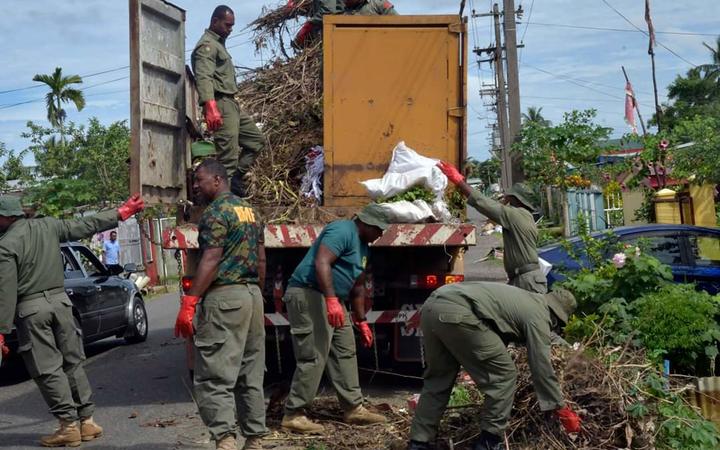
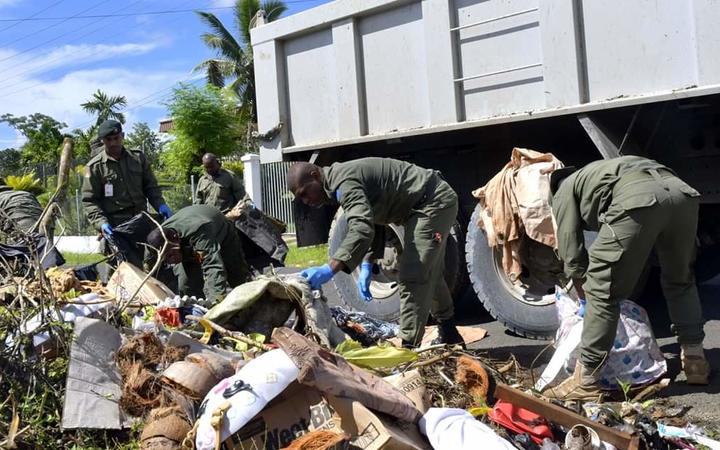
Soldiers help clean up in the capital Suva. Photo: Supplied/Fiji govt
A six-year-old is among 14 people who have died from leptospirosis in Fiji this year.
Health Secretary Dr James Fong said this followed the recent heavy rains and flooding experienced around the country.
He said the remaining 13 deaths involved males aged between 16 and 35 years old.
Fiji recorded 28 new cases of Covid-19 in the community on Thursday – its lowest since this third wave began last November.
The head of Fiji’s Medical Association, Dr Basharat Munshi, is urging the public to boil all drinking water and cover their hands and feet when out in the fields.
“It’s an occupation hazard for farmers, dairy workers and abattoir workers so if you’re a farmer, please wear gumboots and gloves where necessary,” Dr Munshi said.
“If you have any cuts and scratches to cover them up when you go out into the fields.”
Dr Munshi said climate-sensitive diseases such as leptospirosis, dengue fever and typhoid were prevalent during periods of heavy rain and flooding.
Dr Basharat Munshi. Photo: Supplied
It was imperative that members of the public adhere to the health precautions to avoid contracting leptospirosis, Dr Munshi said.
“The symptoms of leptospirosis include fever, muscle pain, headache, red eyes, loss of appetite, nausea, vomiting, dizziness or feeling weak.
“To prevent leptospirosis, people must avoid wading or swimming in flooded waters, wear shoes when walking outside, and keep all food and drink covered and away from rats.”
Dr Fong said 65 of the latest leptospirosis cases were reported in the Central Division, three in the east, 38 in the north and 73 cases recorded in the west.
While leptospirosis case numbers were above expected numbers for this time of the year in the west and central divisions, Dr Fong said there was also an increasing trend noted in the north of the country.
An Emergency Medical Assistance Team (FEMAT) has been deployed to the western interior of Fiji’s main island Viti Levu to address the surge in leptospirosis cases there.
Another team, led by Health Minister Dr Ifereimi Waqainabete is visiting communities on Kadavu Island in Fiji’s east.
Soldiers clear rubbish during the LTDD campaign. Photo: Supplied/Fiji govt
Dr Fong said these areas were difficult to reach and are at risk of a major outbreak of the disease.
“The hospital admission and deaths data indicate that most of the hospital admissions and deaths are in the Western Division,” he said.
“There have been 14 deaths with 12 in the western division, one in the central division and one in the northern division,” Dr Fong said.
“The majority of hospital admissions in the west are from Ba, Nadroga/Navosa, Rakiraki and some parts of Lautoka.
“The majority of admissions in the Central Division have been from Serua/Namosi, Wainibokasi and Tailevu.”
Dr Fong said delays in accessing care had been noted to contribute significantly to those adverse outcomes.
In January last year, Fiji’s Health Ministry announced a leptospirosis outbreak and 10 suspected fatalities.
The Auckland hospital gives rapid antigen tests to everyone who turns up for treatment, even if they do not have symptoms of the coronavirus.
The Middlemore Hospital emergency department. Photo: LDR
Middlemore Hospital head of emergency department Dr Vanessa Thornton told Morning Report that trend had continued over the week, and the hospital expected that.
“It is slowly increasing, but it will be increasing more dramatically over probably the coming weeks, one would think … as predicted in many of the modelling processes that have occurred, and we have our own epidemiologist that looks on a day-to-day basis and we’re expecting the cases to increase across the next few weeks.”
The number of admissions in general was also expected to rise.
“We may have to reduce some other services in order to cope, but we have a plan in place to cope with this surge going up in the next four weeks” – Middlemore Hospital head of emergency department Dr Vanessa Thornton.
“We do have people presenting with cough fever and it exacerbates their underlying condition, if that makes sense, so it makes their underlying comorbidities more obvious, though they would be sicker than you and I would be with the virus.
“There are few people that are still presenting with … pneumonia, or infection and their lungs, but that’s a much, much smaller proportion than happened in the Delta outbreak.
“They are people who are very, very very short of breath, but we had a lot of those people in intensive care in the last outbreak, which was a much different virus than Omicron.”
The situation for staff was challenging, Thornton said.
Dr Vanessa Thornton Photo: RNZ / Dan Cook
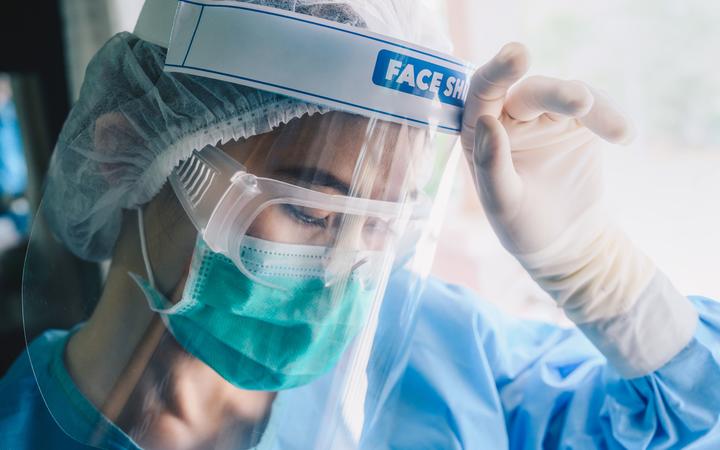
“It’s been challenging for the last two years over this whole period for the staff, from added processes, for example, the PPE you just discussed, and it is very warm in summer … the staff have responded really well to this and had been working very, very hard but it is challenging in this environment.”
As for the wider hospital’s capacity to deal with Omicron, Thornton said: “We have changed all our process to adapt, but it’s challenging. We already had reduced staffing … prior to this and with the illness that’s affecting the community, it obviously affects our workforce as well.
“The challenges in the workforce just add to the pressures from the patients, but Middlemore has been prepared for this.
“We may have to reduce some other services in order to cope, but we have a plan in place to cope with this surge going up in the next four weeks.”
The Ministry of Foreign Affairs and Trade (MFAT) head warns the Ukraine crisis is one of the most significant risks to international peace and security since the end of the Cold War.
MFAT chief executive Chris Seed made the comments to the Parliament’s Foreign Affairs, Defence and Trade Select Committee today.
“We’ve got no doubt that war in Europe of any sort is of no benefit to New Zealand,” he said.
When asked what would happen if sanctions were imposed and Russia retaliated by restricting energy supply, Seed said it would certainly cause disruption, increase oil prices, and affect sharemarkets – all of which would affect New Zealand.
“They’ll wash throughout supply chains, they’ll impact on our ability to trade, we will be in the same boat as any other countries in the world,” he said.
The prime minister has spoken to the president of the European Commission, and Foreign Minister Nanaia Mahuta met with her counterparts in the United Kingom, Australia, Canada, Japan and Ukraine.
Seed said efforts had been made to make a request to speak to the Russian foreign minister.
“We [MFAT] have spoken to the Russian ambassador here, we have sent our colleague ambassador in Moscow, we’ve sent our ambassador from Warsaw to Ukraine,” he said.
“I think there is a clear sense that the situation is of great concern.”
When SARS-CoV-2, the virus that causes COVID-19, infiltrates the body, it typically enters through the nose or mouth, then takes root and begins replicating.
A volunteer receives the second component of the nasal Sputnik V COVID-19 vaccine at Sechenov University Clinical Hospital No 2 in Moscow on Feb. 15, 2022. Artyom Geodakyan/TASS—Getty Images
But what if it could never get a foothold in the upper airways? That’s the promise of nasal COVID-19 vaccines, which are meant to prevent infection by blocking the virus at its point of entry.
In countries like the U.S., where about 76% of people have had at least one dose of the COVID-19 vaccine, nasal vaccines would by default be used primarily as booster shots, and some research teams are studying them specifically in this capacity. But if they’re found to be effective and eventually authorized, they could also give young children and people who fear needles more options.
There’s a long road ahead. While oral vaccines are fairly common, the only nasal vaccine cleared by the U.S. Food and Drug Administration to fight a respiratory pathogen is FluMist, which is used to prevent influenza among people ages 2 to 49. FluMist was in development for decades but was briefly taken off the market due to efficacy issues, which could foreshadow the challenges awaiting vaccine researchers working to create a nasal COVID-19 vaccine.
Still, researchers hope that nasal vaccines may one day do what even the highly effective mRNA vaccines made by Pfizer-BioNTech and Moderna have not: slow transmission enough to bring the pandemic to an end.
Shot-in-the-arm COVID-19 vaccines introduce the body to genetic material from the SARS-CoV-2 virus, teaching the immune system what to do if it’s faced with the real thing. These shots have proven very good at preventing severe disease and death, but less adept at blocking infections—particularly against highly contagious Omicron.
Nasal vaccines could theoretically prevent many infections by conferring “local” immunity where it’s needed most: the nose. If it worked, a spritz would blanket the upper airways with defenses similar to those generated by the body after a brush with the actual virus, says Dr. James Crowe, director of Vanderbilt University Medical Center’s Vaccine Center.
“You get the best immunity to virus pathogens by mimicking, to the greatest extent possible, the actual infection without causing disease,” Crowe says. “Stopping a virus in its tracks, right at the front door, is very attractive.”
If done right, Crowe says, nasal vaccines could be highly effective—but developing them is difficult. They typically use live but weakened forms of a virus, which introduces a “Goldilocks” challenge, Crowe says. Weaken the virus too much and the vaccine won’t work; not enough, and it could overstimulate the immune system, leading to side effects. The balance has to be perfect.https://7cd9edfa3ce1414bf170069917333f85.safeframe.googlesyndication.com/safeframe/1-0-38/html/container.html
The nose is also a very different environment than the deltoid muscle, where shots are typically given. It’s a near-direct line to the brain, which clearly necessitates a different set of precautions, Crowe says.
The upper airways are also built to encounter foreign substances and thus may not respond as readily to a vaccine, says Benjamin Goldman-Israelow, an instructor at the Yale School of Medicine. He co-authored a recent study, which has not yet been peer-reviewed, that examined how mice responded to nasal versus injected COVID-19 vaccines. The research found that mice mounted a stronger immune response when they were injected first and then boosted with a nasal vaccine, as opposed to getting a nasal vaccine alone.
That may be because the upper airways are equipped with natural defenses against invading particles—they’re the body’s entry point for the outside world, after all—and thus do not always respond strongly when first introduced. “By giving that initial priming through the [injected] mRNA vaccine, we educate the immune system, so that by the time we give the intranasal boost, the immune system already knows to recognize this as foreign,” Goldman-Israelow says.
Another rodent study by Yale researchers, published in December, found that mice vaccinated with a nasal flu shot were less likely to catch influenza than those that received an injected vaccine—a finding that may also apply to other respiratory diseases, such as COVID-19. Animal studies from other research teams have also shown promising signs that nasal vaccines may prevent infections, particularly when given as boosters.
Of course, large clinical trials—some of which are underway in other countries—are necessary to know how a product will work in humans. “We cannot draw conclusions about whether a nasal COVID-19 vaccine is going to work or not work until we see the data,” says Dr. Hana Mohammed El Sahly, a professor of virology and microbiology at Baylor College of Medicine.
Nasal vaccines are difficult to get right. In the early 2000s, long before the COVID-19 pandemic, a nasal flu vaccine used in Switzerland was found to be associated with Bell’s palsy, a form of facial paralysis that is typically temporary. By the time that research was published, it was no longer in clinical use.
FluMist, the nasal flu vaccine used in the U.S. and first approved in 2003, hasn’t run into such safety issues, but it was briefly taken off the market due to efficacy problems. The U.S. Centers for Disease Control and Prevention’s vaccine advisory committee did not recommend its use in 2016, citing data that it had been only 3% effective during the prior flu season. A reformulated version of the vaccine returned to market for the 2018-2019 season. In its current form, “it does seem to work, and the data are supportive of its continued use,” El Sahly says.
Still, FluMist is not authorized for people who are 50 and older or younger than 2. It’s also not recommended for immunocompromised individuals and some people who have lung conditions such as asthma. That’s because it contains a live but weakened virus: an effective way to prompt an immune response, but one that can lead to potentially serious side effects in people with underlying conditions.
“It’s a balancing act,” Randall says. “You want the vaccine to be effective, but you don’t want it to really hurt or cause [too much] inflammation.”
Leaps in vaccine science have made it easier, if not easy, to find that balance. The Yale team working on nasal vaccines, for example, created a formula that does not contain an adjuvant (a material often added to vaccines to stoke a stronger response from the immune system) in hopes of reducing side effects. The pandemic also means there’s lots of interest in and money available for developing new vaccine candidates, which hasn’t always been the case.
But creating a vaccine to fight viruses that mutate frequently, like influenza and SARS-CoV-2, will always be challenging. That’s true whether researchers are developing a nasal vaccine or a shot in the arm, Randall says.
“We can ensure that the sequence that we selected is the one that actually ends up in the vaccine,” he says. But there’s no telling whether the sequence in the vaccine will be the one that “Mother Nature throws at us.” Such mismatches explain why the flu shot is far more effective in some years compared to others.
So far, mRNA-based COVID-19 vaccines have held up well against new variants, providing strong protection against severe disease and death. Omicron, however, has been the best variant yet at dodging vaccine-acquired immunity, causing record-shattering numbers of cases and straining the health care system. That underscores the need for a tool that can prevent infections as well as severe disease.
“Really, the goal is to reduce or even eliminate transmission,” says Tianyang Mao, a graduate student at the Yale School of Medicine and co-author of the study on booster nasal vaccines for COVID-19.
Two years into the COVID-19 pandemic, the need is clear. But Yale’s Goldman-Israelow says his team is motivated to create a nasal vaccine not only for this pandemic, but also the next one. Having the technology ready and waiting could significantly strengthen our country’s response the next time a new threat emerges—just as decades of work on mRNA vaccines came to fruition just in time to help with the COVID-19 pandemic.
If nasal vaccines had been available sooner to complement the COVID-19 vaccines we already have, he says, they could have “helped reduce transmission and help prevent the continuation of the pandemic that we’ve seen.”
By Sam Olley of RNZ.co.nz and is republished with permission.
The nurse, who RNZ has agreed not to name, is increasingly worried about the number of patients she’s seeing who are still unvaccinated for Covid-19.
Te Tai Tokerau only reached the 90 percent first dose milestone last week.
The nurse has noticed a growing number of anti-vaccination signs outside properties and when she saw one erected on public land earlier this month, targeting misinformation at children, she intervened.
“There’s this huge billboard, it’s pretty massive and it’s on public land as you’re coming in. It’s quite a threatening sign especially towards kids sort of saying ‘Covid jab kills our kids’. And that sort of set me off.”
She decided to come back to the site under the cover of darkness.
“I phoned up dad. I said, ‘Can you please get the spray paint out ready to go?'”
The way the message had been painted meant she couldn’t “fix” it, the nurse said.
“So I just went all out and spraypainted the whole thing. So I wore like, you know, a massive hoodie and I wore a Shrek … a Shrek mask.”
The nurse said the protests at Parliament highlight why anti-vax billboards should be ousted.
“They think they are a majority but they really aren’t. They need to know that. They’re not working. They’re just going around putting up signs threatening kids… this is not okay. I don’t have kids but …I deal with children all the time.”
She is particularly concerned that anti-vaccination and Covid-19 misinformation signs are, in her view, becoming more noticeable in Northland, than pro-vaccination ones.
“The anti-vax signs are so much more aggressive, in your face,” she said.
“As soon as you hit Kerikeri up north, especially Cooper’s Beach area, [it’s] just filled with anti-vax, the wrong sort of information, complete misinformation.”
She said “there’s not enough” Covid-19 vaccination signs to get accurate information out.
“We need more people out there,” she said.
In a statement, the police said they “would not recommend such behaviour as it could potentially inflame a situation”.
They said the person doing the spraypainting could be liable themselves for their actions, and billboard concerns should be reported to “authorities”.
By Rowan Quinn of RNZ.co.nz and is republished with permission.
A major independent report has found nurses are overworked and exhausted because of consistent understaffing and that patients are not always getting full care.
(File image) Photo: 123RF
The Safe Staffing review was ordered by Health Minister Andrew Little after pressure from nursing unions.
It found hospitals were regularly short of nurses and that has been made worse because of border closures.
The extra pressures from Covid-19 had taken a significant and lasting toll on the wellbeing of nurses and their whānau, the report said.
“If the number of nurses in the workforce are not increased, it is impossible to achieve safe staffing and positive
work environments with the current demand for care,” the report said.
“Nurses will remain overworked and exhausted.”
The report reviewed the safe staffing programme, Care Capacity Demand Management Programme, put in place 16 years ago to try to measure the number of nurses working versus the number needed.
But the report found that not all district health boards had been following it properly.
Eighty-three percent of nurses said patients did not get full care when understaffed.
Half said they suffered poor mental health when their shifts were understaffed and 41 percent said they were asked to take on extra shifts every week.
The union, NZ Nurses Organisation, said the report was vindication for everything they had been saying for years.
But they said the reality on the ground was actually much worse.
Health Ministry Andrew Little blamed the district health boards for not implementing the safe staffing programme and the National government for failing to take it seriously when it came into office in 2009.
“Since we became the government in 2017, we’ve employed an extra 3621 nurses in DHBs, increased nurses’ wages, made it easier for foreign-trained nurses to settle in New Zealand, and we’ve got recruitment programmes under way,” he said.
Little said he agreed there had been a lack of workforce planning for nursing and that the health reforms which ditch DHBs would help to fix that.
“It is critically important that we fix the nursing shortage for the sake of our overworked nurses and to ensure the safety of patients, and our health reforms will make nationwide workforce planning much easier as well as ensuring greater accountability.”
By Eleisha Foon of RNZ.co.nz and is republished with permission.
Despite Pasifika making up about half of the cases in the current Omicron outbreak, community leaders say they’re prepared for what’s to come.
Pasifika immunologist Dr Dianne Sika-Paotonu, of Otago University
But, Pasifika Immunologist Dr Dianne Sika-Paotonu said the actual figure could be much greater, placing further pressure on our health system.
Pasifika people are being told to ready for self-isolation and to help others do the same, after a record number of cases surpassed 1000 yesterday nation wide.
In Canterbury, Tangata Atumotu Trust, general manager, Carmen Collie said they were prepared and ready for what is to come.
Her organisation have been spear-heading mass vaccination events in Christchurch with hundreds of self-isolation packs already handed to families with medical supplies to prepare people for geting omicron.
“Certainly we are prepared in Christchurch, we have been working in preparation for some weeks, if not months. We are working really hard in the boosting space, we are providing them with isolation preparation packs in a number of pacific languages.”
$NZD1.5 million has been made available to Pacific groups across the country, complementing the $2 million announced last year for funding towards boosting vaccine numbers for Pasifika.
Photo: RNZ / Samuel Rillstone
Minister for Pacific Peoples Aupito William Sio said so far more than 100 applications had been received for the first round of funding.
It is expected to help Pacific youth groups, churches and other health organisations get safety messages and life saving information out in at least nine different languages.
He wanted community led initiatives to take charge ahead of the borders opening.
“So far the priorities is to prepare our communities,” he said.
Dr Dianne Sika-Paotonu said boosters, and information must continue to be accessible for our most vulnerable – especially 5-11 year olds.
“So, moving forward we need to ensure that there is an equity focus that reduces barriers but also builds trust for people to ensure they get access to the help, care and services they need. Please get vaccinated, boosted, tested, wear a mask, follow the public health measures and have a plan.”
She said despite Omicron reporting milder symptoms, she asked people take it seriously to slow the spread and to reach out to others to help them do the same.
The Ministry of Health is reporting 1573 new community cases of Covid-19 in New Zealand today.
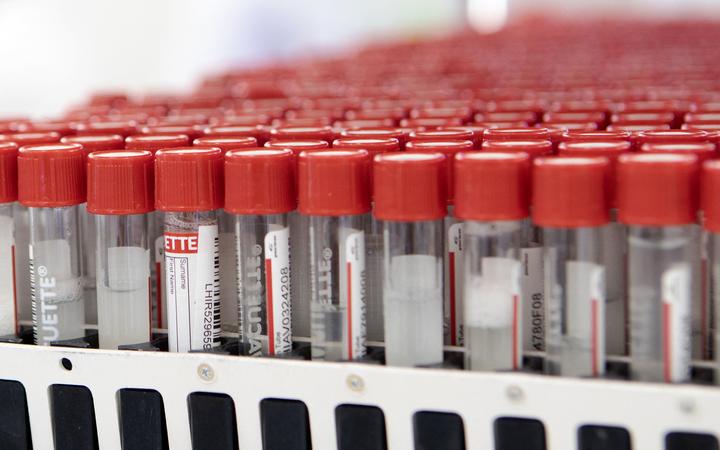
Samples of the coronavirus (Covid-19) PCR test (file image). Photo: AFP
In a statement, the Health Ministry said there were 62 people in hospital with the coronavirus. None are in ICU.
The Ministry said 1140 of the cases are in Auckland, with the others in the Northland (31), Waikato (143), Bay of Plenty (29), Lakes (35), Hawke’s Bay (2), MidCentral (3), Whanganui (11), Taranaki (8), Tairāwhiti (8), Wairarapa (30), Capital and Coast (20), Hutt Valley (22), Nelson Marlborough (49), Canterbury (7) and Southern (35) DHBs.
There were also 15 cases reported at the border today.
The total number of Covid-19 cases in New Zealand since the pandemic began is now 24,660.
There were 40,452 vaccine booster doses given yesterday, including 2320 first doses, 1487 second doses and 1677 paediatric doses.
The Ministry said more than 90 percent of Māori aged 12 years and over in the Hutt Valley have now been fully vaccinated -the fourth DHB area in Aotearoa to reach this milestone.
“Since January 22, when the first Omicron case was detected in the community, double vaccinated cases are ten times less likely to require hospitalisation than unvaccinated cases – 4 percent of unvaccinated cases have required hospitalisation and 0.4 percent of fully vaccinated cases have required hospitalisation.”