Home Blog Page 312

Covid-19 Fiji: 5 deaths, 1,280 new cases amid Cyclone Cody

By RNZ.co.nz and is republished with permission.

Five people have died from Covid-19 in Fiji as health authorities battle a third wave of the coronavirus amid a cyclone that’s bearing down on the nation.

1,280 new cases of Covid-19 were reported last weekend, taking the total number of active cases to 4,429.

Health Secretary James Fong also confirmed the death toll is now 709.

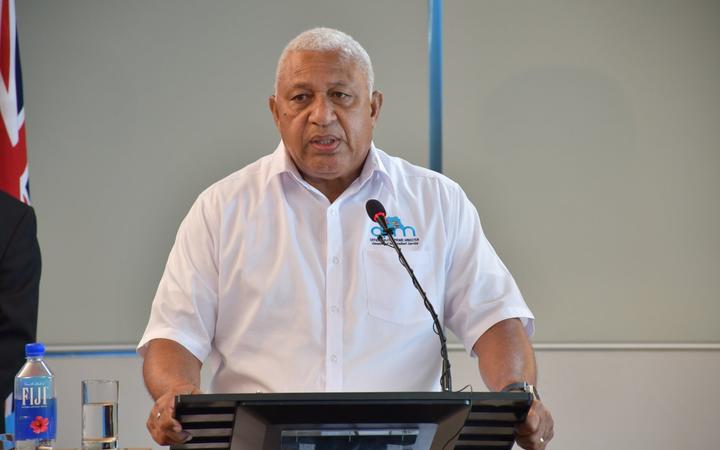
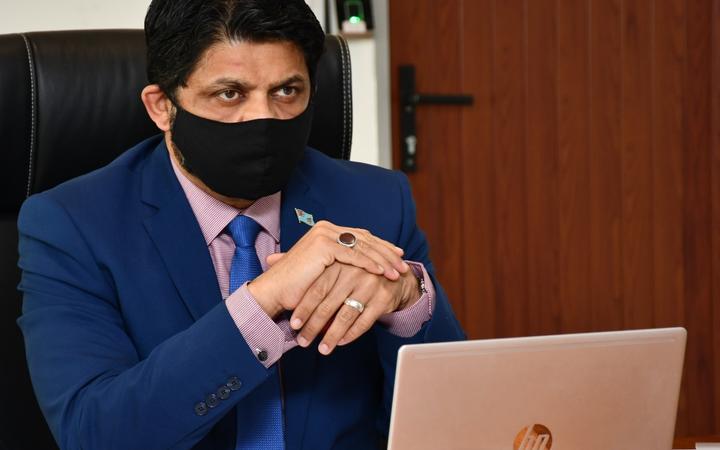
Permanent Secretary of Health, James Fong
Permanent Secretary of Health, James Fong Photo: Fiji Govt

Dr Fong said the five victims all died at home including a 27 year-old man.

Out of the 1,280 new cases, Dr Fong said 348 of them were recorded on 6 January, 320 on 7 January and 612 new cases in the last 24 hours ending at 8am on 5 January.

“Of the 1,280 cases recorded since the last update, 619 cases were recorded in the Central Division; 535 in the Western Division, 114 in the Northern Division and 12 cases in the Eastern Division,” Dr Fong said.

“Overall, there have been 57,187 cases recorded, with 69 percent of the cases from the Central Division, 27 percent from the West, 1 percent from the East and 3 percent from the Northern Division.

“Our national 7- day rolling average is 349 daily cases calculated for 4th January 2022.”

Dr Fong said an 89-year-old woman from Taveuni in the north of the country died on 4 January and had pre-existing medical conditions. She was not vaccinated.

He said a 55-year-old man from Nausori also died on 4 January and had a pre-existing medical condition. He was fully vaccinated.

“A 61-year-old female from Caubati in Nasinu who died on 06/01/22) had multiple pre-existing medical conditions that contributed to her death. She was not vaccinated.

“An 83-year-old female from Suva died on 07/01/2022 and was fully vaccinated.

“The fifth Covid-19 death to report is of a 27-year-old male from Nausori who died on 07/01/2022. He had a significant predisposing medical condition that was assessed by the attending doctors to have contributed to his death. He was fully vaccinated.”

Flood waters in Sigatoka Village closes roads.
Flood waters in Sigatoka Village closes roads. Photo: Twitter / Fiji Roads Authority

Dr Fong said there were 636 other Covid-19 patients who had died from serious medical conditions they had before they contracted the virus. “These are not classified as Covid deaths.”

There have been 772 tests reported for 7 January, Dr Fong said, with the average daily test of 855 per day or 1.0 test per 1,000 population.

He said the national seven-day average daily test positivity is 41.4 percent.

“The high positivity rate is an indication of widespread community transmission and that the cases reported are a significant underestimate of actual numbers.

“As we continue to record new cases of Covid-19 throughout the country, the public is reminded of the need to maintain public health and social measures that are helping in suppressing the transmission of the virus in our communities so that hospitalization numbers remain low.”

There are 162 Covid-19 patients in hospital in serious condition, Dr Fong said.

“When a large number of people get infected within a shorter period of time, even a smaller percentage of people becoming severely ill may still mean a large number requiring hospitalization, which will put pressure on our health system.

“The public is also reminded that for now, we are prioritizing our testing to individuals at higher risk of severe disease to ensure that they are assessed early, referred to an appropriate health care facility, and managed promptly if their symptoms deteriorate.”

Fiji has had 57,187 Covid-19 cases since March 2020, Dr Fong said with 92.4 percent of the adult population fully vaccinated. Just over 40,000 of children aged 12-17 had also received both doses of the vaccine.

Novak Djokovic wins court battle, free to play in Australian Open

By rnz.co.nz and is republished with permission.

An Australian court says tennis player Novak Djokovic who has been held in an immigration detention hotel since Thursday will be released and will be able to play in the Australian Open.

(FILES) In this file photo taken on February 21, 2021, Serbia's Novak Djokovic reacts after a point against Russia's Daniil Medvedev during their men's singles final match on day fourteen of the Australian Open tennis tournament in Melbourne.
Novak Djokovic’s case has been closely followed around the world, sparking heated debate over national vaccination mandates. Photo: AFP

Djokovic’s passport has been returned to him and the government will be responsible for paying his legal costs, the Federal Circuit Court has ruled.

Counsel for the Commonwealth Christopher Tran told the court that following the decision, the Minister for Immigration and Citizenship may exercise his discretion to cancel Djokovic’s visa regardless.

Judge Anthony Kelly said he is “very concerned” about that potential outcome.

He said that if the visa is cancelled by personal exercise of power, Djokovic will not be able to enter Australia for three years.

“The stakes have risen, rather than receded,” Judge Kelly said.

Former prime minister Kevin Rudd accused current leader Scott Morrison’s centre-right coalition government of bungling the situation.

“Total incompetence! If they seriously didn’t want him, why on earth did they give him a visa to fly here?” Rudd said. “This was conceived as one giant distraction strategy when out in the real world people can’t get tested.”

There was jubilation among the Serbian-Australian community outside the court when the ruling was announced.

News of his release was greeted with noisy celebrations of drum beating and dancing.

Some 100 supporters of the tennis star have been camped outside the court during the hearing. Before this, they spent days outside the hotel where Djokovic was believed to be staying during his detention.

MELBOURNE, AUSTRALIA - JANUARY 10: People celebrate after Australian court quashes visa cancellation for Novak Djokovic on January 10, 2022 in Melbourne, Australia.
Serbian fans in Melbourne react to the judge’s ruling. Photo: AFP

Earlier today the judge hearing Djokovic’s legal challenge to the Australian government’s decision to revoke his entry visa raised concerns about the Serbian’s treatment after he was detained on arrival.

Judge Kelly said it appeared Djokovic had received the required medical exemption from Covid-19 vaccination before he travelled to Melbourne for the Australian Open tennis tournament and presented evidence of that when he landed on Wednesday evening.

“The point that I am somewhat agitated about is what more could this man have done?” Kelly said as Djokovic’s lawyers outlined their case challenging the government’s decision to revoke his visa.

Djokovic’s plight has been closely followed around the world, creating political tensions between Belgrade and Canberra and sparking heated debate over national vaccination mandates.

At risk is the world number one’s shot at winning a record 21st Grand Slam at the Australian Open, the year’s first major, which starts in Melbourne on 17 January.

Djokovic, 34, has been held in an immigration detention hotel alongside long-term asylum seeker detainees since Thursday. He was permitted to attend his lawyers’ chambers for the virtual hearings but has not been seen in public since he arrived in Australia.

His lawyers argue that a recent Covid-19 infection qualified Djokovic for the medical exemption from a requirement for non-Australian citizens entering the country to be double vaccinated.

The Australian government, however, says non-citizens had no right of guaranteed entry to Australia, questioned his claimed exemption and stressed that even if Djokovic wins the court action, it reserved the right to detain him again and remove him from the country.

Exchanges between Kelly and Djokovic’s lawyer Nicholas Wood revealed officials made the player switch off his phone from midnight to around 7.42am local time, when the decision to cancel his visa was made.

Officials also reneged on an agreement to give Djokovic until 8.30am to speak to tournament organiser Tennis Australia and lawyers, the judge said. Djokovic was instead woken up by officials at around 6.00am after a brief rest and pressured to respond “because it was better for him if they made the decision right away”, according to his lawyer.

Wood said Djokovic had provided evidence to support his claim for exemption both before boarding his flight and on arrival, despite not being required to do so.

‘Living like an animal’

A group of supporters gathered outside the Federal Circuit and Family Court today, even though the hearing was held virtually because of the Omicron outbreak in Australia.

Access to the day’s hearings was plagued by technical issues that repeatedly crashed the public live-stream.

Many of the supporters outside court, some waving the Serbian flag, held hands and sang as they danced in a circle.

“He has been living like an animal in a human zoo,” said one supporter, Petar Nikolic. “What is happening here is unAustralian. It is politics and definitely racist.”

In Belgrade, Djokovic’s father addressed a small protest in front of Serbia’s parliament building on Sunday, also accusing officials of treating his son, and all Serbians, like animals.

However, popular opinion in Australia, where more than 90 percent of the adult population is fully vaccinated, has been largely against the tennis player, particularly in Melbourne, which experienced the world’s longest cumulative lockdown.

The country’s Covid-19 cases surpassed 1 million on Monday, with more than half of them recorded in the past week, driving up hospitalisation numbers and putting a strain on supply chains.

Tested positive

The saga kicked off when Djokovic posted a photo of himself leaning on his luggage on Instagram last Tuesday, telling the world he was headed to Australia to compete in the Open with a vaccination exemption.

A long-term vocal opponent of mandatory vaccination, Djokovic had never revealed his vaccination status but court documents confirmed he has not been inoculated.

French newspaper L’Equipe published a photograph of Djokovic taken when he was named the daily’s Champion of Champions in the days after he said in a court filing he had tested positive for coronavirus, 16 December.

Other photographs published on social media showed him appearing at functions in Serbia on dates soon after that test.

It was not clear if Djokovic knew of his positive test at the time of the events shown in the pictures.

Tennis Australia chief executive Craig Tiley said in his first media interview since the furore began that his organisation had spoken with federal and state officials for months to ensure the safe passage of players.

Czech player Renata Voracova who was detained in the same detention hotel as Djokovic and had her visa revoked after issues with her vaccine exemption, left the country without challenging her status, the Czech Foreign Ministry said.

– Reuters / ABC

US child sex abuse deportee’s Tonga land suit dismissed

A Supreme Court judge in Tonga has dismissed a lawsuit by a man who demanded his land in Ha’akame, Tongatapu back after he was deported from the USA in 2020.

La’ie Oahu Toutai, 61, took the defendants, ‘Ōniki and ‘Ēseta Save to court after they repeatedly declined his requests to vacate his allotment.

Court document showed Toutai became the lawful holder of the town allotment named Talifolau on 23 October 1987 before it was lawfully registered under his name on 4 June 2015.

He however went to the U.S in 1988 and did not return to Tonga until February 2020. When he left in 1988, the allotment was left in the care of his mother, Mele’ofa. Mele’ofa later left for Australia.

In 1998, Mele’ofa returned to Tonga and her cousin ‘Eseta and her husband ‘Oniki and their three children came to visit her. Mele’ofa offered the allotment to them and ‘Eseta accepted it.

“Mele’ofa then told them that they could have the allotment as theirs because La’ie, the plaintiff, would not return to Tonga”.

Saves argue they owned the land

The Saves argued in court that they “have an equitable right to possess and occupy the allotment, and or alternatively, the plaintiff is estopped from evicting them from the allotment”.

In his ruling in favour of the Saves, Justice Niu said he was confident Toutai was well aware of the defendants occupying his land and keeping it as theirs.

“I also find as a fact that the defendants believed that the allotment was theirs, and that they built on it and lived on it in a substantial way as far as their  means and circumstances could afford because they believed it was theirs.

“They built on it permanently and extended it substantially.

“On those facts, I consider that the equity defence of estoppel applies.

“I therefore come to the conclusion that the defence of estoppel of the defendants succeeds”.

Deportation

Toutai told the court he “was deported from the US for “abusing his children”.

In November 2013, The Herald Journal, Utah, reported that a man by the name Laie Toutai pleaded guilty to two counts of attempted aggravated sexual abuse of a child in Utah, USA,

Toutai, who was 52 at the time, was arrested in September after a teen girl told police he had sexually abused her, reported the Herald.

Toutai was charged in 1st District Court with 15 counts of aggravated sexual abuse of a child, a first-degree felony offense.

He agreed to a negotiated plea settlement in which he pleaded guilty to two of the 15 counts.

In 2014 Toutai was ordered to spend three years to life in the Utah State Prison.

Anti-vaccination doctor Jonie Girouard can no longer practise in New Zealand

By RNZ.co.nz and is republished with permission.

A Kaiapoi doctor caught handing out fake vaccine exemptions is no longer registered to practise medicine in New Zealand.

Dr Jonie Girouard.
A screengrab of Dr Jonie Girouard. ​ Photo: A screengrab from Newshub

Footage of Jonie Girouard​ issuing bogus exemptions and coaching people on how to use them sparked an investigation into the North Canterbury GP in December.

Medical Council chairperson Curtis Walker said Dr Girouard​ was now unable to practise medicine in New Zealand, as she was no longer registered.

“Council takes these matters very seriously and our concern is demonstrated by the publication of our recent guidance emphasising council’s view that there is no place for anti-vaccination messages in professional practice, nor any promotion of anti-vaccination claims, including on social media and advertising by health practitioners,” Walker said.

“The council steps in as early as possible when a notification is made, or information comes to light to put in place any necessary arrangements to make sure patients are kept safe.”

Walker said privacy concerns limited the council commenting on individual practitioners.

“The Medical Council thanks the thousands of doctors who are contributing to New Zealand’s pandemic response. ”

In December the council suspended the practising certificates of three doctors as it investigated claims they had shared Covid-19 misinformation.

Dr Peter Canaday, Dr Emanuel Garcia, and Dr Matthew Shelton are unable to practise, but have appealed the council’s decision to the District Court.

The trio’s appeal is scheduled to take place next month.

The same month, Walker said the Medical Council had begun gathering information “with urgency” once the footage of Girouard​ aired on Newshub.

At the time, he said the council followed a process of natural justice and would be discussing the matter with her.

GPs could not provide vaccine exemptions and the only way to get one was via the Ministry of Health through the Director-General of Health, Walker said.

Hailing from the United States, Dr Girouard and her husband, Michael, have both worked as doctors for over 20 years, including as missionaries in Ecuador and Africa.

FAKAMATALA FAKATONGA

Kuo ‘ikai toe tali ke toketā ‘I Nu’u Sila’ ni ‘a Jonie Girouard hili ‘eni hano ma’u ‘ene foaki ha paasi koviti loi ke ngāue’aki ‘e he kakai ne nau ‘ahia hono kilīniki’. Na’a’ ne toe ako’I kinautolu ko ‘eni ne ‘ikai ke nau fie huhu pe fakafepaki’I ‘a e huhu malu’I Koviti ki he anga hono ngāue’aki ‘a e paasi loi ko ‘eni ka ‘eke. Ka ne ‘ikai ke ne lave ‘iloa ne faitaa’I fakafufū ‘ene ngaahi nga’unu ko ‘eni’ he loto kilīniki’  ‘e he me’afaitā ‘a e kautaha ongoongo Newshub ‘a Nu’u Sila ni’.

Afā shooting victim’s angry mum shares disappointment on social media

The mother of a man who was allegedly shot in Afā, Tongatapu over the weekend has lashed out at his son’s attacker and his family warning them to wait until police investigation was over.

Grieving mum wanted to keep the peace. Photo/Screenshot

The furious mother appeared to have been devastated by allegations posted to Facebook by the alleged attacker’s relatives regarding his son after the shootings.

Kaniva understands two young men were injured after the shootings on Saturday night.

It appears that the incident was a result of previous disputes between groups of people from Afā and Niutōua.

The enraged mum’s live clip was posted to Youtube this morning. She said the condition of his son and what had happened to him was so hard to bear.

She said she and her family were struggling to keep the peace.

Police have yet to release any information about the shooting on their official Facebook page.

Po’oi Pōhiva clarifies late PM ‘Akilisi Pōhiva’s medical treatment costs in New Zealand

The son of late Opposition Leader and Prime Minister ‘Akilisi Pōhiva said his father’s costs after he died in an Auckland hospital were paid by the Tongan Government.

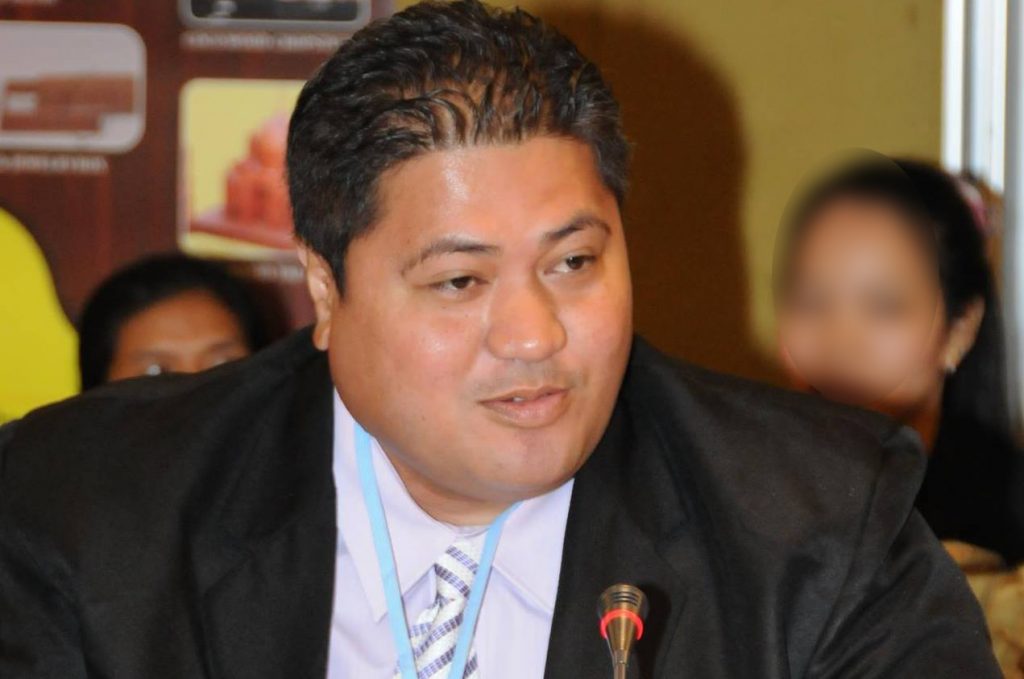
Siosiua Po’oi Pohiva. File photo

He said ‘Akilisi’s medical treatment in Auckland while being the Prime Minister were also paid by the Government.

Po’oi, who was also ‘Akilisi’s personal secretary at the time, said that was the “privilege” to which his father was entitled as Prime Minister.

Po’oi made the clarification after we reported earlier this week that Tonga’s Minister of Agriculture, Food and Forests Viliami Hingano’s arrival in Auckland for medical tests has divided the online community.

Many were shocked after they learnt the Minister’s medical conditions appeared to have reached a state where it required special assistance in New Zealand before he was elected to Parliament, but that this was not revealed to his voters.

As we reported, Hon. Hingano was elected in the November 18 general election and was appointed to the Ministry by Prime Minister Siaosi Sovaleni on December 29, before apparently flying to Auckland the next day.

His medical assistance and travel to Auckland was approved by the former government in his capacity as the governor of Ha’apai.

Po’oi said the fact that Hingano was sent to Auckland for medical assistance before Parliament officially opened was “an issue”.

He believed that if Hingano’s constituency had known before the election the Minister was expected to seek overseas medical assistance, they might not have voted him in.

“He has yet to sweat over doing his job for which he was awarded his entitlement for medical treatment,” Po’oi said in Tongan.

Medical treatment costs package

The government’s overseas medical treatment policy covers all members of the royal family, the Prime Minister, all Cabinet Ministers, Members of Parliament, senior officials and all public servants.

Their entitlements are categorised into various groups with the royals allowed to travel overseas on medical ground with members of their family and staff. The government only pays for the Prime Minister and the Cabinet Ministers if they are sent overseas for treatment. The government can pay for their wives if they are required to take care of them. There is also a different package for chief executive officers and all civil servants which are also covered by insurance policies.

A doctor in Tonga must approve any patient to be sent to New Zealand or Australia for medical treatment if their conditions cannot be treated in Tonga.

Minister of Agriculture, Food and Forests Viliami Manuopangai Hingano

The government pays for all travel costs, accommodation and the medical treatment in the overseas country. The patients are also entitled to receiving their full pay according to pay rules which are set for each category package.

‘Akilisi’s payments

In our report earlier this week, we said ‘Akilisi paid for his travel and accommodation expenses. We did not mention who paid for his medical treatments.

Since ‘Akilisi normally paid for his flight and accommodation costs we also asked Po’oi to confirm whether ‘Akilisi still paid these costs when he was last sent to Auckland hospital before he died in 2019. Po’oi has yet to respond.

Our report on ‘Akilisi’s paying his accommodation and flight costs was based on several interviews with ‘Akilisi when he visited New Zealand for medical check-ups.

In April 2015 we published a story titled “Prime Minister pays for family to travel with him on medical trip to Auckland”

In that story we said: “Tonga’s Prime Minister ‘Akilisi Pohiva told Kaniva News in Auckland he paid for three family members to accompany him to Auckland, where he has received medical care”.

We reported that ‘Akilisi also paid for their stay in ‘Atalanga, the Tongan government’s residence in Epsom, Auckland”.

We also reported that “the Tongan consul at ‘Atalanga, Stafford ‘Aho, confirmed to Kaniva News the Prime Minister paid the rent for all bookings  the consulate has made for him including the house in ‘Atalanga while he was in New Zealand”.

In February 2018, we reported a story titled “Tonga treatment saved thousands; PM thanks Princess Mata’aho for visit”.

In that story we reported that ‘Akilisi’s “decision to be treated in Tonga rather than New Zealand saved thousands of pa’anga of taxpayers’ money, a government spokesperson said”.

The spokesperson “said the government would have spent more than $100,000 if it had hired a medical aircraft to fly the Prime Minister to New Zealand”.

Covid-19 Fiji: 2 deaths, 372 new cases in the community

By RNZ.co.nz and is republished with permission.

Fiji has reported two deaths and 372 new cases of Covid-19 in the community.

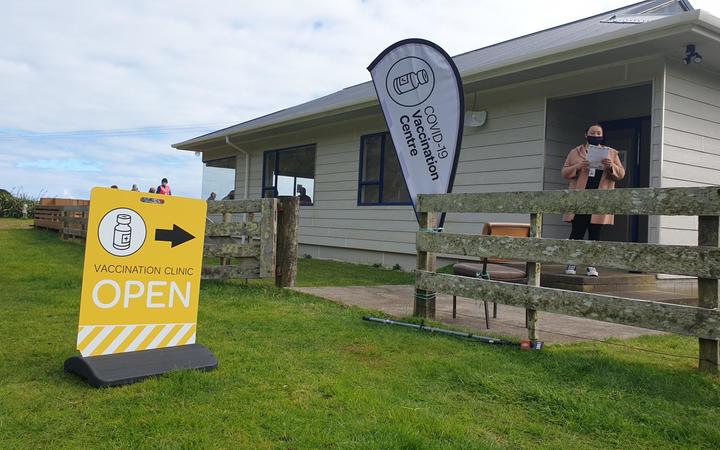
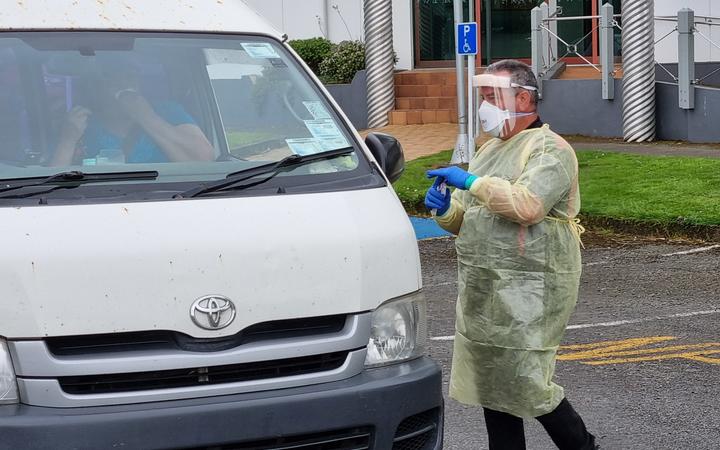
Front-line workers at the swab drive-through in Vunimono, Nausori.
Front-line workers at the swab drive-through in Vunimono, Nausori. Photo: Ministry of Health, Fiji

This brings the total number of active cases in isolation are 3,009.

The Government also confirmed on Wednesday that 113 patients are in hospital.

The two victims included a 75-year-old man from Suva and a 56-year-old woman from Tailevu who both died at home.

Health Secretary James Fong said the man had died on December 31st with significant pre-existing medical conditions that also contributed to his death.

“He received his first dose of the Covid-19 vaccine in mid July and his second dose mid-September.

“The second Covid-19 death is a 56-year-old woman from Korovou in Tailevu who died on January 1st in respiratory distress.

“She had multiple pre-existing medical conditions that also contributed to her death. She had received only one dose of the Covid-19 vaccine.”

Dr Fong said 92.2 percent of Fiji’s adult population were fully vaccinated against Covid-19 while 40,297 children aged 12-17 had also received both doses of the vaccine.

MAFF Minister’s Auckland medical assistance approved by former gov’t after CT scanner stopped working, says gov’t spokesperson

The Minister of Agriculture, Food and Forests, Viliami Hingano  is currently in New Zealand for medical tests after the Vaiola hospital’s computerised tomography (CT) scanner stopped working, a government spokesperson has told Kaniva News.

Hon Viliami Manuopangai HIngano

The former government approved his travel last year in his capacity as the Ha’apai governor, he said.

The Minister’s flight to New Zealand was repeatedly postponed by Tonga’s current volcanic eruptions which started in December last year.

“It was important for him to be taken overseas and get his scan done so that his condition could be identified before he was given the right medical treatment,” the spokesperson said in Tongan.

The spokesperson was responding after Kaniva News wanted to confirm that the Minister was in Auckland for medical treatment.

We reported this week that Hingano’s family had sent him love and supports after a photo of him and a cousin was shared to Facebook last week.

The family urged Hingano to be courageous and prayed that God would help him through the doctors here in New Zealand.

The former governor of Ha’apai was elected as MP for Ha’apai 12 on November 18, and appointed by Prime Minister Siaosi Sovaleni on December 29, before he left for Auckland.

Medical issues divide community

Our report earlier this week about Hingano has divided the Tongan online community.

Some were surprised to find out that instead of the Minister being expected to meet his staff as the first thing he should do after his appointment he was sent overseas for medical assistance.

Some criticised the Prime Minister for appointing someone who appeared to be a burden on taxpayers.

Some stood by the fact the Minister’s travel and all costs incurred by his medical needs must be paid by the government because it was his ministerial entitlement.

Others believed it was time to review the overseas medical treatment policy. Many suggested that all candidates who ran for Parliament must show evidence they were healthy and did not suffer from any chronic disease that would be a financial burden for the country.

Some raised the fact that the policy only applied to government senior officers, leaders and the royals. Commoners who become chronically ill can only be treated in Tonga with the limited medical resources and doctors available at the  Vaiola hospital.

History of treatment

Most of the public servants, politicians and the royals who have been sent overseas on medical grounds suffered from conditions that were serious and could not be treated in Tonga.

While many were fortunate to be cured in New Zealand or Australia and returned home, some did not.

Two recent former Deputy Prime Ministers Lord Ma’afu and Sione Vuna Fā’otusia were treated in New Zealand, but eventually died from their sicknesses.

A fierce online furore erupted in 2019 after the government hired an air ambulance which airlifted Lord Fusitu’a to a hospital in New Zealand.

At the time, those who opposed the overseas medical policy protested on Facebook, rejecting the payment of costs from taxpayers’ money.

The king’s noble was still in New Zealand and it appeared that he was still receiving medical assistance for his illness.

Former MPs medical expenses

Former Prime Minister Lord Tu’ivakanō was regularly sent to New Zealand for checkups after he suffered a minor stroke while in New York attending the United Nations General Assembly in 2013.

His medical expenses and flights were paid from taxpayers’ money.

The government also sent former Prime Minister Pōhiva Tu’ionetoa to Australia for medical treatment after having an injury while being an MP. He received spinal surgery at the St George Private Hospital in Sydney.

Kaniva News understands a former Prime Minister, who was wheelchair-bound, died after being sick and spending about a year or more in an Auckland hospital. While he was in New Zealand all his expenses, including the staff looking after him, were paid from taxpayers’ money.

A former Minister of Police was flown to New Zealand on a medical flight while he was seriously ill, but died during the flight. All expenses were paid from the taxpayers’ coffers.

Late Opposition Leader and Prime Minister ‘Akilisi Pōhiva was also sent to Auckland for medical treatment a couple of times during his tenure. He later died in an Auckland hospital.

However, he paid for his travel and accommodation expenses in New Zealand with his own money.

FAKAMATALA NOUNOU FAKATONGA

‘Oku lolotonga ‘i Nu’u Sila ‘a e Minisitā Ngoue’ hili ia hano tali ke fakafolau fakafalemahaki mai ‘e he pule’anga ‘o Tu’i’onetoa’ makatu’unga he totonu fakapa’anga mo vāhenga ne ma’u ‘e Viliami Manuopangai Hingano tu’unga ‘i hono lakanga ko Kōvana Ha’apai’. Na’e tautoloi ‘ene folau mai’ tu’unga he puna ‘a e mo’ungaafi ‘i Tonga’ ‘o ne uesia ‘a e fefolau’aki fakavaha’apule’anga’. Pehē mei he pule’anga’ ‘o Sovaleni’ ‘oku lolotonga maumau ‘a e mīsini sikena CT ‘a Vaiola ‘oku’ ne fai ‘a hono faka’ata kakato ‘o e sino’ ke ‘ilo ai ha alangamahaki ke faito’o. Ko e tupu’anga ia e folau mai ‘a Hingano’ ke faka’ata ‘i Nu’u Sila’ ni kae lava ke fakapapau’i ‘a e faito’o totonu ke fai kiate ia.

Covid-19 update: 35 new community cases, 24 in MIQ in New Zealand today

By RNZ.co.nz and is republished with permission.

There are 35 new cases of Covid-19 in the community and 24 cases in managed isolation, the Ministry of Health has reported.

In a statement, the Health Ministry said the 35 new community cases are in Auckland (18), Waikato (1), Bay of Plenty (13), Rotorua (2) and Taupō (1).

There are now 37 people with the coronavirus in hospital, including three in intensive care.

At the Ministry’s last update yesterday, there were 19 new community cases and 43 new cases of the virus in MIQ.

More to come…

Prisoner should appeal case says New Zealand-based lawyer; argues law prohibits double sentencing decisions

New Zealand-based Tongan lawyer Nalesoni Tupou believes the prisoner who was jailed for two and a half years by Acting Chief Justice Lord Afeaki should appeal the decision.

Lord Afeaki. Photo/Facebook (Afeaki Chambers)

Tupou said the judge had made two decisions regarding Siu’ivahanoa Tu’ipulotu’s sentence and claimed this was not allowed by law.

Lord Afeaki, who appears to have been judging one of his first court cases in the Supreme Court, sentenced Tu’ipulotu on November 18.

Suspension & removal

He suspended the final nine months of Tu’ipulotu’s sentencing for a period of two years from the date of his release from prison. The decision, along with other conditions for Tu’ipulotu to follow as part of his sentencing, was published by the Attorney General’s Office on November 18.

Another decision was uploaded later on the same day for the same prisoner, but this time, the suspension was removed. There were also minor changes in this second decision to the wording of the original decision.

The varied version was marked as “Corrigendum” or correction and was filed at the website as the third document relating to  the sentencing of the same prisoner on November 18. It showed the Attorney General Office’s stamp and an initial on November 22.

“Pursuant to the order of the Court dated 22 November 2021, the following sentencing remarks are to replace those issued on 18 November 202i”, the Corrigendum read.

Unexplained corrections

There is nothing on the website to describe why the corrections were made to Lord Afeaki’s decision.

Lawyer Nalesoni Tupou. Photo/Tnews

Lawyer Tupou said in Tongan the law did not allow two separate decisions in sentencing.

He said the case should be appealed.

“A court cannot give two different sentences in one particular sentencing of a case,” Tupou said.

“Courts are to give only one decision of sentencing not two different sentencing.”

The prisoner had no legal counsel and represented himself in court.

NZ corrigendum explained

Normally, a corrigendum can only be issued to correct minor clerical mistakes which do not alter the decision, according to various sources.

It is normal in New Zealand for judges to correct their decision or sentencing if there are typos, but they have to explain why the corrections were made.

For example, there was a corrigendum in New Zealand when its Environment Court  corrected a decision it made on October 21, 2021.

In its correction Justice Borthwick said: “Following the release of the decision Otago Regional Council [2021] NZEnvC 164 it has come to my attention that para [384] contains an error”.

After explaining the error in few sentences she then mentioned the law which allowed the correction to be made and said:

“Outcome [6] The error identified in para [384] of decision [2021] NZEnvC 164 is an “accidental slip or omission” that is able to be corrected using the court’s powers under rule 11.10 District Court Rules 2014″.

Hon Borthwick also said: “Paragraph [384] is amended to read: Our findings in relation to the operative regional plan and its unresponsiveness to freshwater management at paragraphs [318]-[321]423 and elsewhere in this decision, apply here. [8] Decision [2021] NZEnvC 164 otherwise remains unchanged”.

Lord Afeaki was the subject of a complaint to the king by senior lawyers in Tonga immediately after he was appointed to fill the gap of the Acting Chief Justice after Lord Chief Justice Michael Whitten went to Australia for holidays.

The lawyers questioned Lord Afeaki’s experience and legal background and expressed doubt that he was the right person for the position.

As we reported previously, the king appeared to have ignored the lawyers’ complaint.

Lord Afeaki was listed in the Find Law New Zealand website as being specialised in Administrative Law, Commercial Law, Company Law, Human Rights, Litigation, Maori Law, Maritime and Mediation. He described himself in a video clip posted on his Facebook page as a barrister with more than 25 years of experience.