Home Blog Page 319

Second day of Tonga fundraiser in Auckland today

By RNZ.co.nz and is republished with permission.
No caption
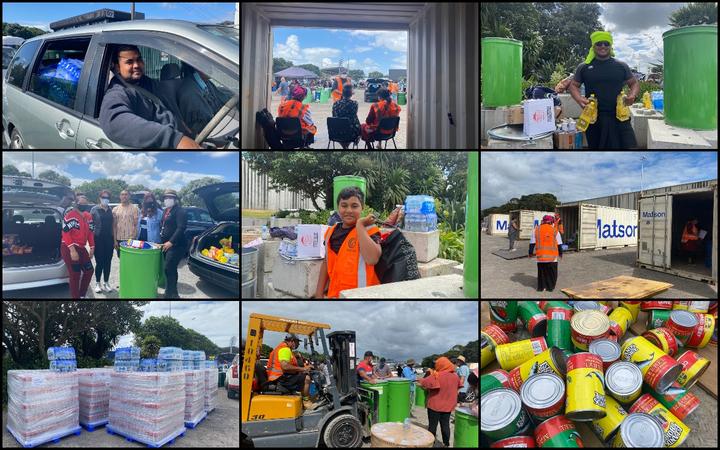
Photo: RNZ/ Lydia Lewis

The second day of a drive to receive emergency supplies to be sent to Tonga starts in Auckland at 9am this morning.

Hundreds queued for hours at Mount Smart Stadium in Penrose yesterday to deliver emergency goods that will be sent to their families in Tonga.

Almost six shipping containers were filled yesterday and organisers say at one point queues of more than 400 hundred cars stretched three kilometres.

Aotearoa Tonga relief committee secretary Pakilau Manase Lua said it’s been heartening to see the support and today is expected to see an even bigger turn out.

He said only vaccinated people can enter the stadium but donations from unvaccinated people can be dropped off at the stadium gates from 9am to 8pm.

Mepa Vuni said it was a long wait yesterday and many people had taken the day off work to make their deliveries for Tonga to the stadium.

“I haven’t spoken to my Mum since the eruption on Saturday. We are all doing this for the time being. We have been queing here for more than two hours. People have been queuing since 7 o’clock,” she said last evening.

Pasifika doctors ready

The Pasifika Medical Association is ready to mobilise the necessary support for Tonga, following the devastating volcanic eruption and tsunami.

PMA’s Medical Assistance Team is ready to send an experienced and specialized team of doctors, nurses and technical support workers.

The medical team has previously been deployed to Tonga to help with the measles outbreak and Cyclone Gita.

PMA chief executive Debbie Sorensen said they are prepared and are on standby.

She said the volcanic ash is a major concern for people with asthma or respiratory conditions, who will require extra health assistance.

Concerns about Covid threat from emergency response

Tonga’s Minister of Trade and Economic Development is reassuring the public there is minimal threat of Covid-19 being imported into the kingdom via the international emergency response to last week’s volcanic eruption and tsunami.

Emergency assistance from the international community is ramping up with navy vessels and flights arriving into the kingdom from Australia, New Zealand and other countries.

Tonga has had a strict border closure in place since the start of the pandemic and has so far had no community transmission of Covid.

Ulu’alo Po’uhila the editor and publisher of Tongan newspaper, Kakalu O Tonga, is in New Zealand and said he managed to speak with minister Viliame Latu and put to him concerns raised by the public about Covid-19 protocols around the international relief effort.

“I was asking because there is a concern throug these [emergency] aid and these people going to Tonga it might take the virus, Covid virus, to Tonga. And I was told that they, all they do is just, it is a contact-less delivery,” he said.
Nomuka family say home likely unliveable for return to Tonga

By RNZ.co.nz and is republished with permission

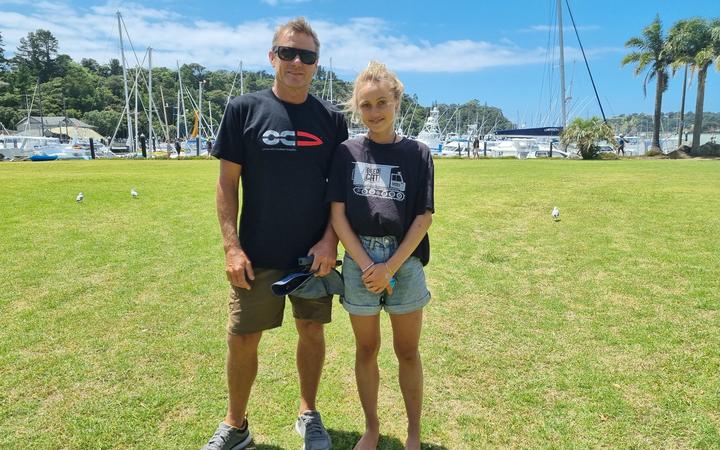
A family from Nomuka expect their home will be unliveable when they return from New Zealand.

Dave and Dior Sheen live in one of the closest homes to the Hunga Tonga-Hunga Haʻapai volcano, but are in New Zealand on a boat maintenance trip.
Dave and Dior Sheen live in one of the closest homes to the Hunga Tonga-Hunga Haʻapai volcano, but are in New Zealand on a boat maintenance trip. Photo: RNZ/ Sam Olley

The Sheens have been in Northland for the last month, for temporary maintenance on their catamaran, and have not been able to make contact with friends back home in Tonga.

Last weekend’s eruption and tsunami killed a 49-year-old man on Nomuka, and caused extensive damage to the island, where around 400 people live.

Containers of non-perishable foods, water, utensils, batteries and torches from New Zealand donations are destined for Nomuka, as well as Mango, Atata, and Fonoifua islands.

Dior Sheen told RNZ that overhead photos of Nomuka, taken by relief flights, had been “quite shocking and really sad”.

“Photos have shown that our house is either severely damaged or completely destroyed.”

Other buildings were unidentifiable, she said.

“We saw all of our friends’ houses along the foreshore, they were just completely gone. There’s not even a sign in the building anymore.”

The centre of the village also looked “a lot different”.

“The only things left standing really are the churches and the schools, and then the entire island is just grey with ash.”

The Sheens had to move their home inland after major damage from Cyclone Harold last year.

“We’ve kind of spent all of last summer doing that, and it’s such a massive mission to do it all again.”

But Dior Sheen said houses could be replaced, and it was the people and animals she was most worried about.

“We just really hope that they had enough time to even get a couple of hundred metres inland.”

The Sheens sailed to the Hunga Tonga-Hunga Ha’apai volcano and camped there last year.

Meanwhile, divers from the New Zealand Defence Force will continue surveying the harbour in Tonga today.

They will be checking for any damage to the Nuku’alofa wharf, and ensuring no obstacles would stop a ship from entering the harbour.

Commodore Garin Golding said the HMNZS Aotearoa will also keep delivering desperately needed water supplies.

He said the ship will remain there in the coming days, offloading supplies to tankers and other water container systems.

Tonga eruption sets world record for booming heard so far from volcano

By RNZ.co.nz and is republished with permission

Volcanologists estimate the material ejected in the Hunga Tonga-Hunga Ha’apai eruption was about twice that of the Mount St Helens eruption in 1980.

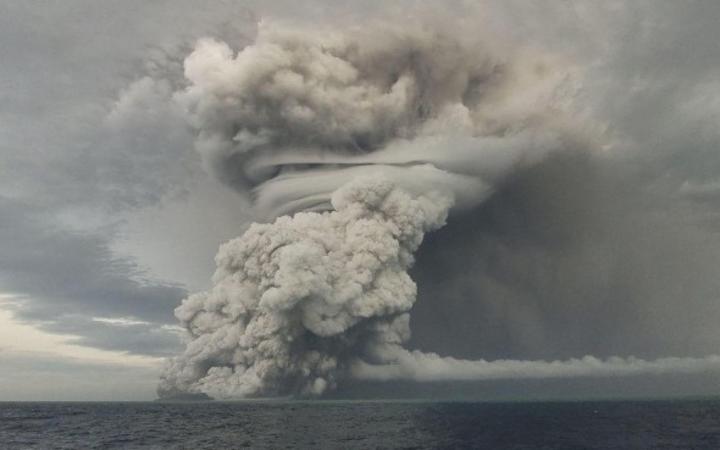
Powerful undersea volcano eruption in Tonga on Friday Jan 14, 2022. The latest eruption of the Hunga Tonga-Hunga Ha'apai volcano came just a few hours after Friday's tsunami warning was lifted.
Hunga Tonga-Hunga Ha’apai erupting on 14 January – the day before an even more violent eruption. Photo: Tonga Geological Services/ EyePress News via AFP

GNS Science says initial assessments indicate that up to one cubic kilometre of material spewed from the Tongan volcano.

The eruption and gas plumes on 15 January rose about 30 kilometres into the sky.

In a statement, GNS Science Duty Vulcanologist Steve Sherburn said this eruption was the largest in the volcano’s current eruptive episode that dates back to 2009. He said it was much more violent than scientists had expected, given the volcano’s smaller eruptions in recent decades.

The atmospheric shockwave travelled around the globe and was picked up on air pressure sensors as far away as Iceland.

Sherburn said the eruption now holds the world record for being heard so far from the volcano.

Audible booming could be heard from New Zealand to the south and Alaska to the north.

“This was due to the low-frequency bass-like booms produced during the eruption that can travel thousands of kilometres away from the source,” Sherburn said.

He said the eruption was rare because it generated tsunami waves that impacted thousands of kilometres away from the volcano.

A volcanic-source tsunami such as this has not been seen since Krakatau erupted in Indonesia in 1883, he said.

Sherburn said the submarine eruption and tsunami is rare but not unprecedented and “scientists have been highlighting the possibility of submarine eruptions as tsunami sources for decades”.

Scientists expect that the volcano will remain active for weeks to months and the international community will continue to keep tabs on the volcano’s activity by monitoring satellite images.

Will Hunga Tonga-Hunga Ha’apai reefs recover post-eruption?

Ecologists are reviewing research on reefs around the Hunga Tonga-Hunga Ha’apai volcano, to see how biodiversity may fare following the latest eruption.

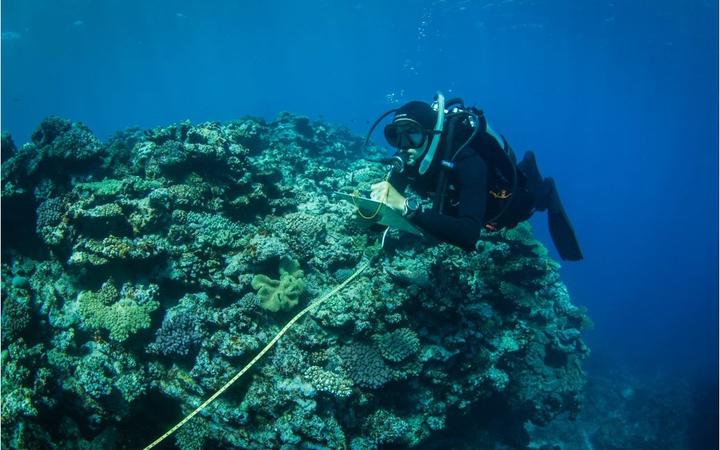
Underwater research at Hunga Tonga-Hunga Ha'apai.
Underwater research at Hunga Tonga-Hunga Ha’apai. Photo: Supplied / Patrick Smallhorn-West

When it erupted from December 2014 to January 2015, water temperatures temporarily changed by up to 5C and masses of ash fell into the sea.

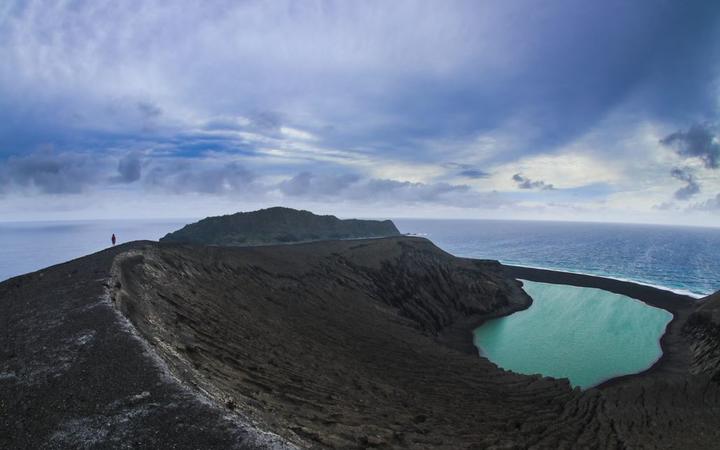
The crater created an 185 hectare landmass – the newest landmass on earth – connecting two islands.

Scientists went there four years later to see if surrounding coral and fish populations survived the explosion.

The research was part of reef ecologist Dr Patrick Smallhorn-West’s PhD.

Seeing the latest eruption had been “surreal”, but Smallhorn-West was optimistic coral populations could recover around the caldera, and said it was just a matter of how fast.

“If some have survived, then you’d probably get decent recovery happening pretty quickly. If the whole thing has been annihilated, then it might be a bit longer … I hope to see actually pretty decent recovery around there, in the next five years or so if there are no further eruptions.”

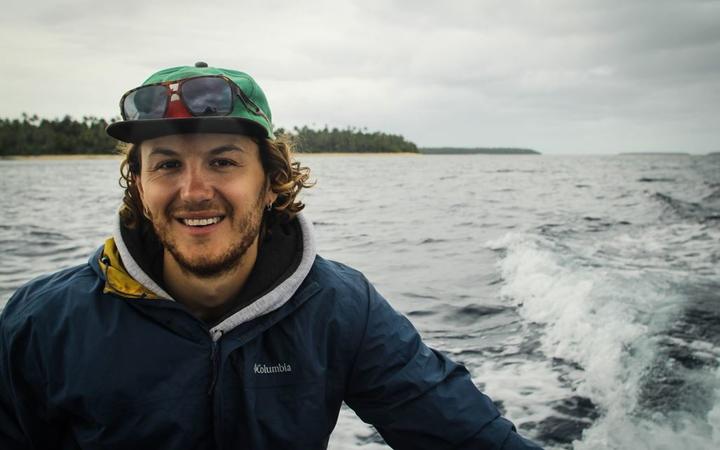
Patrick Smallhorn-West.
Patrick Smallhorn-West. Photo: Supplied / Patrick Smallhorn-West

He and fellow scientists found that after the last eruption “in some places the reefs were completely annihilated, kind of the worst thing that can happen to a reef, it’s like a nuclear bomb”.

But another section “had been completely undisturbed” with “reef growth there that was probably 40 or 50 years old”.

“It was the healthiest we’d seen in the whole country.”

He believed that was due to the reef’s isolation – there is less pollution and fishing – and healthy, older parts of the reef have helped the damaged parts recover quickly.

“There was really high recruitment, lots and lots of coral babies growing back where it had been destroyed. To an extent that was quite surprising, actually. So now with this eruption, the satellite footage is showing some of the reefs that we dove on in 2018 look like they’re actually out of the water now or just gone,” Smallhorn-West said.

“So those ones probably don’t have a good chance, but the outer edge of the northeastern island, that’s where it had been totally protected from the earlier eruption. So it’ll be interesting to see what happens there.”

Smallhorn-West said the volcano was “an incredible part of the world”.

Researchers walked around the volcano during their field work.
Researchers walked around the volcano during their field work. Photo: Supplied / Patrick Smallhorn-West

“There’s two pre-existing islands, and hence the name Hunga Tonga-Hunga Ha’apai and then in 2015, this whole thing came up in the middle and joined them together.

“So there were lots of plants, recruiting and there was whole colonies of seabirds starting to nest there in all the cracks. And it’s kind of sad thinking a lot of that’s probably not there anymore,” he said.

“I think these islands, Tonga’s volcanic archipelago, has a wonderful chance – or it should be considered for – a UNESCO World Heritage listing.”

The 2018 research team spent days diving the reefs, and a few hours exploring around the crater.

“It was pretty cool, pretty stark, and some pretty massive cracks that you wouldn’t want to fall into, and it’s all kind of on consolidated ash and rubble.”

Smallhorn-West said there were “all kinds of reasons to keep studying these places” and he hoped to do more research on the volcano’s reefs.

But he said disaster recovery was the immediate priority and the primary concern was the safety of all those affected by the eruption.

American embassy denies Youtube report; No US troops or aircraft carrier fleet for Tonga

The American embassy in Auckland, New Zealand has denied a report circulating on Youtube that the US army is sending 3000 troops to Tonga.

The report has been widely circulated on social media.

Leslie Núñez Goodman, Country Public Affairs Officer for the US Mission in New Zealand described the person who posted the Youtube as an “impersonator.”

“Unfortunately, it is not an actual U.S. Military account and the information on the video is not correct,” Goodman told Kaniva News.

The video claims the US is sending the aircraft carrier USS Abraham Lincoln and five other ships.

According to a US Navy press release, the Abraham Lincoln left San Diego on the west coast of America on January 3.

The video also claimed the USAF sent reconnaissance flights to Tonga on Monday. There is no record of this happening.

The amateurishly edited eight minute video is padded out with military public relations video and images of what appears to be flood damage in the Caribbean and a refugee camp in Afghanistan.

The Royal New Zealand Navy has despatched HMNZS Wellington and HMNZS Aotearoa to Tonga.

The Aoteoroa is carrying 25,000 litres of water.

The HMNZS Canterbury was due to leave Auckland for Tonga today with more supplies.

The  HMAS Adelaide left Australia with aid and supplies today and is expected to reach Tonga in about five days.

Meanwhile the UK has despatched the HMS Spey, which is expected to sail from Tahiti today.

UK-funded supplies are also being carried on the Adelaide.  Supplies requested by the Tongan government include 90 family tents, eight community tents and six wheel barrows.

An RNZAF Hercules and an RAAF C-17 have delivered water containers, kits for temporary shelters, generators, hygiene supplies and communications equipment.

King Tupou VI offers hope to families who lost relatives in deadly tsunami

King Tupou VI has offered sympathy and prayers to all those who lost relatives in last weekend’s Tongan volcano eruption and tsunami disaster or are still waiting for news about their families.

King Tupou VI

He said the whole of Tonga was devastated by the tsunami and it wiped out some of the islands, homes, plantations and possessions.

His Majesty’s first speech to address the nation following last week’s volcanic eruption has been delivered in Tongan in a video clip which was shared on Facebook last night as New Zealand and international aid programmes have stepped up.

The tsunami on Saturday killed three people and injured many. Waves of up to 15 metres flattened houses and caused extensive damage to Tongatapu’s western district.

It wiped out the islands of Mango, Fonoifua and ‘Atatā.

The king mentioned some biblical texts in his attempt to encourage his people to stand together to rebuild the nation.

“Let’s start with Jehovah as Jehovah is our refuge”, the king said referring to Psalm 91 of the Bible.

Facing new challenges
He said he could not say whether the natural disaster’s damage itself was less than the damage it caused to the environment and the evacuation of the people “as there was supreme over all in nature”.

“But it is astonishing, and I am grateful that the death toll was at a minimum,” the king said.

“While we feel and sympathise with immediate families and relatives of the deceased, we have been facing new challenges,” the king said.

He said the Armed Forces’ boats which transported people from the islands were affected by the pumice stones from the volcanic eruptions.

He said the people of ‘Eua valued their wharf more than their airport. And that was because that was what they mostly used for transportation and trade.

Standing together
“In times of trouble, people stand together so they could withstand the consequences,” the king said.

“It is not who have much money or assistance from overseas but the will of the people

“It is the determination to live on top of believing in God and show love, helping each other, have patience and be self-possessed”.

“In the aftermath of the disaster, we have to all stand up and work,” he said.

“It is our nation and the place where we grew up and it is only you and me who would treasure that”.

The king congratulated people from other countries and various partnerships, churches and businesses for helping Tonga.

Aid is coming from Australia, New Zealand, Japan and the United States. New Zealand’s Defence Force continues to coordinate with its partners.

Inequities in lung cancer treatment focus of $6M funding boost

By RNZ.co.nz and is republished with permission.

Stark inequities in treatment and survival rates for Māori and Pacific patients diagnosed with New Zealand’s biggest cancer killer are the focus of $6 million in new research funding.

Doctor (file image)

Lung cancer is a leading cause of death in Aotearoa, killing 1700 people every year, a disproportionate number of whom are Māori.

Patient advocates have welcomed the funding shared by six university and public health teams, but also want better drug funding to help people battling the disease now.

Health Research Council chief executive Sunny Collings said there were entrenched disparities in lung cancer care.

“Māori are four times more likely to die from lung cancer than non-Māori, an unacceptable disparity that has remained unchanged for at least the past 20 years,” Prof Collings said.

The research council, Cancer Control Agency, and Ministry of Health are jointly funding the research.

University of Otago associate professor Jason Gurney has received funding for a project designed to achieve equity in lung cancer survival rates for Māori by 2030.

“At 300 deaths per year, about the same number of Māori die from lung cancer as [those who] die from the six next most common causes of cancer death combined,” he said.

“Our own recent research shows strong survival disparities across all stages of lung cancer, suggesting that access to potentially curative treatment is not equal between Māori and non-Māori regardless of the stage.”

While the funding was welcome, Lung Foundation New Zealand chief executive Philip Hope said patients also deserved better access to publicly-funded therapies.

“If we’re guided by an equity lens, we would not be putting all of our effort into research right now, we would be putting it into reimbursing treatments that would be life-changing for patients who have been diagnosed right now,” he said.

“They no longer find it acceptable to be told to go home and die quietly.”

Lung cancer sufferers want Pharmac to reverse a 2020 decision to freeze plans to fund a drug that could help at least 1400 patients a year.

Keytruda is available in New Zealand but patients must fund it themselves at a cost of tens of thousands of dollars.

Hope said people were dying prematurely, partly because of a “thrift culture” at the drug-buying agency Pharmac.

“In Australia, Māori have access to 17 different drugs that are available to treat lung cancer. In New Zealand, they have access to five. If they want access to any one of those other 12, they’ll need to pay for it,” he said.

“There are many treatments sitting at Pharmac right now, the evidence is indisputable, they will extend life, they will reduce burden in the health system, but for whatever reason there’s not the appetite to seek reimbursement, to seek the budget to fund those medicines.”

Hope said 45 percent of patients diagnosed with lung cancer were diagnosed at hospital emergency departments, a figure he attributed to a “wait and see” approach and people in disadvantaged parts of the country not going to the doctor.

Fiji man living in NZ convicted of murdering family in Fiji

By RNZ.co.nz and is republished with permission.

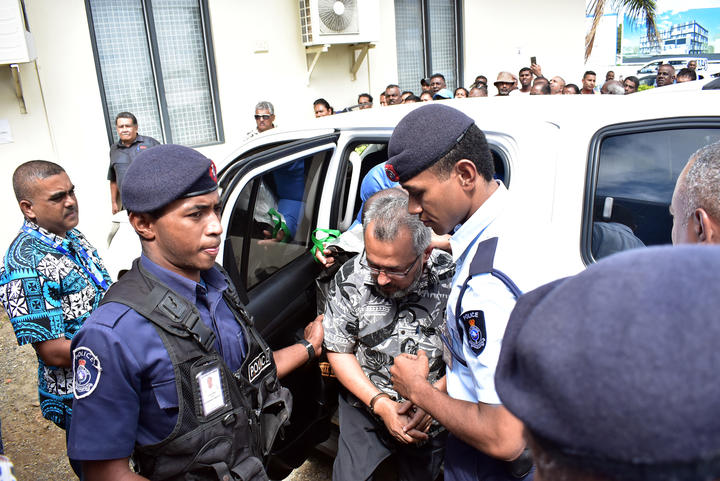
A Fiji-born New Zealand resident has been found guilty of multiple murders in Fiji.

Mohammed Raheesh Isoof of Christchurch was convicted of five counts of murder and one attempted murder.

In the Lautoka High Court, Justice Thushara Rajasinghe ruled the prosecution proved beyond a reasonable doubt that Isoof had killed the family of five in August 2019.

Police officers escort the murder suspect Muhammed Raheesh Isoof to the remand centre from Nadi Magistrates Court on September 18.
Isoof being taken into custody last September Photo: Fiji Times/ REINAL CHAND

The judge said it was evident the accused had lied in his evidence before the court.

Isoof will be sentenced on Friday.

Isoof had murdered three adults and two children and attempted to murder an 11-month old by abandoning her in the Nausori Highlands, Nadi.

The bodies of a 63-year-old carpenter, Nirmal Kumar, his 54-year-old wife, Usha Devi, their 34-year-old daughter, Nileshni Kajal and her two daughters Sana aged 11, and Samara, 8 were all found near a cliff.

Tongan ‘real life Aquaman’ survives 27-hour swim after tsunami

This article appeared on RNZ.co.nz and is republished with permission.

A 57-year-old Tongan man says he swam about 27 hours to get to shore after getting swept out to sea during Saturday’s devastating tsunami.

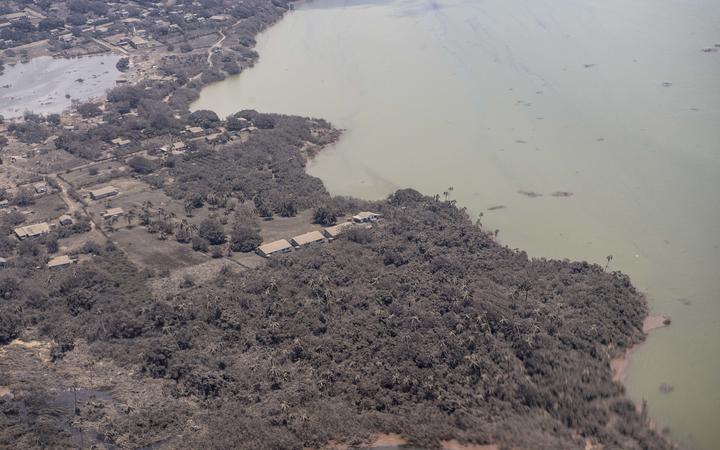
A P-3K2 Orion aircraft flies over an area of Tonga that shows Ash on homes and surrounding vegetation.
A P-3K2 Orion aircraft flies over an area of Tonga that shows ash from Saturday’s volcanic eruption on homes and surrounding vegetation. Photo: New Zealand Defence Force. Licenced under Creative Commons BY 4.0.

The eruption of the Hunga Tonga-Hunga Ha’apai volcano on Saturday killed at least three people, sent tsunami waves rolling across the archipelago, damaging villages, resorts and many buildings and knocked out communications for the nation of about 105,000 people.

Lisala Folau, who lived on the small, isolated island of Atatā which has a population of about 60 people, was swept out to sea when the waves hit land at about 7pm on Saturday, he said in a radio interview to Tongan media agency Broadcom Broadcasting.

Folau said he was painting his home when he was alerted about the tsunami by his brother, and soon the waves had gone through his lounge.

He climbed on a tree to escape but when he got down another big wave swept him away, he said. The 57-year-old said he was disabled and could not walk properly.

“I just floated, bashed around by the big waves that kept coming,” he told the radio station.

Folau said he kept floating, and slowly managed to swim 7.5km to the main island of Tongatapu, reaching the shore 27 hours later at about 10pm on Sunday.

Reuters was unable to contact Folau or verify the events.

Lisala Folau. Photo/Supplied 

The story of Folau’s heroics went viral among Tongan groups on Facebook and other social media.

“Real life Aquaman,” said one post on Facebook, referring to the comic book and film chracter.

“He’s a legend,” said another post.

Atata, which is about 8km northwest of Tonga’s capital Nuku’alofa, or a 30-minute boat ride, has been almost entirely destroyed in the tsunami that hit the islands.

Tongan naval boats are still surveing the smaller islands and evacuating people to the main islands.

-Reuters

Tonga eruption: Airport runway cleared of ash, WHO representative says

By RNZ.co.nz and is republished with permission

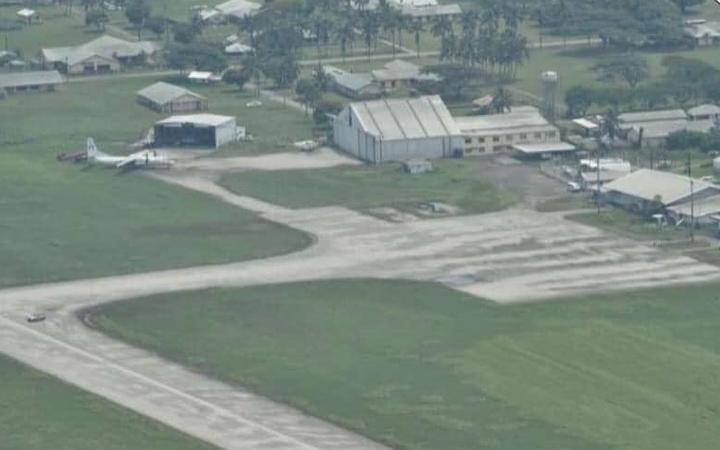
A World Health Organisation representative in Tonga says the international airport has been cleared of volcanic ash which will allow humanitarian aid flights to arrive.

Fua'amotu International Airport has limited damage but a layer of ash covers the runway making it unusable. An aerial photo taken from an NZDF P-3 Orion on January 16, 2022
Fua’amotu International Airport seen with a covering of ash in an aerial photo taken from an NZDF Orion earlier this week. Photo: NZDF

Hundreds of volunteers, workers and Tongan defence force personnel have been clearing the debris from the runway by hand.

WHO liaison officer in Tonga Dr Yutaro Setoya, who is in Nuku’alofa on the main island Tongatapu, told RNZ’s Pacific reporter Eleisha Foon there had been a thick layer of ash on the runway preventing planes from landing.

“The runway, I understand, was cleared to be able to be used from outside [the country]. I understand humanitarian flights are coming in,” Setoya told RNZ by satellite phone.

A New Zealand Defence Force C-130 Hercules is on standby and will be able to to take off once the all clear has been given, bringing supplies of water, hygiene kits and other goods. Two Australian Air Force Hercules are also ready to depart.

One of Tonga’s main communications providers, Digicel, said it had restored international calls to Tonga via satellite.

But until the undersea communications cable is restored its network services will not be fully operational, it said.

It is expected to take at least a month to complete repairs on the cable that carries the bulk of internet and phone communications to Tonga.

Digicel Tonga is giving out free sim cards from Thursday morning, with the company saying it knows how desperate family and friends overseas are to connect with relatives.

Three people are confirmed to have died after Saturday’s massive volcanic eruption and tsunami. Houses on the island of Mango in the Ha’apai group were destroyed, and the majority of structures on Atatā on Tongatapu, about 6km north Nuku’alofa, were all but wiped out by the tsunami.

There has been extensive damage to Fonoifua and Nomuka Islands. Evacuations of residents are underway. Western parts of the main island of Tongatapu are also badly hit, with dozens of houses destroyed.

New Zealand Defence Force ships HMNZS Wellington and HMNZS Aotearoa are due to arrive in Tonga on Friday, carrying water and other immediate supplies, as well as engineers and helicopters.

Their first task is to offload desperately needed water, but distributing supplies will be complicated by the need to maintain Covid-19 protocols.

Tonga is free of the virus, and Tongan and New Zealand officials are still working out how foreign assistance can be done in a contactless way.

A second New Zealand Defence Force P3 Orion surveillance flight was carried out on Wednesday and also included Fiji’s southern Lau Islands, at the request of the government of Fiji.

The Tongan government has begun a huge cleanup operation in the capital.

Setoya said Tonga needed access to emergency funding and immediate humanitarian supplies from overseas, but he believed most of the response to the devastating volcanic eruption could be handled domestically.

He said people affected by the volanic eruption were resilient and strong and were helping others clean up.

“Tongan people are strong and very quick to react,” he said.

“People are cleaning ashes from the ground and the roof … hand in hand, cleaning the houses together. So I think there’s a good energy in Tonga.”

He said Tonga needed rain to wash away the ash.

“Because ash is everywhere and has to be washed away before we get clean water [from roofs] … many people depend on rain water in Tonga.”