Police have seized illicit drugs, firearm, ammunition
and cash on Tuesday.
A total of 228.82 grams of cannabis, a .22 rifle and 587 live bullets had been seized.
The Drug Enforcement Taskforce
arrested four people from three different locations in Tongatapu.
The arrestees included a 33-year-old man from Tofoa,
a 40-year-old man from Fua’amotu, a 23-year-old woman from Kolofo’ou and a
33-year-old man from Vaini.
“All four suspects have been charged accordingly for possession of illicit drugs and for possession of firearm and ammunition without licence. They are remanded in police custody to appear in court at a later date,” a statement said.
“Police are concerned with the significant amount of
firearms and ammunition that have been smuggled into the country and the risks
they pose to community safety. We therefore urge members of the public to come
forward with any information that will help with police investigations.”
The
Asian Development Bank has identified tourism as a growth area in the Tongan
economy.
According
to the Asian Development Outlook 2019,
tourism contributed 11.5% of Tonga’s GDP in 2017, compared with 7% in 2010.
The
Bank said tourism was a factor in the economy in South Pacific countries.
The ADB
said there was a need to improve infrastructure to ensure the benefits of
tourism were spread across the country.
Infrastructure
had to be sufficiently resilient to withstand cyclones.
Tourism
also had to be kept to environmentally friendly and sustainable.
“Governments
can consider enhancing legislation to better address issues that threaten the
sustainability of the tourism industry and policies promoting sustainable
tourism practices,” the ADB said.
Tourism
was the second most affected industry by Cyclone Gita. It said the Tongan government
intended to “build back better.”
Elsewhere
in the report, the ADB said Tonga’s economy was expected to grow by 2.1% this
year.
Growth was
expected to slow slightly in 2020.
The ADB
said Tonga’s economy would from reconstruction and infrastructure projects
related to the recovery from 2018’s Cyclone Gita.
As Kaniva News reported recently, the ADB’s
chief economist, Yasuyuki Sawada, visited at the end of last month.
Tonga
has received $70.2 million in loans, $121.2 million in grant and $23.3 million
in technical assistance from the ADB since 1972.
Last
year the ADB warned that Tonga was one of six Pacific countries facing high
risks of debt distress.
It said
Tonga was the worst off, with public sector debt totaling 56 percent GDP.
The
main points
The Asian Development Bank has identified
tourism as a growth area in the Tongan economy.
According to the Asian Development
Outlook 2019, tourism contributed 11.5% of Tonga’s GDP in 2017, compared with
7% in 2010.
For
more information
ADB’s chief economist to visit Tonga
as country’s public sector debt nears 60% of GDP
A team from
Tonga has arrived in Auckland to inquire about a TP$50 million contract agreement
signed by the former government with the Hawaiki telecommunications company.
The team
wanted Hawaiki authorites to give them a clearer picture of the contract.
Hawaiki
decribes itself as “a new fibre optic cable linking Australia, New Zealand, American
Samoa, Hawaii and the US West Coast”
The company,
which began commercial operations started in July last year, claims to have a 15,000 km telecommunication
cable connecting 356 million consumers in Australia, New Zealand, American
Samoa, Hawai’i and the continental United States, with branches to New Caledonia,
Fiji and Tonga.
The Tongan team
is led by Tonga Cable Ltd (TCL) Director Paula Piveni Piukala and Minister of
Trade and Econmic Development Tu’i Uata.
Hon. Uata claimed
that former Deputy Prime Minister Siaosi Sovaleni signed the contract, but that
TCL later began to question whether or not the large amount of money being paid
from taxpayers money was justified.
Hon. Uata said
Tonga paid TP$6 million dollars so that the Hawaiki cable connecting New
Zealand and Australia to Hawai’i and Los Angeles was connected to the Vava’u
fibre cable in Tonga.
He said the
TP$50 million was paid to the Hawaiki in exchange for a gurantee of repair
services if the cable in Vava’u was damaged.
Piukala said
it “did not make sense” to pay such a large amount of money just in case the
cable might be damaged in the future.
However, both
men said that if, after talking to the New Zealand authorities, the TP$50
million deal appeared to be justified, they would be satisfied.
While in New
Zealand they will meet their lawyer, Dr Rodney Harrison.
“We are here
to mitigate a win win situation,” Piukala told Pacific Media Network this
evening.
Other cable services
In January this
year damage to an undersea cable knocked out most of Tonga’s internet capability
for 12 days. The government used
satellite connection to supply partial service until the cable was repaired.
In April this
year the Tongan government signed a 15 year contract with Kacific Broadband
Satellites Group to provide high speed broadband via satellite to the Pacific
Island nation.
The satellite
bandwidth will be used to connect communities in 89 remote outer islands. In
the case of a fibre cable outage, the satellite bandwidth can be shared with
Tonga’s main centres.
Tonga also
has an agreement with French company Alcatel for the provision of a fibre optic cable system connecting Nuku’alofa
and Vava’u with a branch to Ha’apai.
The main points
A team from Tonga has arrived in
Auckland to inquire about a TP$50 million contract agreement signed by the
former government with the Hawaiki telecommunications company.
The team wanted Hawaiki authorites to
give them a clearer picture of the contract.
Minister of Trade and Econmic
Development Tu’i Uata said questions had been raised about whether the amount
of money being paid from taxpayers money was justified.
Members of His Majesty’s Armed Forces’ navy and military honoured Samuela Tatafu at an emotional funeral at Ma’ufanga yesterday.
Mourners gathered at the St Mary’s Cathedral to honour the man who was described as “he has an ambition to work for the nation.”
The 52-year-old
former Navy Lieutenant Commander was reported missing at sea on April 23, after
failing to arrive in Nuku’alofa at 10am after leaving ‘Eua at 6am.
Search and rescue team finally located Tatafu’s body on the beach area at Tu’aliku cliffs of Lapaha.
Samuela Tatafu. Photo/Facebook
The body of his colleague Litani Taufa was still missing.
Tatafu was first recruited into His Majesty’s Armed Forces in 1989 until 2000 when he retired and became a member of the military reserve force.
Since the
sea accident, friends and family are sharing their thoughts and prayers for Tatafu
and his family online.
A number of
tributes have been sent via Facebook.
“This is
just a small tribute to a man who lived larger than life- on, in and around the
water. Sam tragically passed on Tuesday 23 April in a small boating accent
during a rough sea passage from ‘Eua to Tongatapu,” the Tonga Heritage Society
wrote on Facebook.
“I have
known Sam for the best part of 35 years and send our sincerest condolences to
his family.
“In 2010 Professor David Burley and I chartered Sam’s boat for a research expedition through the remote southern Ha’apai Islands looking for ancient rock art. Sam went out of his way to get us to the places we needed to go, we ate fresh fish and shared many a good laugh. He will be missed by all who knew him.
Rest in
peace Sam.”
“Very sad sounds like a lovley (sic) man,” a commenter responded.
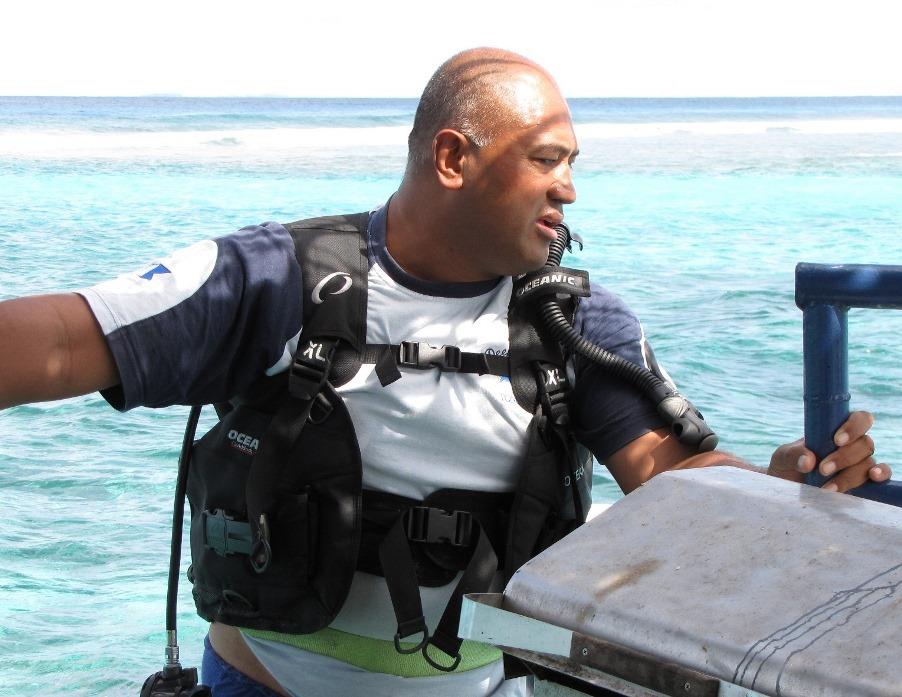
Tatafu was the owner of two businesses, the Ovava Tree lodge and Deep Blue Diving.
He is survived by his wife Ana Tu’ifanga Tukia Naufahu Tatafu with their five children. He had two other daughters from a previous relationship.
Early estimates are that more than 2000 elective and other procedures have not happened this week because of the junior doctors strike.
Members of the Resident Doctors Association are into their second day of a five-day strike over their expired employment agreement.
In Parliament today, Health Minister David Clark was asked about the impact the strike was having on patients.
He said hospitals are had reported no unexpected issues and people were still turning up for work.
“Approximately 38 percent of house officers and 72 percent of registrars have made themselves available for work this week.”
“And DHBs are advising the public that if they need to attend hospital for accute or emergency medical treatment they should do so,” he said.
While precise figures wouldn’t be known for some time, Dr Clark said he had been given an early indication of how many procedures had been deferred.
“I am advised that preliminary planning estimates are that 1513 elective procedures and 776 other procedures, such as elective angiography have been deffered.”
“People are missing out on planned care as a result of the strike and that’s why I’m urging both DHBs and the RDA to make the most of facilitation to find a resolution urgently,” he said.
But members of the Resident Doctors Association on a picket line in Auckland Ciy hospital today said it was time the minister stepped in.
Dr Maple Goh, a first year doctor at Middlemore Hospital said Dr Clark’s response to the RDA picketing his office yesterday was a huge let down.
“He put up a really disappointing poster that he was disappointed with the doctors which is huge hypocracy considering that we’re disappointed with him because he hasn’t stepped in at all.”
“And it should be within his power to make the DHBs sort this out, we’ve been trying to sort this out for 12 months now and it’s just appaling that David Clark has been sitting on his hands,” she said.
Vice President of the RDA Dr Kathryn Foster agrees and said the Government got involved in other contract disputes, like the nurses, so it should get involved in the doctors dispute.
She said the strike was important because the doctors don’t want hospital chief executives to have the final say over working arrangements.
“The problem with the CEOs having the final say is we’re a vulnerable population, we’re dependent on the DHBs for our training and our capacity to ba able to lerm and work.”
“If we let the DHBs have final say, we have no recourse over changes that maybe damaging to our lives and training and our lives outside of the hospital. we can’t then go to a different employer, we’re a captive audience,” she said.
Part of the issue lied with a lack of trust between the doctors and the dhbs, which Dr Foster said had been gradually eroded over a long time.
“We’ve had many years of systematic erosion of trust and it comes from our side from the DHBs saying one thing and doing another.”
“And that’s why the protection of our union is so iportant and we’re so deperate to hold on it because we can’t trust the DHBs,” she said,
The DHB’s spokesperson Dr Peter Bramley has said the strike is “unreasonable and unnecessary” because faciliation talks are due to start next week on 9 May.
This article is republished under Kaniva’s content partnership with Radio New Zealand.
A dispute that has been in and out of court since 2016 has
returned to the Supreme Court.
This case
concerns an agreement
dated February 27, 2015 for the sale
by Island Management Ltd to Charlet Millen of a
business, assets and undertaking known
as the Coconet Cafe.
Island Management was acting on behalf of Shyla and Isileli
Kali.
The company has
been struck off
the Register of
Companies and is no longer a
legal entity capable of being sued.
On June 23, 2016, Lord Chief Justice Paulsen declared that
the agreement was a valid contract, that Millen had honoured the terms of the
agreement and was ready, willing and
able to complete the deal.
He found that the Kalis were in breach of the agreement
because they had refused to deliver up possession of the business or assets
as agreed.
The judge ordered the defendants to complete the agreement within seven days.
However, the Kalis had refused to comply with the court
order.
In June 2017, Lord Chief Justice Paulsen made a timetable
for the future conduct of the case.
“There followed a series of procedural skirmishes
between the parties requiring
further rulings of the
Court, changes of
Counsel, ill-advised applications and tardiness of the parties
which together led to considerable delays,” the judge said.
The Kali’s lawyer stopped representing them and since August
last year neither of the Kalis had not taken any part in the proceedings.
Millen argued that since the defendants had refused to comply
with the order and failed to complete
the agreement the agreement should be cancelled.
“I am satisfied that the defendants repudiated the agreement
and have no intention, and now no
ability, to complete it,” the judge said.
“Mrs Millen is entitled to a declaration cancelling the
agreement with an award of damages to be assessed.”
Lord Chief Justice Paulsen ordered that the agreement be
cancelled.
He said Millen was entitled to costs.
The
main points
A
dispute that has been in and out of court since 2016 has returned to the
Supreme Court.
This case concerns
the sale of a
café.
Lord
Chief Justice Paulsen ordered that the agreement be cancelled.
The Prime Minister, Hon. Samuela ‘Akilisi Pōhiva will undergo a liver treatment in New Zealand on May 8.
The 78-year-old was in New Zealand two weeks ago to have routine medical checkups.
He returned to Tonga before his office said this afternoon Hon. Pōhiva “is scheduled to undergo a medical procedure at the Mercy Hospital in Auckland.”
“According to Dr. Sione Latu, Physician Specialist at Vaiola Hospital, medical tests were carried out in Auckland in early April and it was determined that the Hon. Prime Minister has a liver complication that the treatment procedure should be carried out on 8th of May.”
Nearly
six weeks after the Prime Minister said there was no need for further public
consultation on new government Bills, the Parliamentary committee dealing with
legislation will start public feedback sessions next week.
The
public will be invited to make written submissions on the six Bills, which the
government wanted debated last month.
As Kaniva Tonga news reported at the time,
the Bills were at the centre of upheavals in Parliament when the Acting Speaker
blocked attempt to have them heard as a matter of urgency.
Noble MPS
also walked out of Parliament during debate over the bills and there were angry
exchanges in the House.
As we
reported, Prime Minister ‘Akilisi Pōhiva resisted pressure from the Nobles to
allow more public consultation on the new Bills.
Hon.
Pōhiva told the House the government had fulfilled all legal requirements
before the new Bills and amendments were to be submitted to the House.
The
government had previously been using radio talk back to gauge public opinion
about the Bills.
However,
Radio New Zealand reported that the Prime Minister later withdrew the Bills,
citing a need for public consultation.
The Bills,
which were originally tabled in March, are:
Bill no.
15/2019 – Act of Constitution of Tonga (Amendment) Bill
2019
Bill no.
16/2019 – Act of Constitution of Tonga (Amendment)
(No.2) Bill 2019
Bill no.
17/2019 – Tonga Police (Amendment) Bill 2019
Bill no.
18/2019 – Magistrate’s Courts (Amendment) Bill 2019
Bill no. 19/2019 – Judicial and Legal Service Commission Bill 2019
Bill no.
20/2019 – National Spatial Planning and Management
(Amendment) Bill
Public meetings will start next
week.
A public awareness programme
providing information about the Bill began today.
The Members of the Parliamentary Standing Committee
on Legislation will host public meetings in Vava’u from May 6–10, followed by meetings
in Ha’apai from May 13-14, Tongatapu from May 15-22 and ‘Eua on May 24.
The
timetable of the consultation programme can be found on the government website,
http://www.parliament.gov.to, the Facebook page Fale
Alea ‘o Tonga, or by phoning 27912.
Radio
announcements will also provide details on the dates and venues of upcoming
public consultation meetings.
The main
points
Nearly six weeks after the Prime Minister said there
was no need for further public consultation on six new government Bills, the Parliamentary
committee dealing with legislation will start public feedback sessions next
week.
The public will be invited to make written submissions
on the six Bills, which the government wanted debated as a matter of urgency
last month.
For more
information
Acting
Speaker shuts down discussion on new Bills, tells House to come back the next
day
A new partly government-owned
dialysis centre is set to open in Tonga soon and a newly registered company has
been set up to run the operation, it has been claimed.
The facility
would be established “at no cost to the government,” a reliable source within
the Ministry of Health told Kaniva news.
The source
said a private company in Salt Lake City was partnering with the Ministry.
It said the
US organization involved philanthropists who wanted to leave some of their
money and wealth to charity.
No further
details were available. The source said a statement would be officially
released soon about the centre.
As Kaniva news reported at the time, the
Ministry has said in the past that it could not fund its own dialysis programme
“because it would eat up 20 percent of the annual health budget for less than
one percent of the population and it is not equitable distribution of meagre resources.”
The Ministry
said there was a 17.7 percent prevalence of diabetes in Tonga, a number revised
after it was regionally reported as 34.4 percent.
The Minstry
said there were 200 patients in the kingdom with varying degrees of kidney
disease and around 66 patients, or a third, are in Stage 5, requiring renal
replacement therapy, or dialysis.
Tongan
patients in New Zealand and around the globe have faced a painful death if they
were sent back to Tonga because dialysis was not available there.
Last year a
Tongan national, Tamahanga Tukunga, was among a growing number of Tongans in
New Zealand who requested help from the New Zealand government.
He received
dialysis three days a week and as a foreign national he was not entitled to
that treatment and could be deported to Tonga within a year.
His treatment
was paid by his relatives through fundraising, including sausage sizzles back
in Tonga, and sending yams to sell in New Zealand.
The cost of
the medical treatment was always a critical factor for overseas countries in
deciding whether or not to grant visas to Tongan patients.
As Kaniva news reported recently, Sosefo
Lakalaka was ordered to leave New Zealand by May 2019 after a tribunal found
the burden on New Zealand’s public health system outweighed the exceptional
humanitarian circumstances of his case.
Mr Lakalaka was
paying off a $US10,768 medical bill and his ongoing treatment was costing the
taxpayer $US13,463 a year.
A Tongan
international and ‘Ikale Tahi player Sione Vaimo’unga, who was trapped in
Romania on dialysis, was luckier after Tonga’s Ministry of Health sought
support from the Romanian government in 2017.
The Pacific
Rugby Players Welfare finally reported last year that Vaiomo’unga was
recovering well from a transplant after he had been on dialysis after being
diagnosed three years previously.
The main points
A
new partly government-owned dialysis centre is set to open in Tonga soon and a
newly registered company has been set up to run the operation, it has been
claimed.
The
facility would be established “at no cost to the government,” a reliable source
within the Ministry of Health told Kaniva news.
The
source said a private company in Salt Lake City was partnering with the
Ministry.
The Asian Development Bank’s chief economist, Yasuyuki Sawada, will visit Tonga for a two day visit this week.
He will be
in the kingdom from April 29-30.
Tonga has received
$70.2 million in loans, $121.2 million in grant and $23.3 million in technical
assistance from the ADB since 1972.
The bank has
significantly increased its financial support since 2008.
Last year
the ADB warned that Tonga was one of six Pacific countries facing high risks of
debt distress.
It said Tonga
was the worst off, with public sector debt totalling 56 percent GDP.
The bank
said the problem stemmed from a narrow economic base, vulnerability to economic
shock and climate change.
According to
a Reuters report, Chinese loans accounts for more than 60 percent of Tonga’s
total external debt burden.
ADB projects
in Tonga include projects aimed at increasing access to solar power and to
improve energy efficiency.
It is also
financing work on climate change adaptation, cyclone recovery, urban
development and public sector management.
While he is
in Tonga, Sawada will meet with Tonga’s Deputy Prime Minister Hon. Semisi Sika,
Chief Secretary and Secretary to Cabinet Edgar Cocker, Minister for Finance Hon.
Pohiva Tu’i’onetoa, and the Governor of the National Reserve Bank, Dr. Sione Ngongo Kioa.
Sawada will
present the 2019 Asian Development Outlook (ADO), which includes the Tongan
economy as part of the Pacific region.
Hon. a
Tu’i’onetoa said Tonga’s economy was benefitting from ADB investment in the
kingdom.
The Minister
will lead Tonga’s delegation to the ADB’s 52nd annual meeting in Fiji at the
beginning of May.
The
main points
The
Asian Development Bank’s chief economist, will visit Tonga for a two day
visit next week.
Last
year the ADB warned that Tonga was one of six Pacific countries facing high
risks of debt distress.
It
said Tonga was the worst off, with public sector debt totalling 56 percent GDP.