Home Blog Page 63

Minister Piukala faces defamation allegation, vows to vigorously defend public comments

A political storm is brewing in Tonga as the Minister for Public Enterprises and Police, Piveni Piukala, publicly refuses to retract statements about a missing shipping container—statements that have now triggered a formal defamation allegation.

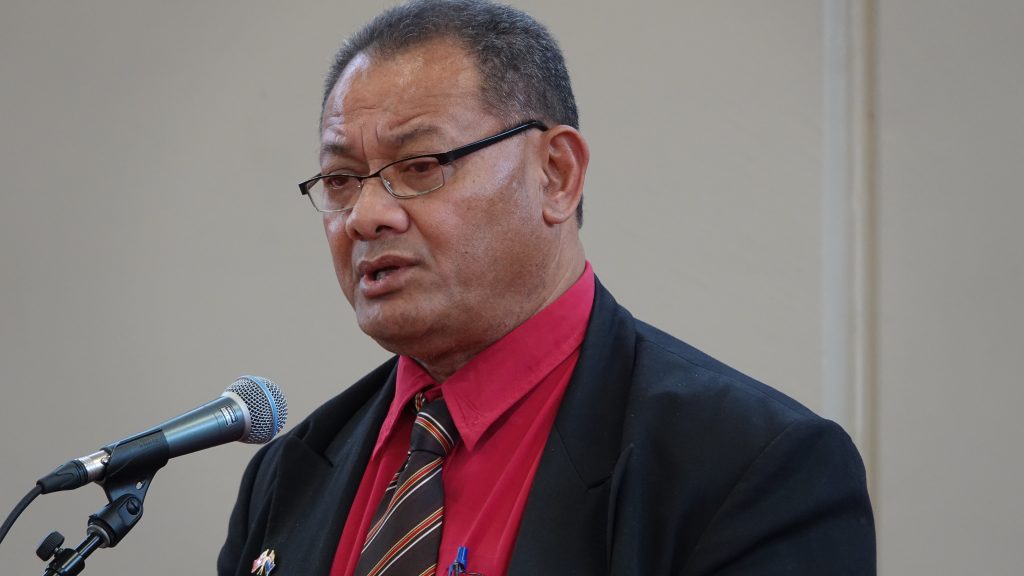
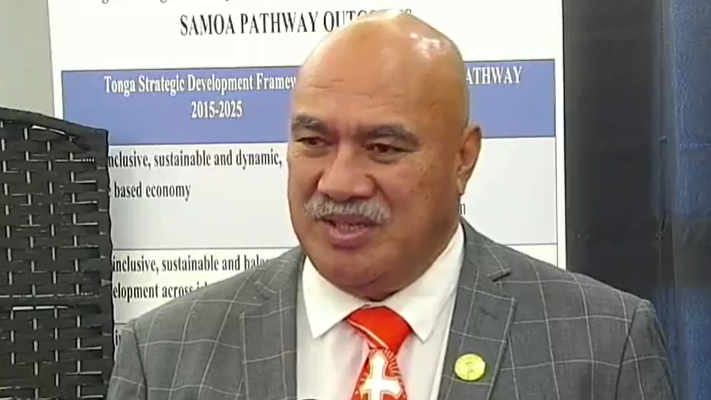
Minister of Police Piveni Piukala

It is understood, a company has demanded the retraction through its lawyer.

The controversy stems from a press conference where Minister Piukala commented on the mysterious disappearance of a container from the secured Queen Salote Wharf.

As Kaniva News reported last month, Piukala alleged that a group he described as an organised crime unit may have been responsible for the disappearance.

Minister Piukala revealed that the case was serious enough for him to personally engage the Head of the National Security and Intelligence Unit.

“I believe this is part of an organised crime,” he stated at the time, emphasising that Tonga is battling a deeply entrenched criminal network exacerbated by systemic corruption.

Expressing his disbelief at the incident, the Minister highlighted the stringent protocols required for releasing a container from the wharf.

“It’s not just one person who signs it out—it involves multiple authorities, including the shipping agency, Customs Ministry, Port Authority, and Stevedores,” he said in Tongan.

“For someone to remove a container without leaving a trace through this entire process is beyond reason.”

He said that he found it difficult to understand how it could happen in a workplace with a sophisticated process in place to ensure the release of any container is approved.

Minister Defies Legal Retraction Demand

In a legal letter dated August 21, 2025, addressed to a representative known only as Mr Edwards, the Minister stood firmly by his remarks.

“I refuse to retract my statements, as they were made in good faith and reflect a reasonable assessment of the factual circumstances,” Minister Piukala stated in the letter.

“My comments did not, at any point, accuse any specific body or your client, of misconduct or criminal activity but rather highlighted legitimate concerns about port security procedures, which is a matter of public interest.”

He clarified that his comments were not an accusation but an expression of concern over systemic issues.

“Not once did I directly or indirectly imply that your client is responsible or at fault, but simply part of a weak procedure.”

The Minister, addressing Edwards’s allegation, recounted his remarks from the press conference and interviews as follows:

“For a shipping container to be cleared from a secured port facility, it would typically need to pass through multiple regulatory and operational checkpoints, including those managed by the shipping agency, Customs Ministry, Ports Authority, and Stevedores; this is a fact. Therefore, for it to just go “missing” without any clear indication of what went wrong and where it went wrong, reasonably raises concerns and suspicions on how it could have happened at all. 

I characterized the incident as suspicious and suggested it could indicate systemic vulnerabilities, simply highlighting the lack of strategic procedures and strict rules controlling entry and exit of cargo and personnel – a procedure which involves your client and other entities. This is also a fact, there are weaknesses in the current practice. Not once did I directly or indirectly imply that your client is responsible or at fault, but simply part of a weak procedure.”

Concerns about the incorporation of customs into Tonga’s constitution

University of the South Pacific,

Laucala Campus,

Suva,

Fiji.

August 21, 2025.

The Editor,

Kaniva News,

New Zealand.

Subject: Concerns on the incorporation of customs into Tonga’s Constitution.

To Whom It May Concern,

I am writing to express my deep concern regarding a proposed bill before Parliament that seeks to incorporate Tongan customs into the Constitution. I feel compelled to highlight the serious challenges this amendment may pose, in the hope that these concerns will be carefully considered by His Majesty.

Constitutions aim to ensure equality, liberty, and justice for every citizen. Customs, however, by their very nature, are flexible, uncertain, and sometimes unreasonable. The proposed bill’s suggestion that courts should not apply ‘technical rules of evidence’ risks undermining the fundamental principle of justice that guilt must be proven beyond a reasonable doubt.

Amending the Constitution to elevate custom into binding law raises troubling questions of gender equality, abuse of power, and fairness. For example, Tongan customs do not adequately recognise the role of women in positions of authority. The fahu system is frequently abused, with some individuals using it to take property without the consent of the rightful owner, which is an act that directly violates principles of human rights and fairness.

Similarly, the custom of seeking forgiveness, while culturally significant, could unduly interfere with the impartiality of trials and the proper delivery of justice. Even practices of ‘physical punishment,’ which is also abused, while sometimes justified in the name of tradition, raise serious human rights concerns and could be normalised under the new amendment.

For these reasons, I strongly urge that the proposed bill be either reconsidered or revised again to ensure that Parliament specifies what customs are to be recognised to ensure certainty. The Constitution of Tonga must remain a safeguard of equality and justice for all, not a tool to enshrine customs that may perpetuate inequality, abuse, or unfair treatment.

Respectfully,

S11240946.

How Tonga’s flawed constitution forces five PMs to choose: Tolerate royal scandals or demand reform 

Explainer – Significant scrutiny of Tonga’s political system, sparked in the early 1980s, rapidly transformed public daily conversation, replacing talk of plantations and fishing with intense political debate.

A new radio program known as Matalafo Laukai, hosted by veteran democracy campaigner ‘Akilisi Pōhiva from 1981 to 1984, was a primary catalyst. It prompted public debates about taxpayers’ rights to government transparency, accountability and good governance.

It taught residents to realise that even everyday purchases included sales taxes, which contributed to public expenditures, and it highlighted the importance of their involvement in political discussions.

Among the key factors that intensified this shift in political discourse were revelations of the royal family scandals during the period, including King Tupou IV’s controversial passport scheme, his compromised dealings with foreign investors; the collapse of Royal Tongan Airlines under King Tupou VI’s premiership; the controversial takeover of the country’s electricity company by the then-Crown Prince, George V; and Princess Pilolevu Tuita’s alleged misuse of satellite rights.

The traction these revelations gained was largely attributable to the investigative reporting of the Kele‘a newsletter. This publication was established to replace the Matalafo Laukai after the government banned it, and later, the Taimi ‘o Tonga newspaper.

It swiftly united scholars and leaders from all walks of life into a movement demanding democratic reform.

This led to the formation of the Pro-Democracy Movement (PDM) in August 1992, spearheaded by Pōhiva, which aimed to advance democratic reforms within Tonga’s constitutional monarchy.  

The tireless efforts of these activists and scholars, supported by strong public backing, culminated in King George V’s agreement. He stated that he had long envisioned democracy as a solution to put an end to abuses of royal privilege.

Their consensus can be summarised in three key objectives:  
(1) protecting the monarchy from allegations of financial mismanagement;  
(2) preventing exploitation of the royal institution by opportunists; and  
(3) ensuring transparent management of public funds through rigorous accountability measures. 

Politics of Personal Animosity

Unfortunately, King George was overly optimistic in trusting Prime Minister Lord Sevele to implement the democratic transition smoothly

Lord Sevele’s opposition to the king’s proposed reforms was widely viewed through a political lens. Critics at the time, including prominent pro-democracy MPs, argued that his stance was fueled by a deep-seated animosity toward his rival, ‘Akilisi Pōhiva.

Further allegations suggested that Sevele feared a Pōhiva-led government would reopen investigations into two major controversies. The first was the 2009 sinking of the MV Princess Ashika during Sevele’s tenure, a ferry disaster that resulted in the deaths of 74 passengers and led to a public inquiry into governmental responsibility.

The second was the 2006 Nuku’alofa riots, which some opposition figures, including Dr Sitiveni Halapua accused Sevele’s government of indirectly inciting by delaying promised democratic reforms.

(L-R) Lord Tu’ivakanō; ‘Akilisi Pōhiva and Hu’akavameiliku

Democratic Hopes Effectively Denied 

The democratic change failed to materialise mainly because the constitution drafted by the Constitutional and Electoral Commission (CEC), based on public consultations and submissions, was not used. Instead, PM Sevele went his own way and reportedly submitted an alternative proposal, now deemed the poorest written constitution among all Commonwealth countries.

The nobility-led government of Lord Tu’ivakanō, which first tested Tonga’s new democratic system in 2010, found significant flaws. In 2011, they hired Peter Pursglove to review the constitution. His review was unequivocal: the reforms had failed to establish genuine democracy. The constitution had been primarily drafted by Lord Dalgety—now one of the king’s law lords—and enacted under Lord Sevele’s government.

Pursglove said the constitution is poorly written, promotes secrecy, has compromised the role of the judiciary and parts of it may be illegal.  

The report also says:  

  • Tonga’s 2010 constitution does not uphold democracy  
  • The Privy Council lacks any democratic composition or accountability  
  • The judiciary lacks accountability and transparency.  
  • Changes to the judiciary are inefficient, ineffective, unaffordable and possibly illegal.  
  • No public discussions were held regarding the reforms to the judiciary or why they were considered necessary.  
  • “The present Constitution of Tonga can lay claim to being the most poorly structured and drafted Constitution of any Country in the Commonwealth,” the report says. 

One of Pursglove’s key recommendations was to transfer the appointment powers for both the Attorney-General and the Police Commissioner from the Privy Council to the Prime Minister and Cabinet.

Power Tussle With Monarchy

Since the democratic breakdown in 2010, Tonga’s five consecutive administrations have responded to the constitutional shortcomings in varying ways – ranging from pursuing the reform to royal appeasement – with some prime ministers exploiting governance flaws to curry royal favour while turning a blind eye to how their actions might implicate the monarchy in potential scandals. 

Three Prime Ministers who wanted to fix the 2010 constitution to fulfil George V’s vision for a full democracy were Lord Tu‘ivakanō (2010 – 2014), ‘Akilisi Pōhiva (2014 – 2019) and Siaosi ‘Ofakivahafolau Sovaleni (2021 – 2024).  

Yet two others—Dr Pōhiva Tu‘i‘onetoa (2019 – 2021) and Dr ‘Aisake Eke (2025)—opted to consolidate power through closer alignment with the King, operating within a constitution widely criticised as dysfunctional, undemocratic, and economically burdensome.  

The Reformers – Benefiting King & Country

The following three leaders worked towards a stable, democratic system that would strengthen the nation and potentially protect the monarchy from future scandals.

1. Lord Tu‘ivakano (2010–2014): Confronting Constitutional Flaws

The nobility-led government of Lord Tu’ivakanō, which first tested Tonga’s new democratic system in 2010, found significant flaws. In 2011, they hired Peter Pursglove to review the constitution. His review was unequivocal: the reforms had failed to establish genuine democracy. The constitution had been primarily drafted by Lord Dalgety—now one of the king’s law lords—and enacted under Lord Sevele’s government.

2. ʻAkilisi Pohiva (2014–2019): Confronting Constitutional Flaws

As the first commoner to be elected Prime Minister of Tonga, Pōhiva vowed to continue Tu’ivakano’s reform efforts during the reign of King Tupou VI. He sought to implement Pursglove’s findings to strengthen democracy, but his tenure was cut short by his death in 2019, leaving his reform agenda unfinished. Before his death, his relationship with King Tupou VI had deteriorated. He complained that, despite his requests, the king regularly refused to meet with him as required by the constitution. He told Kaniva News that he believed the king was trying to reverse the executive powers that King George V had vowed to relinquish in 2010.

3. Siaosi Sovaleni (2021–2022): Challenging Royal Authority 

Prime Minister Hu’akavameiliku took a stronger stance against expanding royal powers. He sued the king’s appointed Secretary for Foreign Affairs, arguing the position should remain under the PSC’s jurisdiction. He also rejected a letter from the king declaring that he had lost confidence in him, calling the move unconstitutional. His resistance led to his eventual ousting in a no-confidence motion. This came after the king reportedly forced the nobility MPs in Hu’akavameiliku’s cabinet to resign ahead of the ballot.

Prime Minister Dr ‘Aisake Eke (L) and Late PM Dr Pōhiva Tu’i’onetoa

The Appeasers – Prioritising Short-Term Royal Favour

The following two prime ministers consolidated royal power at the expense of democratic governance, a move criticised as being economically burdensome and potentially harmful to the country’s and the monarchy’s long-term stability.

4. Pohiva Tu’i’onetoa (2019–2021): Halting Reforms, Restoring Royal Powers 

Unlike his predecessors, Tu’i’onetoa did not prioritise constitutional reform. Instead, in 2020, he passed a law transferring the power to appoint the Secretary for Foreign Affairs from the Public Service Commission (PSC) back to the king, reversing a key democratic check on royal authority. However, Tu’i’onetoa did have one initiative that could be considered his contribution to the democratic reforms pursued by Tu’ivakanō and Pōhiva. When he was appointed Prime Minister, Tu’i’onetoa proposed during his first meeting with King Tupou VI that he be allowed to join the Privy Council. He aimed to update the king on government matters promptly. The king declined this proposal.

5. Dr ‘Aisake Eke (2025): Yielding to Royal Pressure 

The current Prime Minister, ‘Aisake ‘Eke, has taken a different approach, bowing to royal pressure. He is being excessively naive in his dealings with the king, and the nomination of his current Cabinet Ministers appears to have been influenced by the monarchy as well. He is the initiator of His Majesty’s Diplomatic Service Bill. This legislation is a direct reversal of Tonga’s 2010 democratic reforms, as it removes foreign affairs from ministerial and parliamentary oversight, placing it under the monarchy’s sole, unchecked control. Critics condemn this not as modernisation, but as a regression to hereditary rule.

Major upgrade: Fuaʻamotu Airport to receive boarding bridges, terminal expansion through Japanese funding

Tonga’s Fua’amotu International Airport will undergo a significant transformation with new passenger boarding bridges and an expanded terminal, funded through a grant from the Government of Japan.

The upgrades mark the first installation of modern air-bridges in Tonga, revolutionising passenger boarding at the country’s main international gateway.

The multi-million pa’anga project will completely renovate the International Terminal Building, adding elevators for accessibility and constructing a covered shelter at the entrance to protect travellers from the elements.

Aviation officials confirmed the upgrades will also expand the aircraft apron area to prevent operational disruptions during technical issues with planes.

“Additionally, the International Apron will be expanded to ensure continued operations of international flights, even in the event of an aircraft breakdown,” a statement by the Japan International Cooperation Agency in Tonga says this afternoon.

The infrastructure improvement project comes in response to Tonga’s official request to Japan for assistance in upgrading the country’s main international gateway. Since 2022, JICA has conducted extensive preparatory surveys to assess the airport’s needs and develop comprehensive upgrade plans.

Key improvements will focus on the international terminal, featuring an expanded and renovated Passenger Terminal Building.

The upgrades will introduce modern passenger facilities, including Tonga’s first passenger boarding air-bridge and elevator, along with a new covered shelter at the terminal entrance.

The project will also expand the International Apron to maintain flight operations during aircraft technical issues.

Fua’amotu International Airport, originally built in 1989 through Japanese-Tongan cooperation, serves as Tonga’s primary connection to global air routes.

This new investment represents the latest chapter in the long-standing partnership between Japan and Tonga, demonstrating their shared commitment to infrastructure development and regional connectivity.

The upgrade project aims to enhance passenger experience while ensuring the airport meets international safety and operational standards.

Construction timelines and implementation details will be announced following completion of final design work and tender processes.

The project underscores Japan’s ongoing support for Pacific Island nations’ infrastructure development.

Lulutai Airlines faces crucial safety audit after grounding over maintenance failures

Tonga’s Civil Aviation Office (CAO) and Papua New Guinea’s aviation safety inspectors have launched a high-stakes audit of Lulutai Airlines, just four weeks after the carrier was temporarily grounded for failing to meet critical maintenance requirements.

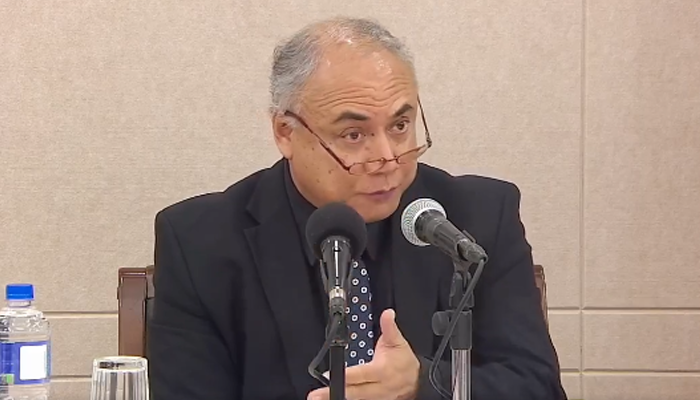
Senior Safety Officer James Panuve led CAO’s team at this morning’s meeting with Sela Finefeuiaki Vea, ‘Ilaisaane Malani and Tevita Ma’asi.

The audit follows the Public Enterprises Minister’s recent revelation that the airline has yet to overcome significant financial, administrative, and management shortcomings.

The week-long audit, which began with today’s entry meeting at Lulutai’s headquarters, will determine whether the airline retains its vital Air Operating Certificate (AOC) following its recent suspension.

The meeting is held to inform stakeholders of the process before meetings and site visits are made.

An exit meeting will be done upon completion of this audit.

Their findings will be reported to the Director of Civil Aviation on the audited party’s compliance with recommendations.

This is a standard procedure to ensure operating air transportation is done in a safe manner.

Senior Safety Officer James Panuve led CAO’s team at this morning’s meeting with Sela Finefeuiaki Vea, ‘Ilaisaane Malani and Tevita Ma’asi.

Tonga’s Civil Aviation Office under the Ministry of Infrastructure is committed to providing safety oversight for the public traveling by air.

With Tonga’s tourism sector still recovering from [relevant event if applicable], the audit’s outcome carries significant economic implications.

The Ministry of Infrastructure emphasised that “safety remains non-negotiable” while acknowledging Lulutai’s essential role in domestic connectivity.

Tonga court jails son for fatal drunk driving crash that killed his father

Tonga’s Supreme Court has sentenced Viliami Tukuamoe’atu, 28, to three years’ imprisonment for reckless driving causing death, with the final two years suspended for two years under strict conditions.

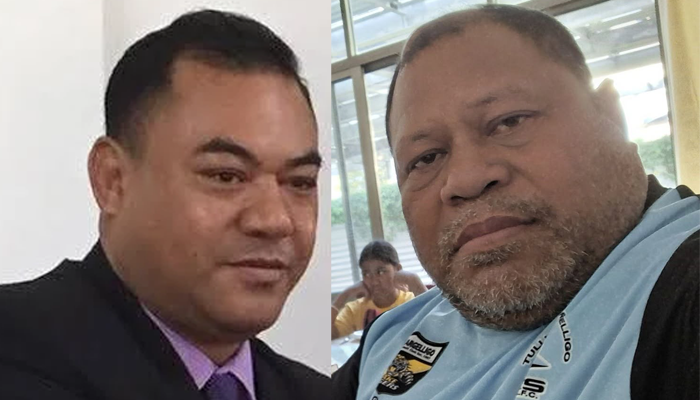
Viliami Kemoe’atu

Tukuamoe’atu pleaded guilty to reckless driving causing bodily injuries and the death of his father in a high-speed crash in Makaunga in January this year.

The court heard that Tukuamoe’atu was driving at up to 140 kilometres per hour while intoxicated, despite a sober passenger being available. After arguing with his father, who tried to stop him, he overtook multiple vehicles before losing control, striking an oncoming car, and crashing into an electric pole.

Lord Chief Justice Bishop told Tukuamoe’atu: “As you know, causing death by reckless driving has an increased maximum penalty of 15 years as opposed to the earlier penalty of 10 years, and there have been corresponding increases in the events of causing bodily harm by way of reckless driving. I must take account of the will of the legislature.”

While acknowledging Tukuamoe’atu’s previously clean record—though disputed in probation reports—Justice Bishop noted his contributions to his church and youth group.

“You have much to be ashamed of,” he said, but added, “I accept that your remorse is strong and sincere. I accept that you have been taught a very bitter lesson.”

The judge considered emotional testimonies, including pleas from Tukuamoe’atu’s widowed mother and injured fiancée, before setting a six-year starting point for the fatal crash and 18 months for bodily harm.

However, citing Tukuamoe’atu’s youth, remorse, and community ties, he suspended part of the sentence, stating: “For those reasons, I consider that the prospects of rehabilitation in your case are excellent, and I suspend the last 2 years of your sentence for a period of 2 years on conditions.”

Tukuamoe’atu’s driver licence was suspended for three years, and he must report to probation within 48 hours of release. The court also allowed his passport’s return—but only for agricultural work in Australia or New Zealand, with travel proof required.

Justice Bishop’s final warning was clear: It is crucial that you are reminded of the ramifications of speeding and overtaking.

Tongan music star Josh Tatofi honours 13-year-old fan who died after ‘bullying’

Josh Tatofi is mourning the tragic loss of a young Tongan fan, 13-year-old Mahonlai Uona Talamesi Taumalolo, who passed away last Tuesday, reportedly due to relentless bullying.

Remembering Mahonlai Uona Talamesi Taumalolo, the 13-year-old Tongan boy with a voice of gold. Tragically passing last week due to bullying, his beautiful rendition of Josh Tatofi’s ‘*‘Ouana’* touched hearts across the Pacific. Photo/Screenshot

The rising R&B and reggae-inspired artist shared a touching tribute on Monday, alongside footage of Mahonlai beautifully singing Tatofi’s well-known song “‘Ouana.” 

The video, which had previously gone viral in Polynesian music circles, showcased the boy’s stunning voice and heartfelt delivery.

In his emotional Facebook post, which has garnered over 6,000 reactions and widespread shares, Tatofi wrote:

“Heartbroken to hear about the passing of 13-year-old Mahonlai. He was the baby of his family, full of light and joy, but the weight of relentless bullying became too heavy to carry.”

“To his family, my prayers and love are with you as you navigate this unimaginable loss. No child should ever feel alone, and no family should ever have to endure this kind of pain.”

Tatofi also urged supporters to help Mahonlai’s family by donating to a GoFundMe campaign for his memorial, writing: 

“If you’re able, please consider helping a family in need by donating to Mahonlai’s GoFundMe to give him the beautiful memorial he deserves. Every little bit makes a difference.”

The tragic story has sparked an outpouring of grief and calls for action against bullying in the Tongan community, where music and family bonds run deep.

It is unclear whether Mahonlai’s family has released an official statement, but friends and supporters have flooded social media with tributes, remembering him as a talented, kind-hearted boy who brought joy to those around him.

As Tatofi’s tribute continues to spread, many are hoping his message will raise awareness about the devastating effects of bullying and inspire greater kindness and support for vulnerable youth.

Josh Tatofi – The Soulful Voice of Tonga and the Pacific

Josh Tatofi is a rising Tongan-American singer-songwriter known for his smooth blend of R&B, soul, reggae, and traditional Polynesian melodies. With a voice that carries both power and emotion, he has become a standout artist in Hawaii’s vibrant music scene and beyond.

Born into a musical family (his father is a respected Tongan musician), Tatofi gained widespread recognition with his hit “‘Ouana,” a soulful love ballad that became an anthem across the Pacific.

His music often weaves heartfelt lyrics with island-inspired rhythms, earning him comparisons to legends like Otis Redding and contemporary greats like Bruno Mars.

Beyond his artistry, Tatofi is celebrated for his deep connection to his Tongan roots and his commitment to uplifting his community—making his recent tribute to young fan Mahonlai Taumalolo all the more poignant.

Drug seizures and arrests in Fonongahina

Tonga Police have conducted a successful operation in Fonongahina following intelligence reports about illicit drug distribution in the area.

Police units from neighbouring stations were swiftly mobilised to investigate the tip-off.

During the operation, officers arrested a 43-year-old man from Ha‘ateiho for possessing a Class B controlled substance along with drug paraphernalia.

In a separate but related arrest, a couple aged 31 and 23 from ‘Utulau were taken into custody after being found in possession of methamphetamine (a Class B drug), various drug utensils, and an undisclosed amount of Tongan pa‘anga currency.

Authorities confiscated all evidence and exhibits found connected to these cases.

Those arrested have been formally charged and will face court proceedings in accordance with Tongan law.

In their statement, Tonga Police expressed appreciation for the community’s continued cooperation in combating drug-related crimes.

They encouraged residents to remain alert and report any suspicious behaviour by calling the police hotline at 922 or notifying their local police station promptly.

The operation underscores the police force’s ongoing efforts to curb the distribution and use of illegal substances across the kingdom.

Lulutai Airlines bid extension raises concerns over transparency and competence

Commentary – The Tongan government’s handling of the Lulutai Airlines Expressions of Interest (EOI) process has become a matter of growing concern, with delays, sudden changes, and questions over the airline’s ability to properly assess multi-million-dollar bids.

What was initially presented as a straightforward process—inviting private operators to take over the controversial domestic airline—has now stretched beyond a month with no clear resolution.

The government had set an original deadline for early July, but after weeks of silence, Public Enterprises Minister Piveni Piukala announced an unexpected two-week extension to “refine the selection criteria.”

That extension period has since passed, yet there has been no further update, leaving bidders and the public in the dark.

Minister Piukala explained that the extension was needed to distinguish between parties interested in operating the airline versus those merely seeking to buy shares—a fair clarification in theory. However, the lack of communication since then suggests deeper issues in the assessment process.

Questions Over Lulutai’s Capacity to Evaluate Bids

Kaniva News has learned that some bidders have expressed frustration with what they describe as an inexperienced and unprofessional evaluation process.

Sources indicate that there have been repeated back-and-forth queries between Lulutai Airlines and potential operators, with some bidders questioning whether the airline’s management has the expertise to properly assess complex commercial proposals.

This is not a minor issue. Lulutai Airlines has been a financial burden on Tonga’s government, plagued by operational struggles and controversies since its inception. Handing over its operations to a competent private operator could be a step toward stability—but only if the selection process is credible.

Transparency and Trust at Stake

The extended silence since the supposed “refinement” of criteria raises legitimate concerns:

  • Why the delay? If the extension was only for two weeks, why has there been no update?
  • Who is assessing the bids? Does Lulutai Airlines—a struggling state-owned entity—have the necessary expertise to evaluate multi-million-dollar proposals?
  • Is the process fair? Bidders reportedly dissatisfied with the handling of their submissions may question whether the playing field is level.

Call In NZ, Aus Help

Given the ongoing concerns about Lulutai Airlines’ ability to properly evaluate bids, wouldn’t it make sense for the Tongan government to request an independent assessment team from New Zealand or Australia?

Both countries have previously shown willingness to assist Tonga in aviation matters.

An independent team of assessors from either country could bring much-needed transparency, technical expertise, and credibility to the bidding process.

Given the millions of dollars at stake—and the importance of ensuring Lulutai’s future stability—such a move would reassure bidders, the public, and international observers that the selection is being conducted fairly and professionally.

The current delays and lack of clarity only deepen suspicions about the process. If the government is serious about finding the best operator for Lulutai, external assistance should be a priority.

The Tongan government must act swiftly to restore confidence in this process. If the goal is truly to bring transparency and better management to Lulutai Airlines, then the evaluation must be conducted professionally, with clear timelines and accountability.

Tongan father Tu’ipulotu Vi’s unsolved killing; Police vow to continue investigation one year on

A year after the fatal shooting of 59-year-old Tuipulotu Vi in Pakuranga Heights, New Zealand Police have reaffirmed their commitment to solving the case—but no arrests have yet been made.

Police continue to investigate the death of 59-year-old Tuipulotu Vi

On the morning of August 19, 2024, emergency services rushed to Marvon Downs Avenue after reports of multiple gunshots.

Vi was found inside a vehicle with critical gunshot wounds and was pronounced dead at the scene, despite attempts by first responders to save him.

In a statement to Kaniva Tonga News, police acknowledged the frustration over the lengthy investigation but assured the public that progress was being made.

“Police acknowledges the significant period of time that has passed since this tragic incident and our thoughts are with Mr Vi’s family, particularly in the lead up to the first anniversary of his death,” the statement read.

“Our team remain committed to holding the person or persons responsible to account.”

Authorities confirmed they are following “positive lines of enquiry” but declined to disclose specifics, citing the sensitivity of the ongoing investigation.

The case has left Auckland’s Tongan community and Vi’s loved ones seeking closure.

Family members, who have previously described Vi as a respected and kind-hearted man, have pleaded for witnesses to come forward.

Police have reiterated calls for public assistance, particularly from those who may have seen suspicious activity around Marvon Downs Avenue in the early hours of August 19, 2024.