The sentencing of Fiji’s former prime minister Frank Bainimarama will take place at the Magistrates Court in the capital Suva on Thursday.
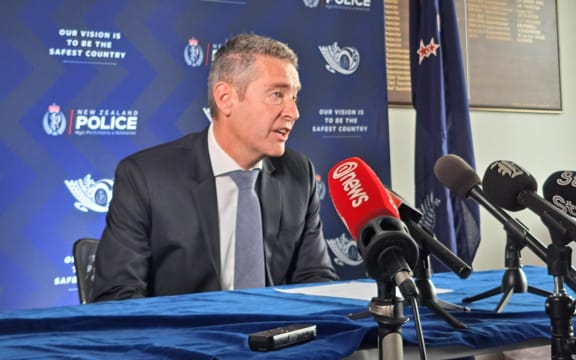
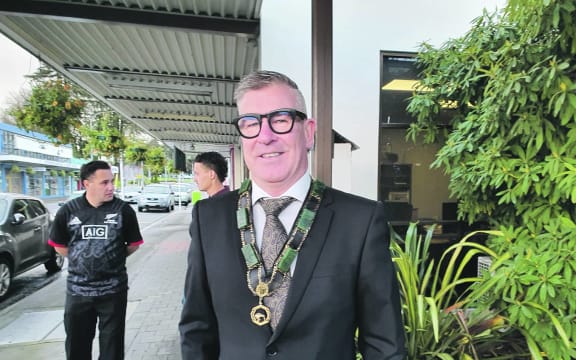
Frank Bainimarama and Sitiveni Qiliho Photo: AFP / Leon Lord
Bainimarama, an ex-military commander and a coup leader, will be sentenced alongside suspended police commissioner – also an ex-military officer – Sitiveni Qiliho.
The former PM was found guilty guilty of one count of attempt to pervert the course of justice and Qiliho was found guilty of one count of abuse of office by the High Court on 14 March.
Bainimarama is facing up to five years in jail while Qiliho is facing up to 10 years.
Acting Police Commissioner Juki Fong Chew is calling for Fijians to maintain order ahead of the sentencing at 11.00am local time.
“Our focus is on ensuring there are no disturbances or disruptions and reiterate the call to respect the rule of law and let the court process take its course,” he said.
A prominent Tongan linguist says the Tongan word for hello – “mālō e lelei” (Thanks for being well) – was not used as a common greeting in the Kingdom until it was mentioned in the works of an Australian missionary named Clerk Maxwell Churchward in the 1950s.
Malo e lelei is a phrase that wasn’t in common use in the past, Tongan researcher Vasalua Jenner-Helu says. Photo: RNZ Pacific
Vasalua Jenner-Helu, who is a researcher and senior lecturer at the ‘Atenisi Institute in Tonga, was recently accepted as a Visiting Academic in Linguistics at the University of Oxford in the UK where she brings her research on decolonising the Tongan language.
“When we look at the background of many Polynesian languages, they have been compiled and written by European missionaries who arrived to the Pacific mainly in the 19th and 20th century”, Jenner-Helu said.
“Our early wordlists which have been collected in Tonga by Europeans have not undergone any formal reviews…these people have conceptualised our language that we now accept as normal today.
“I’m trying to find Tongan words and phrases versus what Churchward has put in.”
Photo: Vasalua Jenner-Helu
Churchward was an Australian Methodist missionary who compiled and translated the entire Tongan language into English with the approval of the late King Taufa’ahau Tupou IV.
A fluent speaker in Tongan, Churchward authored the books Tongan grammar in 1953, and the bilingual Tongan dictionary: Tongan-English and English-Tongan in 1959 which was published by the Tongan government.
The former British Army chaplain is lauded in Tonga for his contributions to Tongan literature with his books still being used to teach the language at schools in the Kingdom and abroad.
“We must give credit to Churchward for his work”, Jenner-Helu said.
“There are many loan words like konifelenisi (conference) or siasi (church)….language is always evolving but at the same time, there are words, phrases and meanings that were not there in our original language.
“My study is an awareness study.”
Clerk Maxwell Churchward Photo: METHODIST CHURCH OF FIJI / ROTUMA/SUPPLIED
One of the phrases that Jenner-Helu said was not in common use in the past was “mālō e lelei” – now a standard greeting in contemporary Tongan. She said it may have been created by Churchward.
“Mālō e lelei is a made-up greeting, it’s very anglicised”, she said.
“We used to say ‘mālō ‘e tau lava’, ‘mālō e tau ma’u’ or ‘mālō e tau ma’u pongipongi ni’, these were the kind of greetings that were in Tonga before Churchward’s books.
“I guess Churchward had to create some kind of equivalent of hello but I don’t find mālō e lelei in any previous recordings of wordlists.”
Photo: John Martin
The phrase malo e lelei doesn’t appear to be mentioned in any literature prior to Churchward’s works.
The first fully translated bible in 1902 (still in use today) uses the salutation “Si’oto ‘ofa”.
John Martin’s 1817 book, An account of the natives of the Tonga Islands in the south Pacific Ocean, contains a glossary of Tongan words compiled from William Mariner, an Englishman who was held captive in Tonga between 1806 and 1810. It outlines several Tongan salutations using “mālō” with no mention of “lelei” (wellbeing).
“Some of the things that someone who compiles a language does is to find something that could be equivalent to words in their own native tongue,” Jenner-Helu said.
“Say an English person conceptualises ‘hello’ into ‘mālō e lelei’ and the shortened ‘hi’ into ‘male’, which is quicker to say than the phrases ‘malo e tau ma’u a pongipongi or malo e tau ma’u a ho’ata ni.
“Language is always evolving but at the same time we need to know that some of these words, phrases and meaning were not in our original language.”
The Ministry of Education has started an urgent clean-up at Sommerville School in Panmure after images of mould, mushrooms, and leaky buildings hit headlines earlier this month.
The Ministry of Education has started an urgent cleanup at Sommerville School in Panmure after hazardous building conditions hit headlines earlier this month. Photo: LDR / Alka Prasad
School principal Belinda Johnston said the clean-up started two weeks ago after a public response to the school’s building crisis.
“Following the media intervention, we had a meeting with a group of people from the Ministry of Education and they committed to remediating the most urgent problems as soon as possible,” Johnston said.
She said progress had been quick since the meeting, but said “it only happened after all of the publicity”.
The school is based in Panmure but supports students by working with 15 other schools across eastern Auckland from Ōrākei Basin through to Maraetai, Johnston said.
“We haven’t got enough space. Everything’s crumbling. It’s not healthy.
“Just under 25 percent of our students are Pasifika and around 15 percent are Māori. That’s 40 percent of our school, so it’s a significant portion who are being affected by all of this.”
Sommerville School principal Belinda Johnston says the school is still waiting on a low-budget rebuild plan for the school. Photo: LDR / Alka Prasad
Johnston said the school currently had two closed classrooms and had had to close its roll due to a lack of space for more learners.
A lack of maintenance has made existing problems worse, she said.
“They’d become major issues by the beginning of this year, we had a flood due to really old plumbing. We had to close two classrooms, the bathrooms, the meeting room, the laundry, and then we had to find spaces for those learners in other areas of the school.”
In a statement sent to Local Democracy Reporting, Ministry of Education head of property Sam Fowler said: “The property at Sommerville School is in poor condition.”
Fowler added: “We’ll continue to undertake further works to improve the condition of the buildings and funding for ongoing maintenance is in place to support the school while they continue to operate in these facilities.”
Johnston said the immediate clean-up was to address surface-level issues and ongoing flood damage.
“Defogging and deep cleaning have been mentioned many times … getting everything clean and dry. Adding good ventilation for air flow, replacing floors and walls and furniture that’s been damaged,” Johnston said.
But she said urgent repairs would not be enough to fix the school’s structural problems.
The school is still waiting on confirmation from the Ministry of Education about when the school will be rebuilt and if new plans will be fit for purpose considering central government funding cuts.
“I think the Ministry of Education have always known that we needed urgent attention, but we’ve always been getting reassurance that our new school was just around the corner,” Johnston told Local Democracy Reporting.
“It needs to meet the needs of our learners. What particularly concerns us is space, because there’s not much space where we are now,” she said.
Johnston said the Ministry of Education would come back to the school at the end of the month with more information on a rebuild.
“We’re yet to see what that design looks like and whether or not we think it’s suitable for our learners is unknown yet.”
Belinda Johnston says promises of a rebuild have led to a lack of ongoing maintenance. Photo: LDR / Alka Prasad
On behalf of the ministry, Fowler said “a major redevelopment of the school is planned with construction expected to begin in the first half of 2025.
“The project to deliver Sommerville School’s new facilities has taken too long to deliver. We welcome the government’s inquiry of our school property function.”
Panmure-Ōtahuhu MP Jenny Salesa said the previous government committed to supporting the school’s rebuild to help vulnerable learners.
“In 2018, a Labour government announced an investment of $17 million into Sommerville School to support special education and ensure children with learning support needs are able to attend school and receive the best education possible,” Salesa said.
“The state of the buildings that our students learn in, many who are medically vulnerable, are unhealthy, leaky and in disrepair, which is why we invested in rebuilding a fit for purpose facility,” she said.
“These projects are deliverable, and this government needs to give certainty to the school … our schoolchildren need classrooms that are fit for them, and won’t get them sick,” Salesa said.
LDR is local body journalism co-funded by RNZ and NZ On Air.
The owner of a South Auckland fried chicken shop robbed at knifepoint on Tuesday night says the encounter was “shocking” and “frightening” for him and his staff.
Security cameras caught the incident. Photo: Chicking Takanini / supplied
A police spokesperson said they were called to Chicking on Great South Road at 9:39pm after a person who had a weapon demanded money from a staff member.
“The offender has taken a quantity of cash from the till before fleeing,” the spokesperson said.
CCTV footage obtained by RNZ showed a man wearing a black hoodie and surgical mask using a weapon to threaten staff into opening the cash register at the fried chicken restaurant.
Chicking Takanini owner Kafi Islam said the man had what appeared to be a “mechanical tool” resembling a knife, and was holding it against his 21-year-old staff member.
He recalled the moment he was sitting behind the counter and the man came in.
“He was saying, ‘Give me the money or I will stab him.’ Then I ask, ‘Okay how much money do you want?’ And he said $100.
“Evidently the staff member opened the cash draw, took a hundred dollars out, and gave it to him. I chose to comply with the robbers rather than fight with them.
“He took the money, and as soon as he saw other cash in the cash drawer he immediately started robbing all the cash.”
Islam said the robber asked the two to open a second till, but Islam “screamed and shouted” at the intruder, telling him to leave.
“It was very very frightening, it was absolutely shocking, absolutely like disaster. Immediately after, I called the cops.”
Islam said the robbery was adding to already existing financial pressures. He said the stolen money would have helped pay for staff wages, and Islam would not claim insurance because of the fees.
“It’s hard to be honest, in this current economic situation. We, Chicking Takanini, is struggling,” he said. “He just took the money but did not rob any fried chicken. We are just a small fried chicken burger shop.”
Islam said the frightening night made him and his workers concerned about returning to work.
“Especially my staff member who got threatened to be killed, was very scared and shaken. He is only 21 years old.”
Police said they were yet to make any arrests and were still in the process of determining who was responsible.
The latest stage in the legal saga surrounding the Lavulavus has been adjourned until next Tuesday, April 2.
(L-R) ‘Etuate Lavulavu and ‘Akosita Lavulavu
The Supreme Court is conducting voir dire hearings.
According to Attorney General Linda Simiki Folaumoetu’i, voir dire hearings are a means of investigating the truth or admissibility of evidence.
She said they also investigated whether police and people involved in collecting evidence for a trial had done so legally and lawfully.
The Attorney General said the voir dire had not been completed.
The fourth and final prosecution witness for the voir dire, Auditor General Sefita Tangi, was still being cross examined by Counsel for the First Defendant, Mrs ‘Akosita Lavulavu;
The voir dire was adjourned from March 11, 2024 to April 2, 2024, due to official travel by Acting Justice ‘Elisapeti Langi and the Auditor General.
‘Akosita and Etuate Lavulavu were jailed in 2021 for corruption and fraud connected with a school they ran.
In 2022, the Court of Appeal overturned the original sentence, ruling that the judge in the earlier trial had not been impartial. The Court of Appeal ordered that the duo be re-tried in the Supreme Court.
Before the re-trial ‘Akosita Lavulavu claimed that Justice Langi would be biased because she had been working at the Attorney General’s office when the charges were first laid.
Justice Tony Randerson said the appeal had no merit.
Lavulavu and others founded a private education institute in Tonga in 2003. Etuate Lavulavu was its president and his wife ‘Akosita was its director.
From 2013-2015 the Institute obtained grants from the Ministry of Education and Training. When the grants were audited by the Auditor-Genera’s office, irregularities were found.
It was recommended that $553,800 be reimbursed to the Ministry and that the case be referred to the police for possible further investigation.
In March 2018 the Lavulavus were charged with three counts of obtaining money by false pretences and convicted after a trial before Judge Cooper.
In July 2021 they were each sentenced to six years imprisonment with the final year of Mrs Lavulavu’s sentence suspended for two years on conditions.
They remained in custody until bail was granted in September 2022.
Mr and Mrs Lavulavu successfully appealed against their convictions. On October 10, 2022 the Court of Appeal quashed their convictions and ordered a retrial.
The Court of Appeal said there was ample evidence to support findings of apparent bias on the part of the Judge, that the trial was unfair and that the verdicts could not stand.
However, the Court was satisfied that there was sufficient evidence to support convictions on a correct application of relevant legal principles.
In November 2022 former Lord Chief Justice Whitten, KC, set a trial date for May 8, 2023, but the DPP filed an amended indictment which said that Etuate Lavulavu was guilty as a party rather than as a principal offender.
Mr Lavulavu applied to have the charges against him dismissed on the grounds of abuse of process. However, in May 2023 Lord Chief Justice Whitten dismissed Mr Lavulavu’s application. Etuate Lavulavu was given leave to appeal. His wife did not appeal.
The appeal was subsequently dismissed.
For more information
Judge bars media from reporting on Lavulavu couple’s $500,000 fraud retrial
EDITORIAL: Tongans have been left in the dark over the reported resignation of Prime Minister Hu’akavameiliku as Defence Minister and Fekitamoeloa Katoa ‘Utoikamanu as Foreign affairs Minister.
King Tupou VI Photo/File photo
Neither the palace nor the government will confirm or deny the reports, Both the palace and the parliament are letting the people down.
Senior government sources told Kaniva News earlier this week that they believed the reports were true.
Since 2010, when Tonga adopted its frail constitution, the kingdom has been a democracy, but one that has been constantly under threat as forces in the palace seeks to reassert their dominance over the country.
His Majesty King George V agreed to relinquish his executive to a government elected by the people.
Clause 51 (7) of the Constitution bars the king from making any interference in the daily operations of Cabinet, including nominating the Ministers for the king to appoint.
The Tongan people can be forgiven for thinking that King Tupou VI has done just that.
The Prime Minister and Hon. ‘Utoikamanu appear to have resigned after coming under intense pressure from the unelected Nobles’ MPS, some of whom seem to see themselves as the guardians of the King’s privileges.
Regrettably, but perhaps understandably, the Prime Minister seems to have buckled under that pressure.
As reported earlier, the Nobles sent the PM a letter saying: “We are the king’s cultural preservers (‘aofivala). Therefore, we propose that you and your government respect the king’s desire.”
This kind of bullying should be intolerable in a democracy.
Equally dangerous and, frankly, absurd is MP Piveni Piukala’s proposal to have the King hand- pick the Noble’s representatives for Parliament.
As we have argued before and argue again, this kind of behaviour smacks of the law of the jungle, not respect for the Constitution of a democratic nation.
The resignation of the Prime Minister and the Minister Foreign Affairs is a step backward for Tonga toward the dark ages. It will ruin Tonga’s fragile democracy. Hon. Hu’akavameiliku’s apparent submission to pressure from the Nobles means his name will never be included in the list of those who have stood up to defend Tonga’s democracy and constitution. The Attorney General was right in saying it was unconstitutional for the King to interfere with the Prime Minister’s power to nominate Ministers under Clause 5 of the Constitution.
The King and the PM must immediately clear the air and make it clear what has happened. The implications for democracy and for the kingdom are frightening and have led to serious concern about how this might play out.
Veteran Tongan journalist Kalafi Moala says the Prime Minister and Minister of Foreign Affairs resigned before they flew to Niuafo’ou recently to meet the king. Moala claims that the Prime Minister has nominated the king’s son, Crown Prince Tupouto’a, to become the Minister of Defence and Minister of Foreign Affairs.
Moala claimed this alleged nomination and the resignation of the PM from Defence and ‘Utoikamanu from Foreign Affairs had been agreed between the king and the Prime Minister before the king accepted a request from the Prime Minister for the audience at Niuafo’ou.
For the King to act outside the Constitution and then to nominate his son, if true, would be a serious threat towards our Constitution. Moala has also claimed that the king’s daughter could also be nominated for a Cabinet position. Should any of this come to pass it would truly be a step back into the dark ages when Tonga was an absolute monarchy in which the ordinary people had no say.
One of the thing which gave impetus to the push for change in Tonga, led by the Defender of Democracy ‘Akilisi Pohiva, was the litany of corruption and abuses of power involving the monarchy in the years before 2010. This included the illegal passport sales, during which US$50 million proceeds were lost and in which King Tupou IV was implicated, and the collapse of Royal Tongan airlines.
Six people have been arrested after two separate alleged supermarket thefts in Auckland.
File photo. Photo: RNZ / Richard Tindiller
In one incident, police received a report a trio had allegedly left the supermarket in Highland Park in east Auckland without paying on Sunday afternoon, Inspector Rakana Cook said.
“Customers had alerted staff members to the theft after seeing them walk out without paying and load their vehicles with unpaid groceries.
Cook said two siblings were arrested after trying to flee on foot.
“A third person, a son of one of the others arrested, was taken into custody after being stopped a short distance away with a carload of groceries.”
It was estimated that the six trolleys worth of groceries the trio allegedly took was worth $16,000.
A man, 35, is scheduled to appear in the Manukau District Court on 28 March charged with three counts of shoplifting.
A woman, 25, is charged with one count of shoplifting and will reappear in the Manukau District Court on 15 April.
An 18-year-old will appear in the Manukau District Court.
In a separate incident, police were alerted to three men leaving a supermarket on Manukau Road in Pukekohe with a shopping trolley full of meat products around midday on Saturday, Inspector Joe Hunter said.
“They then walked through the self-checkout without paying, while also threatening a member of the public who had confronted them during the incident.
“The offenders left the store and loaded the stolen meat into a vehicle in the car park and drove away.”
Inspector Hunter said officers were able to find the vehicle because a member of the public noted the number plate and passed that information to police.
“In Drury, a police unit signalled for the driver to stop on Great South Road which he did, and the stolen meat was found inside.
Three men were taken into custody without incident,” he said.
The meat, valued at about $750, was recovered and returned to the supermarket.
“Following enquiries, we have laid additional charges over an earlier incident at a Pōkeno supermarket on 21 March where around $1000 in meat products were stolen,” said Inspector Hunter.
Two men, 39 and 25, were scheduled to appear in the Pukekohe District Court on 27 March facing multiple shoplifting charges.
A third man, 28, was also set to appear on shoplifting charges but faced a separate charge of speaking threateningly.
Authorities have publicly released the names of suspects in murder of patched Head Hunters member Charles Pongi during a large East Auckland gang brawl last year.
Charles Pongi
They were Vili Laungaue and Lika Feterika.
A New Zealand Herald report this afternoons said: ”The duo were initially among six men – some charged with murder, others charged with lesser offences alleged to have occurred on the same day – who had intended to seek continuing name suppression during a High Court at Auckland hearing earlier this month”.
“A judgment released to the Herald today indicates suppression for Laungaue and Feterika has now lapsed, while the identities of three others will be revealed next month unless those defendants opt to take their failed name suppression bids to the Court of Appeal for a second look”.
The revelation comes after a homicide investigation was launched earlier this year following the death of the 32-year-old, who was alleged to have been shot when more than 70 gang members from the Head Hunters, Rebel MCs, and associates converged on the Taurima Reserve in Pt England on 5 August for an intended brawl.
Pongi, 32, was shot in Taurima Reserve before he took himself to hospital but died that same night.
Five men initially charged in relation to Pongi’s death all appeared in court in December.
Four men had been charged with murder and were all in their 20s, while another man has been charged with assault, discharging a firearm with the intention of intimidating members of the Head Hunters gang and unlawful possession of a firearm.
An investment analysis shows the government should continue funding the free school lunches programme, a University of Auckland researcher says.
Supporters say free school lunches boost attendance, attention and help feed children who can go hungry when cupboards are bare. (File photo) Photo: RNZ / Angus Dreaver
The Public Health Communication Centre used investment analysis to look at the expected outputs of the Ministry of Education- provided Ka Ora, Ka Ako Healthy School Lunches programme to how well it was completing its goals.
Associate Minister of Education David Seymour recently announced plans to review funding of , saying 10,000 lunches were being wasted each day. The programme is funded to feed more than 230,000 pupils until the end of the year, at a cost of about $325 million, but Seymour said funding could be cut by up to half.
Educators and child advocates have vocally opposed reducing funding, saying the healthy food helps reduce truancy, supports concentration in the classroom, and feeds hungry children when they sometimes miss out at home.
The University of Auckland study looked at 21 outputs measured across the programme, with 16 of those being rated has done “excellent” or “good.”
These included reducing the financial burden of food on disadvantaged households, alleviating hunger at school and promoting healthy eating.
The one element it did poor at was “certainty of continuity of the programme”, due to the funding for it currently not going beyond December this year.
Professor Boyd Swinburn told RNZ that with the economic credentials coming out of the programme the government could not pull out of it without heavily impacting childrens’ education and health.
“What I would like to see is that the government take these economic credentials and look at ways the programme can be expanded to reach more schools.”
Swinburn said schools currently running the programme have “no idea whether its going to continue into the future.”
“If the programme was going to continue then that would give them much more confidence to be able to get better systems in place, become more efficient, find other supply chains for local foods, train up more staff and so on, but the incentive is just not there at the moment because of the uncertainty.”