A woman who was arrested and charged earlier this year after Police seized 15 kilograms of methamphetamine has been reportedly released.
‘Anasēini Kolokihakaufisi. Photo/Supplied
‘Ana Seini Kolokihakaufisi, 37, along with her brother Tevita Nonu Kolokihakaufisi, 39, were arrested at their home after Police seized 5.657kg of meth at their family residence at Kolofo’ou.
A further 9.927kg was confiscated at Tēvita’s office at the National Reserve Bank of Tonga. The street value of the seized illicit drugs was estimated at $15 million Pa’anga (US$6.3 m).
A report by Kakalu ‘O Tonga newspaper this week alleged that Ana Seini’s lawyer, Mr David Corbett, had recently announced her release.
The reasons for the release were still unclear. However, it was reported at the time of her arrest that the defence counsels for the siblings had sought bail for ‘Ana based on a letter from a doctor that was issued in 2015, indicating her previous mental health condition.
The Magistrate refused the bail and demanded a more recent medical evaluation for the Court to consider.
Drug use crisis
The release comes amid the kingdom’s struggling to tackle its drug use crisis.
A new development in that crisis was the attempt by notorious motorcycle gangs, the Comancheros, to establish a chapter in Tonga.
The Comanchero has headquarters in New Zealand and Australia.
The Tongan police arrested two Comanchero suspects recently following the previous arrest of two of the gang’s alleged senior figures last month.
The two men arrested over the weekend were believed to be the sergeant-at-arms and the treasurer of the gang’s branch in Tonga. Police said the arrest was a major blow to the group’s operation in the country.
Meanwhile, in New Zealand, Police said nearly every member of the Comanchero Motorcycle Gang now faces criminal charges amid a three-year investigation.
New details about the investigation were released by police yesterday and also revealed the gang was raising money so its members could undergo “military-styled training” by a trainer brought into the country.
It has been revealed that the New Zealand Comanchero established a “commission” which ordered members to raise funds to buy a gang pad, two businesses, and guns.
“As an example: It is alleged there would be a $5000 commission on every kilogram sold by their members,” the New Zealand Police Commissioner Andrew Coster said.
The Tongan police believe that the arrest they made over the weekend could help thwart the Comanchero’s attempts to expand their reach in the kingdom.
“What the intelligence is telling us now is that the development of the Comancheros is halted, and we’d like to think that will be the end of the Tongan chapter of the Comancheros motorcycle gang,” Tonga’s police commissioner, Shane McLennan, was reported by the ABC news as saying.
“Just like any club or organisation, gangs have a hierarchy and a structure. The treasurer has a financial role but the sergeant-at-arms is a key member of a gang for us to be able to arrest.
The Tongatapu Rugby Sub-Union Committee has apologised to the Liahona players for what appeared to be an incorrect referee decision that led to their loss against Kolomotu’a last week at Teufaiva National Stadium.
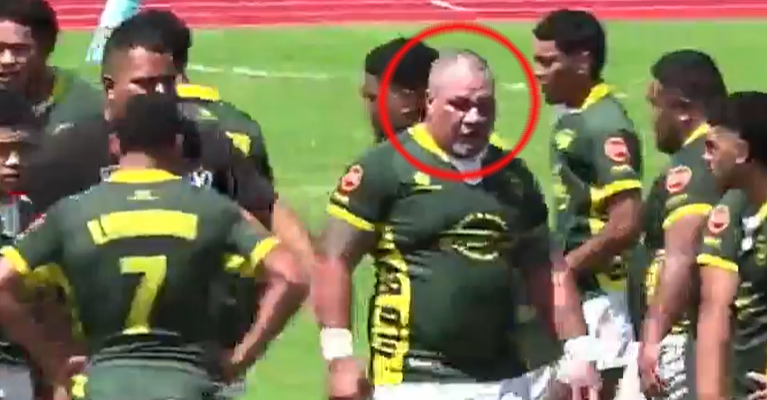
Afimeimo’unga Hola (circled in red) allegedly punched the sideline referee.
As we reported earlier this week, an altercation following the loss led to an incident where a Liahona player allegedly punched a side line referee.
Despite the apologies, the Committee said it had banned the alleged Liahona offender from playing for life.
A fine of an undisclosed amount would also be imposed according to the Committee’s rule for such an offense, a Commiittee spokesperson told Kaniva News.
The Committee was also in the process of prosecuting the alleged offender, it said.
The spokesperson did not elaborate on the details of the referee’s mistake.
The incident occurred shortly after the referee allowed a late try just after full-time, but the ball was still in play, ultimately leading to Kolomotu’a’s victory.
Before awarding the try, the referee sought advice from the side line referee, who agreed it was a try for Kolomotu’a.
At the end of the game, the side line referee was seen talking to the Liahona players before he was apparently punched.
The alleged offender has been identified as 42-year-old Afimeimounga Hola.
Hola was recently on the news after he received a suspended sentence of 11 months imprisonment for two counts of using a service to abuse and causing harm by posting an electronic communication.
He was the first person convicted under Tonga’s Electronic Abuse Offences Act.
In that case, he broadcasted offences on Facebook and enticed others to commit arson against plaintiffs causing them fear and anxiety.
Lack of referees
The spokesperson expressed disappointment that the mistreatment of referees in rugby is still ongoing.
“The committee encounters significant challenges when attempting to secure referees to officiate our games during the annual district tournament,” he stated.
He said that the committee was underfunded and had to run the tournament in a very challenging situation.
He said that the incident between the Liahona and Kolomotu’a teams did not improve their situation.
“Previous incidents have shown that such abuse causes officials to leave the sport”.
He said the Committee has apologised to the Liahona team.
He also said that the “player who punched the referee is prosecuted and banned from playing for life”.
The match was part of the yearly district rugby union quarter-final games for men and women.
A petition trying to oust the chief justice from his post because he is gay is still circulating around Tonga.
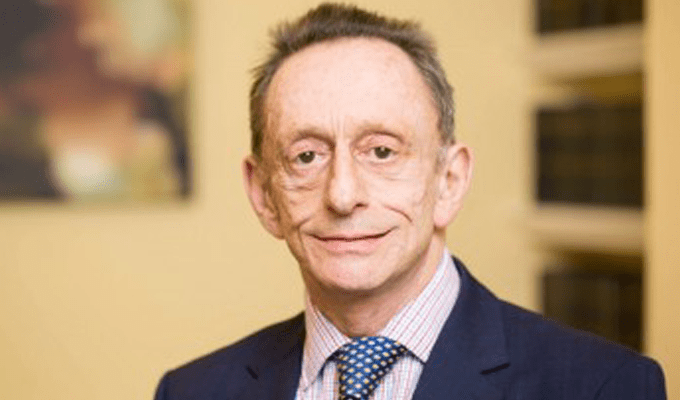
Malcolm Bishop
Welshman Malcolm Bishop took on the role this month.
Tonga’s law criminalises ‘acts of sodomy’.
RNZ’s Tongan correspondent Kalafi Moala told Caleb Fotheringham of Pacific Radio New Zealand a few thousand people are expected to sign the petition.
He says there will be a march to present the petition to the palace office.
As Kaniva News reported last week, Senior Tongan lawyer Clive Edwards Snr alleged that advocates for LGBTQ+ rights, such as Mr Bishop, may be breaching Tonga’s laws prohibiting sodomy.
Mr Edwards also expressed concerns about Mr Bishop’s ability to remain impartial in court cases involving sodomy over which he would preside.
In 2021, Tonga’s then Chief Justice, Mr Michael Whitten, sentenced an 18-year-old teenager to 42 months imprisonment after sodomising a 14-year-old boy.
CEDAW
The controversy surrounding the appointment of the new Chief Judge arises about a decade after protests had been staged against the Akilisi Pōhiva government’s decision to ratify CEDAW.
ABC Radio reported that the King of Tonga finally decided to withdraw the government’s ratification of the UN Convention on the Elimination of All Forms of Discrimination Against Women (CEDAW).
“There has been a strong reaction from churches and members of the public against CEDAW, over fears it could lead to abortion and same sex marriage in the conservative kingdom”, it said.
The king also said the government’s move to ratify CEDAW was “unconstitutional”.
RNZ reported at the time that the King, in a statement, said he wanted to acknowledge the concerns of 13,048 of his subjects, who had sent eight petitions to him.
Tonga is one of only seven countries, including the United States, which have not ratified the convention.
LGBTQ+ lifestyle
As we recently reported, a petition was currently being organised to urge the king to revoke his appointment of Mr Bishop as the new Chief Judge after it was revealed that his LGBTQ+ lifestyle might violate Tonga’s law, which prohibits sodomy.
The petition stems from the revelation that Mr Bishop and his late partner, Anthony Vander Woerd, another man, lived together as a gay couple for 51 years.
The Legal Futures website reported earlier this month that Mr Bishop is an LGBTQ barrister, and he is open about his sexual orientation and gender identity.
The online legal news source also reported Barrister and TV personality Rob Rinder as saying that he had previously named Mr Bishop as his LGBTQ hero.
Same-sex marriages have been legal in England and Wales since March 29, 2014.
Churches and legal stakeholders in the kingdom were planning petitions and marches to the king, urging His Majesty to rescind Mr Bishop’s appointment.
Christian life
After attending Ruabon Grammar School near Wrexham in Wales, Mr Bishop pursued theology studies at Oxford University.
More recently, he started translating the New Testament into modern English, much of which was done during Covid, and had recently published The Gospels – a lawyer’s translation from the original Greek. He said his translation of the whole of the New Testament would be published by the end of the year.
He was called to the Bar in 1968 and is now a King’s Counsel.
He served as a Deputy High Court Judge, Recorder of the Crown Court, Chairman of the Isle of Man Legal Services Commission, Bencher of the Inner Temple, and member of the Family Law Bar Association Committee. He was formerly a member of the Bar Council.
By rnz.co.nz and is republished with permission. Additional information by Kaniva News
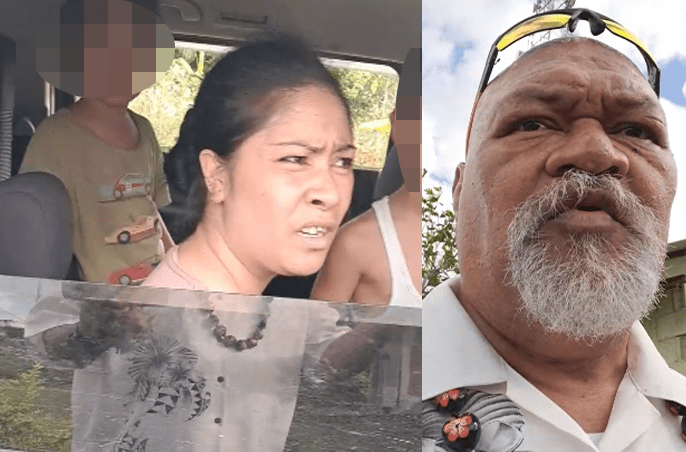
Tenants and their children, who were inside a vehicle, were shocked when confronted with an unexpected eviction order in Tonga’s main island of Tongatapu.
Tenants confronted with an eviction order.
The incident gained widespread attention and sparked strong reactions from the online community after a live video of the dispute was shared on Facebook this week.
It comes after what seemed to be a private bailiff service arrived at a Fualu residence opposite the king’s villa at Tufumāhina.
A bailiff spokesperson, Kolio Tapueluelu, who was live streaming the incident, claimed they had the eviction order. While he was on live, a vehicle with the family arrived at the property.
According to exchanges during the live stream, Tapueluelu introduced himself to the driver and a woman in the back passenger seat, who were identified as the tenants.
Tapueluelu told them they were there to serve the eviction order, and the tenants had to leave the property immediately.
A bitter confrontation ensued as the tenants disputed the eviction order.
As the woman adamantly refused to leave and begged Tapueluelu to remain calm, her children, in the meantime, were visibly in fear and distress.
The argument continued, but what drew strong attention on social media was not the confrontation itself but the viral video showing Tapueluelu allegedly making threatening remarks.
“Stop laughing,” Tapueluelu said in Tongan to the driver after he laughingly replied, telling Tapueluelu that the alleged damage to the toilet in the property was acceptable because he had constructed it.
The woman intervened and insisted the court hearing to resolve the issue had yet to be heard, but Tapueluelu showed them documents claiming they had just been issued from the court.
“This is our house”, the woman insisted reiterating her connection with the landlord who was said to be her sister.
“We won’t leave”, she told Tapueluelu in Tongan.
“We have no place to go”.
Responding, Tapueluelu told them to leave.
“Get out of here right now,”Tapueluelu said in Tongan, telling the couple that he wanted them to leave for the road.
“Do what I tell you to do to make it short”.
Many commenters were also concerned about the bailiffs’ lack of official uniforms and IDs presented during the live streams.
In another video, which seemed part of the live stream video taken at the scene, one of the bailiffs was seen saying a prayer.
The woman was visibly tearful, and everyone appeared to reconcile and begged for each other’s forgiveness.
Tapueluelu later took to another livestream to confront his critics, saying that they had no idea about the task’s difficulty or the bailiff’s role.
It was unclear whether the tenants had finally been evicted or if there was an agreement for them to stay.
Both Tapueluelu and the family could not be reached for comment.
What did Facebook users say about this video?
The video has garnered more than 400 shares, 900 comments and 700 reactions.
Several Facebook users also expressed outrage at the viral video. One wrote, “Do it the proper way.”
“The children are pitiful,” another user commented.
A third user wrote, “The tenants were right. Do they have a right to resist?
“Unprofessional,” another wrote referring to the bailiffs.
Some commenters sided with the bailiffs, saying they were doing their job and the tenants should refrain from damaging the property.
By Jonty Dine of rnz.co.nz and is republished with permission
Anthony Joshua is gunning for a third world heavyweight title this weekend.
Anthony Joshua holds numerous world titles. Photo: Photosport
Boasting a combined 45 career knockouts, Anthony Joshua and Daniel Dubois both possess ungodly power, and this weekend they are both prepared to wield it in their grudge match at Wembley Stadium for the IBF world heavyweight title.
With the bad blood, gold on the line, and close to 100,000 fans in the arena, a classic clash is on the cards.
Fresh off his vicious knockout of former UFC heavyweight champion Francis Ngannou, Joshua said he was more dangerous than ever.
“Aside from belts, and it being him, I’m just ready to fight. This is alpha male business now. September 21. It’s going down,” he told DAZN Sports,
Joshua is riding a four fight win streak following back to back losses to Oleksandr Usyk.
Now in the midst of a career resurgence, he said that ‘the best AJ is still to come,’ and he has his target locked firmly on Dubois.
“I know boxing very well, I’ve study Daniel, and he will see. I don’t focus on the belt, just him.”
Though giving up an eight-year age difference, Joshua is oozing confidence ahead of the London showdown.
“This is a high paced fight with two big punchers. These fights take a lot of you, and you have to dig deep because there’s no there’s no other exit except for victory.”
As well as the IBF title, the winner will likely get the next shot at either Tyson Fury or Oleksandr Usyk when the pair rematch on December 21 in Riyadh.
The tension between the pair is obvious, almost coming to blows at a press conference where Joshua demanded that Dubois not disrespect him after Dubois suggested they find out who the better fighter was then and there.
Much of it stems from a rumoured sparring match between the two several years ago.
“People say he rocked me. People say he dropped me around that time. There’s about 15 heavyweight saying that they’re dropped me everyone uses my name for clout, but the best way to prove it is by fighting me,” Joshua said.
Neither would elaborate on the details but Dubois said whatever happened counts for little come Saturday.”
“That happened seven years ago. This is not sparring.”
It’s been a long journey to the title for Dubois after suffering a knockout loss to Joe Joyce in 2020.
“I was in a dark place, but I feel like I’ve been resurrected again and I am in the light and ready to fight. He has been the king for a while, a long time in fact, but I am a kingslayer.”
Dubois said it’s his time.
“Joshua’s the main man holding all the keys. I aim to knock him out. I need to go out there and take it from him. I’m going to turn him into an old man in the ring. I’m going to make a fool out of him by knocking him out.”
Te Whatu Ora says the risk of a wide-spread outbreak in New Zealand remains low. However, Burnett Foundation Aotearoa chief executive Joe Rich worries about the greater risk the virus poses to gay, bisexual and other men who have sex with men (MSM).
“It can be incredibly uncomfortable. But it is treatable,” he says.
“Those that do get it report extreme levels of discomfort sometimes requiring hospital level care and morphine to deal with the pain.”
The strain suspected to be in New Zealand is different from the more deadly clade I currently spiking across Africa.
“There are no cases of clade I in Aotearoa, or our neighbouring countries,” Te Whatu Ora says.
“Mpox clade II is the most common type seen worldwide and all mpox cases reported in Aotearoa to date have been clade II.”
Africa: Mpox virus on the rise
Checkpoint28 August 2024Queue
What is mpox?
Te Whatu Ora’s website identifies mpox as a viral disease commonly transmitted through contact with blisters or lesions from someone who has the virus.
Common symptoms of mpox are flu- or cold-like symptoms such as fevers, muscle aches and swollen lymph nodes, as well as lesions on or around the genital area.
Rich says not everybody who attended the Winter Pride event needs to be concerned, but if you are experiencing the symptoms, or have been notified as a contact, you should refrain from sex and get tested at a local sexual health clinic.
He says vaccines are the best way to proactively prevent against the latest outbreak.
National Public Health Service medical officer of health Dr Matt Reid says those considered to be at high risk of transmitting mpox can receive appropriate advice and treatment by booking a consultation with a health professional.
“During the consultation, a medical practitioner discusses the individual’s risk of exposure to mpox, and the options available. These include protective and preventative measures,” he says.
Burnett Foundation Aotearoa chief executive Joe Rich. Photo: RNZ / Jake McKee
Who is considered high risk?
In Aotearoa New Zealand, gay, bisexual and other men who have sex with men have the highest risk of transmitting mpox.
Auckland University researcher and associate professor of social and community health Peter Saxton believes this is due to the community’s close sexual networks.
“We are a globally interconnected community and vaccine coverage among New Zealand men who have sex with men remains woefully low.”
However, the LGBT+ community’s long history of sexual health awareness made the country’s last outbreak easier to manage.
“Historically we’ve seen very good engagement with sexual health care by our communities,” Saxton says.
“Having lived through the HIV epidemic … we’re aware of how quickly cases can spread around our communities.”
Trans and non-binary people who have sex with MSM are also considered high risk, and are eligible for free vaccinations through their GP, as well as anyone who is a close contact of someone who has been infected with mpox.
Dr Peter Saxton. Photo: RNZ / Jake McKee
Do MSM need to change their sexual behaviour?
“Not at this stage,” Rich says.
“If we were dealing with a large-scale outbreak the advice might change.
“We’re a sex-positive organisation and we want to encourage people to do things to protect themselves, which in this case is getting the vaccine, before we try to encourage people to stop having an enjoyable sex life.”
Reducing or changing sexual activity due to illness can be a difficult subject for gay and bisexual men due to stigma perpetuated during the HIV/AIDS epidemic – but Saxton wants all MSM, even those “in the closet” or “DL”, not to hesitate to seek care if they are experiencing symptoms
“People should be alert, but absolutely this is not something that should mark someone out as being a gay or bisexual man,” he says.
“Just pay attention to the information that trusted organisations like Burnett Foundation Aotearoa are giving.”
How can MSM best protect themselves against mpox?
Rich says vaccines are still the best way to protect against mpox.
“Two doses are the ideal level of protection. And they don’t always protect you from getting it, but it will significantly reduce the severity of the symptoms.”
However, Saxton says the current law makes access to the mpox vaccine more difficult.
“Commercial events haven’t been confident they can communicate information about the vaccine and mpox risks without falling foul of the Medicines Act.”
The vaccine is currently unapproved in New Zealand, meaning it is only able to be made available through section 29 of the Medicines Act 1981. Body Positive New Zealand’s website says this “allows for ‘unapproved’ vaccines to be provided to individual medical practitioners for a particular patient after assessing the patient’s needs”.
Saxton is calling on Te Whatu Ora to advocate for the approval of the vaccine.
“We know that if government releases the tools and the resources, the communities can rally and deliver this at scale and really quickly,” he said.
“The first thing Te Whatu Ora can do is to proactively get the mpox vaccine approved by Medsafe.”
Reid says Te Whatu Ora remains well-prepared to deal with cases of mpox.
“NPHS continues to update mpox clinical advice for healthcare professionals and information to the public,” he says.
“If you’re in Auckland, you can book an appointment by calling Auckland Sexual Health Service on 0800 739 432. If you are based outside of Auckland, please contact your local sexual health service.”
The Ministry of Communication (MEDIDECC) has cautioned companies and individuals in Tonga who are selling Starlink satellites without the necessary licenses, labelling their activities as “illegal.”
It has been warned that those breaching the applicable statutes could be liable for heavy fines.
Tongan residents are experiencing internet inconsistency patterns following repeated damages to the undersea cable connecting internet services to its northern archipelagos.
The latest damages last month appear to have been recently fixed.
Starlink was recently granted a provisional temporary permit to operate in the Kingdom for six months as part of the government’s attempts to provide stable internet connection to its people.
“It has come to our attention that certain individuals and entities are engaging in the illegal resale of these terminals, which are exclusively distributed by authorised sellers, namely Digicel Tonga and Wantok”, the Communication said in a statement.
It said the unauthorised sale of Starlink terminals could undermine the telecommunications system and pose consumer risks by offering non-compliant or malfunctioning devices.
“Under current legislation, individuals found guilty of illegally reselling Starlink terminals will face severe penalties. The law stipulates that offenders may incur a penalty of up to $10,000 or face imprisonment for a term not exceeding four years, or both”.
This stringent measure was put in place to protect consumers and ensure that all telecommunications services provided in Tonga meet established safety and quality standards.
“We urge all residents and businesses in Tonga to refrain from purchasing Starlink terminals from unauthorized sellers.
“Instead, please seek out Digicel Tonga or Wantok for legitimate purchases.
By doing so, you will ensure compliance with local laws and receive proper customer support and service”.
Consumers should verify the credentials of any seller before completing a purchase to assist consumers in making informed decisions, it said.
“Authorised retailers can provide necessary documentation confirming their legitimacy as distributors of Starlink products.
“If you suspect any illegal activity related to the resale of Starlink terminals, please report it immediately to local authorities or contact details below.
Your cooperation is vital in maintaining a lawful marketplace and protecting our community”.
The Tonga Dialysis Centre was launched a year ago, but no official opening date has been announced.
The Minister of Health, Dr Siale ‘Akau’ola, was reported by the Tonga Independent as saying the government was still awaiting a report from its stakeholders in the USA.
As we reported in August last year, Tonga has begun construction of the kingdom’s first dialysis centre.
A groundbreaking ceremony was staged at the time to mark the occasion at Veitongo.
The former Minister of Health, Saia Piukala said during that ceremony that the centre is named after Siaosi Brown, a Tongan man who died while hiking Bell’s Canyon, US in June 2017.
Siaosi was Rod Emam’s best friend. Emam’s father and uncle donated and funded the centre.
Tonga did not have a dialysis centre, which forced people who suffered from diabetes and renal failure to travel to overseas countries, including New Zealand, Australia and the US, for treatment.
The Ministry of Health chief executive Dr Reynold ‘Ofanoa said during the ceremony about 75 percent of Tonga’s annual death rate had been due to non-communicable diseases.
He said 40 to 50 people need this dialysis service.
The groundbreaking ceremony today comes after years of negotiations, Dr ‘Ofanoa said.
As we previously reported, a private company in Salt Lake City was partnering with Tonga’s Ministry Of Health. The US organisation involved philanthropists who wanted to leave some of their money and wealth to charity.
Tonga’s Attorney General is appealing a Supreme Court ruling that stops using the Auditor’s report on Lavulavus’ school attendance as admissible evidence in a pending re-trial of the Lavulavu couple.
As Kaniva News reported previously, the Supreme Court has ruled that a report compiled by the Auditor General’s department on a school at the centre of the Lavulavu’s trial cannot be used as evidence in court.
Judge ‘E.M.Langi, presiding, said the standard of the material in the report amounted to hearsay.
However, local media reported today that the Solicitor General submitted that the whole report was not based on hearsay.
A report by the Tonga Independent described the basis of the appeal in Tongan as: “ko e konga pe he ‘Atita na’e na’e ‘iai ‘a e fanongo Talanoa (hearsay) pea ko e konga pe ia ke to’o kae ‘oua ‘e fakata’e’aonga’i kotoa ai ‘a e fu’u lipooti”.
The news outlet said that Solicitor General Semisi Lutui submitted that only part of the Auditor’s report was based on hearsay. He argued that the court could remove that part of the hearsay report, and the rest should be regarded as valid.
Judge Langi ruled that the Auditor General’s Report dated October 5, 2016, was inadmissible as evidence in Lavulavu’s retrial.
She said the Crown could not rely on the report as evidence of its truth.
On October 10, 2022, the Court of Appeal quashed convictions against Etuate and Akosita Lavulavu for obtaining money by false pretences for their private college, Unuaki o Tonga Royal Institute and ordered a retrial.
The retrial was set to run before the then-Lord Chief Justice Whitten on May 8, 2023. The Crown intended to rely on a report from the Auditor General dated October 5, 2016, but on May 1, 2023, the Defendants‟ filed objections to the admissibility of the Auditor General’s Report.
The retrial was initially listed to commence in May 2023, but for various reasons did not proceed.
On August 16, 2023, Mr. Lavulavu filed supplementary submissions in respect of his objections to the Report and contended that the process by which the Auditor General produced his Report was improper, unlawful, unreasonable, irrational, procedurally unfair and is unacceptable.
Former Lord Chief Justice Whitten determined that the content of those supplementary submissions would have to be dealt with by way of a voir dire, including the calling of evidence.
The voire dire eventually began on November 7, 2023.
After considering the submissions of both parties on the scope of the voir dire, I agreed with Mrs. Fa‟anunu and Mr. Lavulavu that the evidence by Crown witness Ms. Popua Mafi may have exceeded the scope of the voir dire grounds, the judgement read.
“On December 18, 2023, amended grounds of objections were filed on behalf of the First Defendant. On 31 January 2024, I issued written directions on the scope of the voir dire”, the judgement also read.
“Before the continuation of the evidence of Popua Mafi I informed the parties that the only grounds that I would consider for the purposes of this voir dire were hearsay and unlawfully obtained evidence. I informed them that I would not be concerned with any issues of credibility or reliability, as they were matters for the trial proper,” the judge said.
The first Crown witness was Salome Lavemaau, who led the team assigned to audit the relevant TVET grants to the Lavulavu’s private college, Unuaki „o Tonga Royal Institute (UTRI) together with Lutimila Tafea and Sefita Leha.
They audited the school for the period Semester 1 of 2013, Semester 2 of 2014 and Semester 1 of 2015;
Salome’s role was to review the expenses for which the TVET grants were used. Half of the grant was to be used for teachers salaries, with the remaining 50 percent divided between teaching and learning resources.
She was provided with UTRI financial statement and receipts and noticed that the details on the receipts were inconsistent with the financial statements. The mority of the receipts were not for expenses for renovating the school which was the main purpose of this part of the grant. Consequently, when the expenses did not add up, she submitted her report in which she stated that she was not satisfied with the information provided.