There are 134 new community cases of Covid-19 reported in the community today.
In a statement, the Ministry of Health said the new community cases are in Northland, Auckland, Waikato, Bay of Plenty and the Nelson/Marlborough regions.
“We are also advising of two additional cases in Nelson-Tasman region. This brings the number of cases in the region to three. Due to a technical error, these three confirmed cases in Nelson-Tasman will be officially included in our figures tomorrow,” the ministry said.
There no additional cases to report today in Hawke’s Bay, Lakes, Taranaki, MidCentral, Wairarapa, or Wellington.
Seventy-one of today’s new cases are yet to be epidemiologically linked to the current outbreak.
Today there are 89 cases in hospital – 15 in North Shore, 36 in Auckland, 34 in Middlemore, three in Waikato and one in Rotorua. Of these cases, 56 are not vaccinated or not eligible to get vaccinated.
There are also nine cases in ICU or HDU.
That brings the total number of community cases in the current outbreak to 8431.
Northland
There is one new case in Kaitaia. Public health interviews are underway to identify a link.
Auckland
Today, there are 116 new cases. Health staff are now supporting 3844 people to isolate at home, including 977 cases.
Waikato
Of Waikato’s eight new cases four are in Te Kūiti, one in Huntly, one in Hamilton, one in Ngāruawāhia, and one in Te Awamutu.
Five of today’s cases have been linked to previous cases and the remaining three are under investigation.
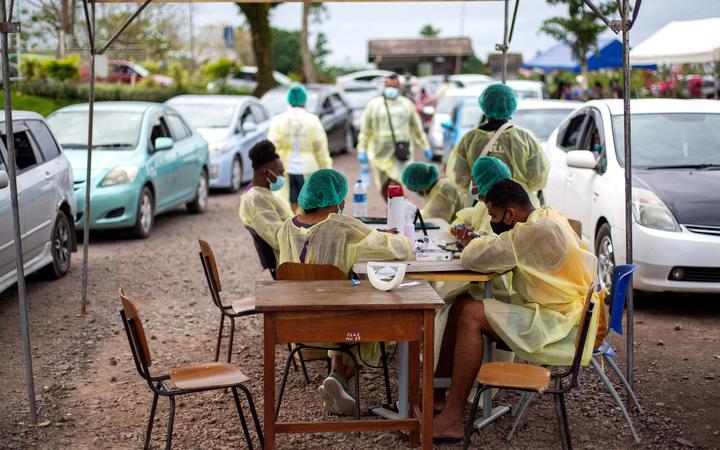
There are six pop-up and dedicated testing sites operating across Waikato today in Hamilton, Ngāruawāhia, Ōtorohanga, Thames and Te Kūiti.
Health staff are assisting 118 cases to isolate at home.
Bay of Plenty
For the nine new cases in the region, one is in the Whakatāne district, three are in Tauranga, and five are in the wider Western Bay of Plenty.
All are close contacts of previously reported cases and were already isolating at home when they tested positive.
On vaccinations, there were 40,972 total doses administered yesterday – including 6213 first doses, 11,862 second doses and 21,431 booster doses. To date, 92 percent of eligible people in New Zealand have had their first dose and 86 percent are fully vaccinated.
Power Play – Political novice Chris Luxon goes into tomorrow’s caucus vote the odds-on favourite to take the National Party leadership.
Chris Luxon represents the chance for a fresh start, Jane Patterson writes. Photo: RNZ / Dom Thomas
The shock of Judith Collins’ kamikaze takedown of rival Simon Bridges has been sinking in for MPs over the weekend; their anger is undiminished even as they regroup to choose a new leader.
Former leader Bridges – who was unceremoniously ousted by Todd Muller in the run up to the 2020 election – has publicly indicated his interest; Luxon, in contrast, has stayed mum, but both MPs have been personally lobbying their colleagues.
The message coming through is the preference for a fresh start, over experience with a fair amount of baggage. There is also a view Luxon could have a better shot at uniting a caucus riven with distrust and resentment after its most recent bout of self-flagellation.
Whoever gets the job will not have much time to celebrate; they will have a much more pressing task to bring the caucus together into some semblance of unity to lurch into the Christmas break and, if the summer goes to plan, have some time away from Parliament.
Nicola Willis Photo: RNZ / Dom Thomas
It’s not just the leader to consider – the choice of deputy can balance out geography, ethnicity, gender, or bring warring factions together.
The party’s rules basically leave it up to the caucus to decide how to run the contest, stating only that if a vacancy arises “the Parliamentary Section shall appoint a leader to fill such vacancy”.
Leadership contests can sometimes be run on a ‘ticket’ – a candidate for leader alongside their preferred deputy – but there are no publicly declared pairings in this case. More likely is once the leader is elected, that will dictate who steps up for deputy. A combination of Luxon and Wellington-based Nicola Willis has been floated.
If truly convinced he cannot win, Bridges may endeavour to use his leverage to secure the deputy position and finance role – a Bill English to Luxon’s John Key.
The machinations are largely playing out away from the direct view of the media, with MPs choosing to limit any further damage in the short time available to make this crucial decision.
Parliament is in recess but tomorrow, National Party MPs will return for a 3pm special caucus meeting where they will elect their fifth leader in four years.
The royal family have lost everything stored in a house at their Tufumāhina dwelling after a devastating fire.
The house at Tufumāhina royal dwelling was engulfed by a devastating fire. Photo/Facebook
Photos of the skeleton of the burnt out building is all that remains on after the fire took hold at around 9pm on Saturday night.
Reports said a passerby noticed fire coming out of the house and called the emergency services.
As Kaniva News reported on Sunday, the firefighters who responded to the report of the blaze had to break down locked gates so they could reach the scene.
The blaze is being investigated but the authority reportedly said there was no evidence of arson. However, the local media report have quoted other sources who believed the fire was caused by an electrical fault.
The house was unoccupied at the time of the blaze.
The royal property was normally guarded by His Majesty’s Armed Forces.
Speaking after the Cabinet meeting this afternoon, Prime Minister Jacinda Ardern confirmed that all of Northland would join the Auckland region in red, along with Taupō, Rotorua Lakes, Kawerau, Whakatāne, Ōpōtiki, Gisborne, Wairoa, Rangitīkei, Whanganui and Ruapehu districts.
All other regions would be in orange.
Watch the briefing again here:
Ardern was joined at the briefing by the Director-General of Health Ashley Bloomfield and Finance Minister Grant Robertson.
She said New Zealand was now in the “strongest position to move forward” to the new system, which would replace the “sudden lockdowns and restrictions of alert levels”.
“Other than the existing Auckland boundary, which lifts on January 17, there will be no new restrictions on travel between regions.”
She said the vaccine passes would allow vaccinated New Zealanders to do many of the things previously treated as high risk, regardless of which colour setting each area was in.
“Like safely going to bars and restaurants, getting a haircut, and going to a concert or the gym. In Auckland, it means seeing friends and family indoors again,” she said.
For Auckland, she said: “You can now see family and friends again in their homes, and use the bathroom inside. Luxury. If you are unvaccinated you can gather with others but the gathering limits are lower across each of the levels.”
She said life for the unvaccinated would be more restricted. “That is the best way that we can ensure that the unvaccinated are protected too.”
Factors considered in determining the regions’ settings include vaccination rates, the state of the health system, testing, contact tracing and case management capacity, as well as the rate and effect of Covid-19 transmission, she said.
She said at every colour setting, there were three key things to remember – having your vaccine pass with you, wearing a mask, and scanning in wherever you go.
“At orange, the big change here for parts of the country which will enter into this setting is that for the vaccinated and where vaccine passes are used, there are no gathering limits.
“People can gather again safely. At red, it will feel a lot like level 2. Your vaccine pass lets you go everywhere but number limits of 100 will apply to most activities.”
She said the policing of the vaccine passes would be about “supporting compliance at venues, ensure that they’re able to operate the vaccine pass safely. It won’t be operating at borders.”
Ardern said as we enter the next phase, be kind to each other.
“Everyone, and I mean everyone is doing their best. There will be challenges ahead, we’ll continue to see cases in places we haven’t so far, but we will get through just like we did last time and just like we will this time, together.”
Cabinet will review these settings and provide an update on 13 December.
The next update by ministers will be on 17 January, and will continue on a fortnightly basis.
Photo: Supplied
No region expected to be in green over summer
On moving into the green setting, Ardern said that was not anticipated to happen “during this transition phase”.
Ardern said the way the criteria have been applied at this point are different from where it will be in future.
She confirmed there will be no one in green before the New Year.
“Keep in mind the Auckland boundary only lifts in the middle of December so we do expect that the country will be in either orange or red settings through that period.”
She said it was unlikely that any region would go from orange to red in the next two weeks because vaccination rates would not go down.
The ability to check that everyone entering the South Island is either double vaccinated or tested also factored into the decision to move the island as a whole to orange, she says.
It was revealed today that Tairāwhiti iwi have urged Rhythm and Vines owners and management to cancel this year’s festival over concerns it could cause a Covid-19 outbreak in the region.
Meanwhile, Stuff is reporting that more than 3000 people have signed an online petition urging the organisers of the Gisborne festival to cancel the event because of the same concern.
It comes as the Tairāwhiti DHB, which includes Gisborne, has one of the lowest vaccination rates in the country.
Ardern said it was up to those festivals to decide how to go ahead, which is part of why the government set up an insurance scheme for large events like that.
“There are festivals in the south that will for instance be able to go ahead, but in some regions we are in a transition where there is uncertainty and that is what that support mechanism is all about.”
Ardern said she did not think the regions would be very surprised about the levels they would go into. “These are preventative measures.”
One of the advantages for New Zealand was there had been a good spread of vaccination across the country, she said.
The new system would also help lift vaccine rates as well as help protect, she said.
Ardern said for the most part people found to have Covid-19 away from their usual place of residence, they will have a place they can isolate.
“If they need extra supports to isolate somewhere else, the public health unit can work that through with them.”
Photo: RNZ / Samuel Rillstone
Transition support for businesses
A new transition payment, of up to $24,000, will soon be available for businesses, particularly those in Auckland, Waikato and Northland.
The one-off payment will be activated through the Resurgence Support Payment (RSP) system criteria and be available on 10 December.
This payment will be $4000 per business plus $400 per FTE up to a cap of 50 FTEs – a maximum payment of $24,000.
Treasury has estimated the likely total cost of the payment to be between $350 million and $490m.
The affected revenue period for the Transition Payment will be set between 3 October and 9 November, and must be compared to a typical week in the six weeks prior to 17 August.
Robertson said they were moving away from the broad based economic supports provided under the alert level system because most businesses would be able to operate at almost full capacity under the new framework.
“On Friday the final Wage Subsidy and RSP opened for applications. These will still open, and pay out even though we are moving to the new framework, in addition to the transition payment.
“Support to be off work while isolating or to take leave while waiting for test results, currently provided by the Leave Support Scheme (LSS) and the Short Term Absence Payment, will remain available under all levels of the traffic light system.
“However, the LSS will move to a weekly payment rather than fortnightly under the new system, reflecting the changed isolation period.”
If it is deemed necessary, targeted support would only be available under the red setting of the new system because businesses that operate vaccine passes have no significant restrictions at orange and green, he said.
Cabinet has also agreed to change the rules so recently acquired businesses can access the RSP.
The rules required the applicant to have been operating as a business for at least one month before 17 August so businesses acquired after July 17 have not been eligible for any payment.
“The test will now be that the business itself must have been in operation for at least one month prior to August 17 and the business must be carrying on the same or similar activity as before the change in ownership,” Robertson said.
“The revenue decline test also needs to be amended to allow the applicant to use the revenue received by the previous owner over the comparator period in order to demonstrate the necessary revenue decline during the affected period.”
The change will come into effect on 10 December and recently acquired businesses would then be eligible for RSPs made on and after 29 October.
Omicron variant
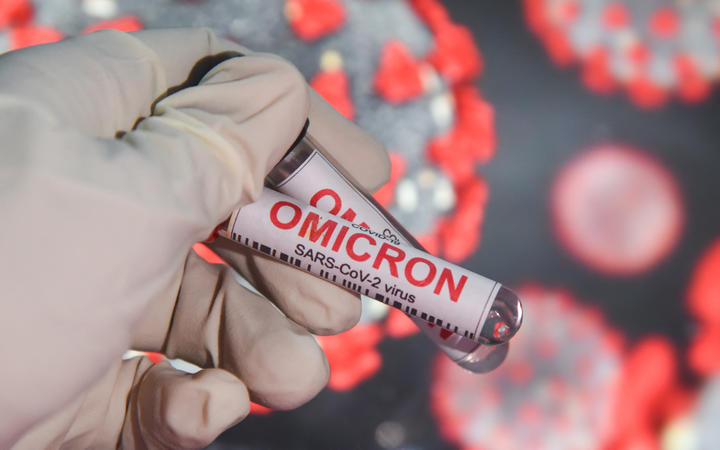
The advance of the new Covid-19 variant, Omicron, was also on the agenda with cases spreading to several countries over the weekend, including Australia, Belgium and the UK.
“At this stage we have no cases of the Omicron variant in New Zealand but the developing global situation shows us why our approach of ongoing caution at the border is needed,” Ardern said.
On Saturday night, Covid-19 Response Minister Chris Hipkins announced that New Zealand will ban travel from nine southern African countries from the following day in an effort to curb the potential spread of Omicron.
Only New Zealand citizens are allowed to travel here from those countries and they will also be required to stay in managed isolation for a 14-day period and undergo testing.
“Omicron is a reminder of why we need a response that lasts and carries us through the pandemic,” Ardern said.
“We already had a strong system in place and the ability to move swiftly to make it stronger still. This is a reminder of the risk that still exists at our border.”
She said it was unclear at this stage exactly what risk Omicron posed.
Bloomfield said what was being looked at was whether any additional protections werre needed at the border to reduce the likelihood of getting the new variant in New Zealand.
“It’s really just looking to keep it out while we learn more about it.”
Ardern said the borders have always been used as a means of protection, and that will continue as we see the new variant emerge.
“We will continue to review whether or not any other countries need to be added to our very high risk country list as well.”
The variant has also not changed the advice on boosters, she said.
Police commissioner Andrew Coster says it is too early to say whether the West Auckland shooting today is gang related.
Watch the news briefing back here:
Police Commissioner Andrew Coster said police have had to deal with serious events over the past 24 hours, including a West Auckland shooting today and an officer being struck by a fleeing vehicle last night while deploying road spikes in New Lynn.
A man has died after the shooting with police in West Auckland, and there are now four officers in hospital as a result of both incidents. Two have serious injuries.
The house was engulfed in flames when police arrived.
They tried to engage the man to disarm over 30 minutes but he became increasingly agitated and aggressive, he said.
Residents of neighbouring properties were evacuated, he said. A police dog and “distraction devices” were also deployed.
“The situation escalated further when the man fired at police and officers returned fire, incapacitating him,” Coster said.
“Our staff delivered first aid to the man, but tragically, he died at the scene.
“Our people come to work everyday to keep people safe and this is the last thing we want.”
Police engaged professionally and were very patient, Coster said. “I couldn’t ask for more.”
Two officers suffered moderate injuries and a third officer has more serious injuries but is stable and undergoing surgery.
The injuries officers sustained were on parts of their body not covered by body armour.
Coster said when he heard multiple officers had been injured; “my heart sank, it is not what we want for our people.”
The staff involved directly today were from the Armed Offender Squad.
The man who died is still being formally identified by police and next of kin are being notified.
Coster said there was nothing to suggest today’s incident was gang related but it was still early days to determine that.
Police now have a critical incident investigation underway, and the Independent Police Conduct Authority and WorkSafe have been notified.
“We’re trying to piece together the man’s actions today and understand how events unfolded,” Coster said.
He said these events reflect the level of tensions in some communities.
“This has been a very challenging time for staff particularly in this district.”
Police were concerned about the increase in violence and they were actively working on this, he said.
Police at the scene in West Auckland this morning. Photo: RNZ / Marika Khabazi
New Lynn incident
Regarding the event last night on Great North Road in New Lynn, Coster said police responded to a burglary call at about 11pm.
“Staff in the area noticed a suspicious vehicle which did not stop when signalled to pull over. Police did not pursue the vehicle but another police unit deployed spikes before the fleeing vehicle at the intersection of Fruitvale Road and Great North Road.”
This was about 1.5km away from where the burglary took place, he said.
About 11.10pm, the fleeing officer struck the officer that deployed the spikes.
“In a cowardly act, this driver did not stop to render assistance and the officer sustained serious injuries.”
The car then crashed into a power transformer a short time later and the people in the car fled the scene.
Multiple investigations are underway.
The officer has undergone surgery today and is doing well, Coster said.
A group representing Chinese people in Solomon Islands says many Chinese families have lost everything and been left homeless following the widespread looting and torching of shops and properties.
A protest last Wednesday calling for Prime Minister Manasseh Sogavare to step down lapsed into major unrest and three days of rioting.
The Solomon Islands Chinese Association (SICA) has condemned the events which it says has endangered innocent lives.
Chinatown in Honiara, where buildings were torched Photo: Georgina Kekea
SICA is encouraging all Chinese owned and operated businesses to continue operating in an ethical and fair manner; respecting and abiding by the laws of the country.
It said the Chinese community remains confident in a brighter Solomon Islands despite the violence, which it blamed on a small minority.
The Mayor of Honiara Eddie Siapu has appealled for help to clean up the city with Chinatown and eastern Honiara in particularly bad shape.
“I would like to make a call, an appeal, to my good people of Honiara City to come forward and assist the City Council with a majoro voluntary cleanup in the city. Following the riot and looting in the capital I appeal to the business houses, NGOs, stakeholders, commnity leaders, church leaders and other groups for assistance,” he said.
External help vital in regaining control
Papua New Guinea’s police chief said the deployment of its forces to Solomon Islands helped quell the unrest.
PNG’s deployment of 37 police and correctional services personnel to Honiara followed Australia’s move to deploy over a hundred military and police forces last week.
Police commissioner David Manning says his force was glad to help their Solomons counterparts.
“And our support was not only timely but very much critical to their ability to contain the situation in Honiara. It is very much Papua New Guinea’s intent to ensure not only that we enjoy domestic security but also regional security as well.”
Rioting has ceased in Honiara but security forces remain on high alert as parliament reconvenes.
Manning said PNG security forces could stay longer if needed.
He said the deployment of 37 police and correctional services personnel was critical to their local counterparts being able to contain the situation.
“The deployment marks the beginning of a three to four week deployment for this contingent. There is a coimmitment to support further, depending on the situation in Honiara.”
Australia has also deployed over 100 military and police forces to Honiara.
Meanwhile, the European Union is monitoring the situation.
The EU’s Ambassador for the Pacific Sujiro Seam said they are greatly concerned by what has taken place in Honiara.
“We call on all parties involved to enable a return to peace, calm, stability and security after days of riots, looting and fire,” he said.
COMMENTARY The lack of information and statement to update the public on what the newly elected 26 MPs are doing in the lead up to Tonga’s premiership election is unacceptable.
St George Palace at Pangai Si’i. Photo/Kaniva Tonga (Kalino Lātū)
This is the country’s most important election and news of what is happening is being kept secret from the public. The situation does not help promote the mechanisms of transparency, good governance and accountability laid out in Tongan law.
An interim Cabinet minister told Kaniva News this morning that all MPs, including the Nobles were meeting to decide on the best option for them to elect the best Prime Minister and his new Cabinet.
Some media have produced well informed speculation about what might happen, but there is too much danger of unfounded rumours spreading online.
After the election on November 18 the only information that came out from a few of the newly elected MPs were votes of thanks for being elected to Parliament and they were only posted to Facebook.
The political system for electing the Prime Minister is undemocratic because of the involvement of the nobility MPs who were only voted into parliament by their 33 members. In New Zealand, although its voters would not elect their prime minister like the US presidential election, its party system election allows voters to vote for the prime minister’s political party making their election democratic.
Concerns about new PM
At the moment there is strong concern about who will be the new Prime Minister. There is a possibility Pōhiva Tu’i’onetoa will be elected PM again because of what appear to be binding documents between him and his former Cabinet ministers and the nobles under his PAK Party agreements. But there are also rumours that the new MPs want a new PM, not Hon. Tu’i’onetoa.
The local news media has been heavily criticised for its failure to update the public. They were also criticised for their failure to announce the provisional results of the elections on November 18 from the polling booths as soon as they became available. The results were finally announced about 11.30pm, eight hours after the polling booths closed.
By that time the public was already well aware of the results in the afternoon because they had been announced at the polling booths. While there were complaints on social media for the time it took for the results to be officially announced, FM 87.5 announcer kept on saying they already had the provisional results, but they had to wait for the election supervisor.
Former Manager of the Tonga Broadcasting Commission, ‘Ahongalu Fusimālohi, reportedly said he felt the local media, especially FM87.5 and the TBC were told by the government to only release the official results. Fusimālohi said this was unacceptable.
Fusimālohi criticised the media’s actions and said it was the norm in the past that TBC had to release the unofficial results once the polling booths announced their results. It did not have to wait for the election supervisor to announce the official results.
He said the problem was that when the media did not announce the preliminary results as soon as they become available the public would be skeptical about the outcome.
Nobility MPs
Veteran journalist and publisher Kalafi Moala reportedly said the situation about the newly elected MPs came about because the general election results were being recounted on Friday after complaints were lodged with the election supervisor. This meant nothing would be released until the recount was finished.
Moala said he had received unconfirmed reports that the MPs representing the nobility had decided they would not accept any offer of Cabinet posts from the people’s MPs. He said the Nobles wanted to leave the running of the government to the people’s MPs alone. Moala said this meant a new Cabinet would be people’s elected MPs only and there were rumours the new cabinet would not appoint any new minister from outside the MPs.
Tongatapu firefighters responded to a house fire alert and had to break locked gates down so they could reach the fire scene.
Black smoke was pouring while the house going up in flames at Tufumāhina royal residence, a video clip taken near the scene shows.
The clip, which was shared to Facebook last night, also appeared to show two fire engines remained park in idle mode outside the high fence property while the firefighters were trying to break down the gates.
It was unclear whether or not the fire was brought under control. The video camera man followed the fire engines to the scene after the gates were opened but he was told to leave.
The cause of the fire remains unknown. No reports of injuries.
The property was owned by the king and it was normally guarded by members of His Majesty’s Armed Forces.
There have been 144 new community cases of Covid-19 reported in New Zealand today, with one further death also reported.
In a statement, the Health Ministry said 82 people are in hospital, including nine in intensive care.
Today’s death was a Covid-19 patient at North Shore Hospital in their 80s who passed away yesterday evening.
“Our thoughts are with the patient’s whânau and friends at this deeply sad time.”
The Ministry said 88 of today’s new cases are yet to be linked.
Today’s new cases included 127 in Auckland, two in Northland, nine in Waikato, four in the Bay of Plenty and the one in Hawke’s Bay reported earlier today which was picked up after a routine hospital swab.
The nine new cases in Waikato include five in Hamilton, two in Te Kūiti, one in Cambridge and one in Kawhia.
In the Bay of Plenty, the four new cases include one based in the Whakatāne district and three in the Tauranga area.
The Whakatāne district case and one of the Tauranga cases are linked to previously reported cases. The remaining two Tauranga area cases are household contacts, with their links to previously reported cases still being investigated. All are self-isolating at home.
The two new cases in Northland were announced yesterday and are being formally included in today’s figure, but the Ministry said there were also another two cases in Kaitaia and in Whangārei that will be added to tomorrow’s numbers.
The Kaitaia case is a close contact of a known case and links between the Whangārei cases and known cases are still being investigated. Both are self-isolating at home.
There were also four cases reported in managed isolation today, which include one new case in Canterbury.
The ministry said the case – who is a child and has been isolating at home with family – travelled from Auckland to Christchurch on Thursday 25 November on Air NZ Flight NZ8475 arriving in Christchurch at 10.50am. Anyone who is considered a contact of this case will be contacted directly.
This case travelled from London to Doha on 16 November and Doha to Auckland on 18 November. They left managed isolation last week and tested positive on their Day 9 test while in home quarantine.
There were also four cases reported in managed isolation today.
There have been 8118 cases in the current community outbreak and 10,891 since the outbreak began.
Omicron advice
Last night Covid-19 Response Minister Chris Hipkins announced that New Zealand will ban travel from nine southern African countries from 11.59pm tonight in an effort to curb the potential spread of the new Omicron coronavirus variant. From then only New Zealand citizens will be allowed to travel here and they will also be required to stay in managed isolation for a full 14 day period and undergo testing.
The Health Ministry said today that knowledge about this emerging variant “is in its infancy and we are closely watching and monitoring evidence and countries’ responses”.
It said there was no need to rush to get the booster.
“The science shows fully vaccinated people remain really well protected from infection, and from being seriously ill if they do get Covid-19. There is plenty of existing stock of the Pfizer vaccine in New Zealand now and on order for everyone who needs a booster shot over coming months.
“We will advise on any potential impacts for New Zealand, noting that we remain in a good position to minimise the impact of any new variants with isolation and routine testing of international arrivals.”
There were 20,873 vaccine doses given yesterday, including 6378 first doses and 14,495 second doses. The ministry said 92 percent of eligible people in New Zealand have had their first dose and 85 percent are fully vaccinated.
It said it had now issued more than 2.26 million My Vaccine Passes.
Ninety percent of Pacific people in New Zealand have had their first Covid-19 vaccine, while 11 district health boards (DHBs) have reached 80 percent first doses for Māori, Ministry of Health says.
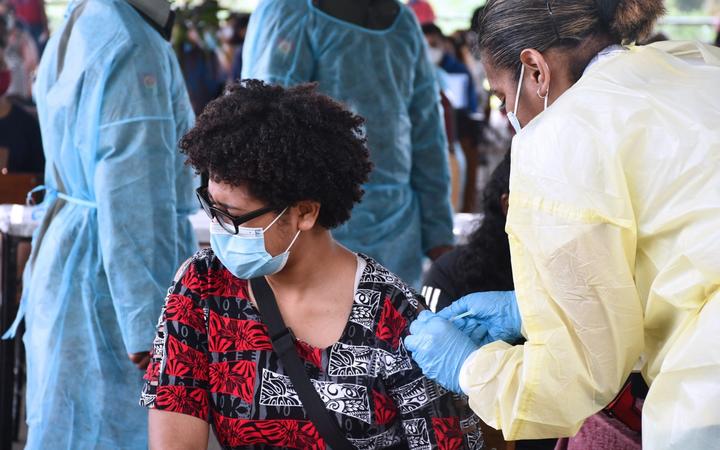
Nurses in the Far North Vaccinating during the lockdown Photo: RNZ / Angus Dreaver
There were a total of 17,899 doses administered yesterday, including 5679 first doses and 12,222 second doses.
To date, 92 percent of eligible people in New Zealand have had their first dose and 85 percent are fully vaccinated.
The ministry said the country’s Pacific communities had reached “some key vaccination milestones”, with 90 percent having officially received their first dose, and 80 percent fully vaccinated.
Eleven of the 21 DHBs had reached 80 percent first doses for Māori, it said in a statement.
The ministry also highlighted how Capital & Coast DHB is just 1131 doses shy of reaching the 90 percent fully vaccinated milestone.
More than 2.1 million My Vaccine Passes have been issued.
Events held in Auckland to encourage vaccine uptake
This weekend is the last chance New Zealanders have to be fully vaccinated with both injections in time for Christmas.
More than 20 vaccination events are being held in Tāmaki Makaurau this weekend, ahead of the Auckland border restrictions easing on 15 December.
Tāmaki Makaurau vaccination programme director Matt Hannant said there will be live music, free food and spot prizes on offer at events across the city.
People can also now pre-book to get the AstraZeneca vaccine, which is available from Monday, he said.