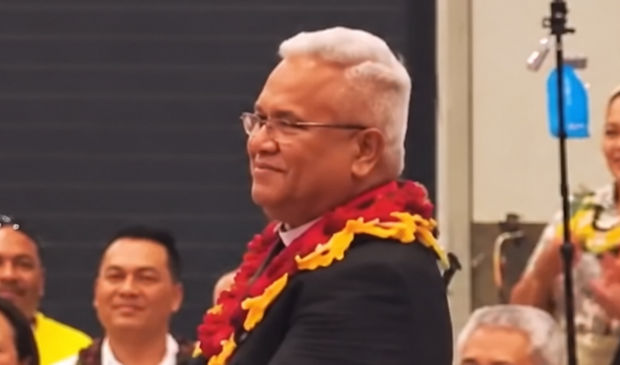
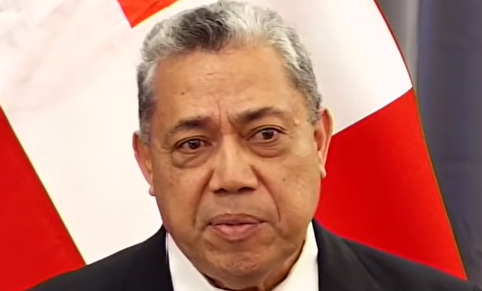
Tonga’s Cardinal Soane Patita Paini Mafi took to the floor to dance as the Tongan Catholic community in Australia celebrated the Golden Jubilee of its Chaplaincy, marking 50 years of faith, service and community life.
Cardinal Paini Mafi
Video shared from the celebrations shows Cardinal Mafi, wearing a traditional garland, joining the festivities in front of members of the congregation, drawing attention to a more relaxed and joyful side of the anniversary programme.
The dance formed part of celebrations surrounding the 50th anniversary of the Tongan Catholic Chaplaincy of Australia, which began its Golden Jubilee programme on October 1.
The anniversary celebrations have combined festivity with remembrance, including tributes to priests who played important roles in establishing and serving the Tongan Catholic community in Australia.
Members of the community gathered at Villa Maria in Hunters Hill, Sydney, where a wreath was laid at the grave of the late Fr Cyril Butler SM, known among Tongans as Patele Sililo.
The Chaplaincy described Fr Butler as the first priest to minister to the Tongan Catholic community in Australia.
The commemorations then moved to Rookwood Cemetery, where participants paid tribute to the late Fr Penisimani Folaumoetuʻi, who also served as chaplain to the Tongan Catholic community.
The Chaplaincy offered prayers for the two priests, saying: “May they rest in the peace and comfort of our Lord.”
The programme later continued at Belmore, where Cardinal Mafi was welcomed and presented with a gift from the Church.
His participation in the dancing added a distinctly Tongan cultural dimension to the religious celebration, with music and dance joining prayer, remembrance and fellowship as the community marked the milestone.
The Golden Jubilee commemorates five decades of organised Catholic pastoral ministry among Tongans in Australia and recognises the clergy and communities who helped establish and sustain the Chaplaincy.
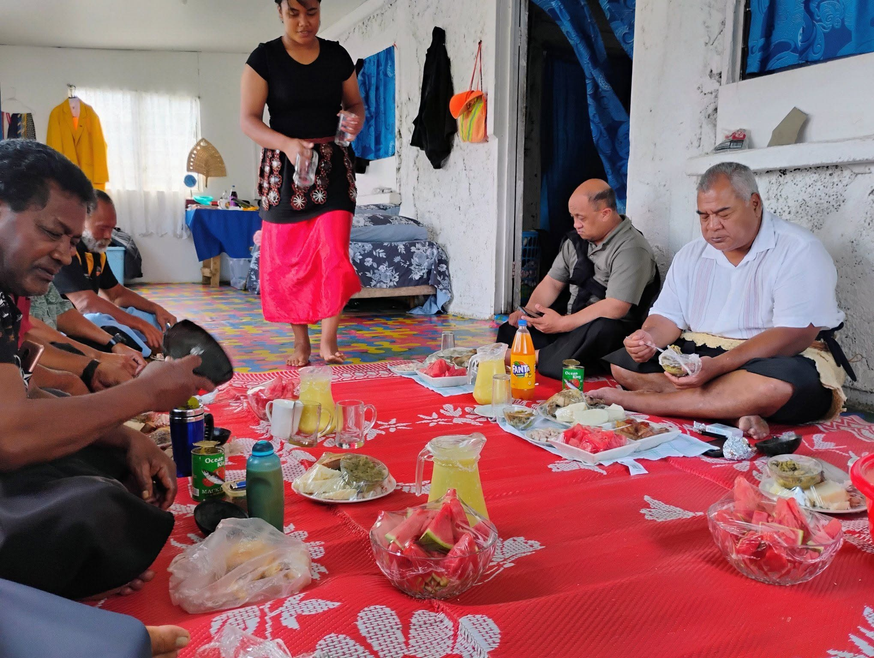
Residents of Niuafoʻou have marked 80 years since the island’s devastating 1946 volcanic eruption by gathering around a bowl of kava and reflecting on the night their ancestors fled for their lives as their main village disappeared beneath smoke and volcanic destruction.
Niuafoʻou residents gather to mark the 80th anniversary of the island’s devastating 1946 volcanic eruption. Photo / Rev Motelolo Malaʻefoʻou/Facebook.
Free Wesleyan Church minister in Niuafoʻou Rev Motelolo Malaʻefoʻou shared photos of the gathering on Facebook, saying they were drinking kava while trying to imagine what residents had experienced on that night eight decades ago.
“Ko e ʻaho ni ne puna ai e maama ʻi Angahā Niuafoʻou ʻi he 1946,” Malaʻefoʻou wrote.
“ʻOku mau tuki pe hono efe mo sioloto atu ki he ʻaho ko ia, neongo ko e manatu ki ai ko e misi pe.”
“It was on this day that the volcano erupted at Angahā, Niuafoʻou, in 1946,” he said.
“We are just preparing kava while visualising that day, although imagining it is like a dream.”
Night of terror
The dramatic events of September 1946 were documented by James Lewis in his account Volcano in Tonga, published in the Journal of Administration Overseas in 1979.
Lewis said his account of the eruption and subsequent evacuation was provided by Niuafoʻou Town Officer Moeaki Tākai, who had kept a diary recording the events as they unfolded.
The eruption began on the evening of Monday, September 9, 1946.
According to the account, darkness had fallen and a brass band was playing when, at about 7.30pm, residents felt the first earthquake.
The musicians stopped playing as fears grew that an eruption was imminent.
Within minutes, residents began fleeing the village towards higher ground.
Lewis described the climb up the mountain as apparently an instinctive reaction by people familiar with volcanic danger and the risks faced by settlements closer to the coast.
As families scrambled to safety, the darkness was filled with panic.
“People were crying and praying, calling to one another and shouting to find one another,” Lewis wrote.
When residents reached higher ground and looked back, their principal village was no longer visible. The area where it had stood was engulfed in black smoke.
By about 10pm, authorities had instructed everyone to remain on the mountain.
Around 2,500 people eventually gathered on the mountainsides as the eruption continued below them.
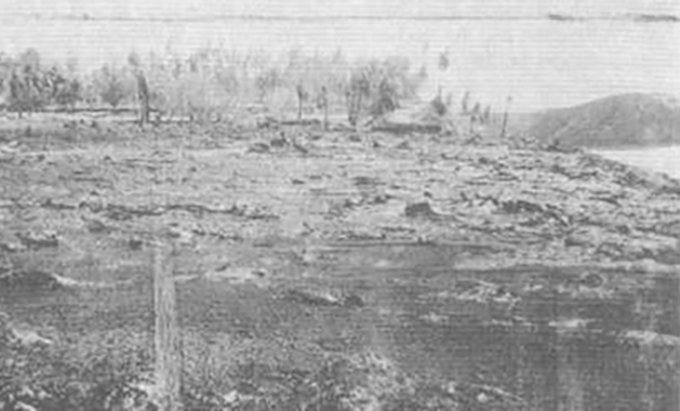
The 1946 volcanic eruption on Niuafoʻou in Tonga began on the evening of September 9, 1946, destroying villages and forcing a complete evacuation of the island’s population
Among those stranded were four Sisters from Belgium, France, Holland and the United States. Their national flags were raised on the highest tree in an attempt to attract attention.
Wireless operator stayed behind
One of the most extraordinary episodes recorded by Lewis involved wireless operator John Malekamu, who remained behind sending SOS signals calling for help.
He abandoned the wireless station only when lava had advanced to within about 30 feet of it, shortly before the station was destroyed.
Malekamu ran through intense heat before collapsing beneath a tree, where he was eventually found by a friend.
He survived and was taken back to join the rest of the community on the mountain.
At sunrise, Lewis wrote, the people joined together in giving thanks to God for their deliverance, with the eruption having caused no casualties.
But Niuafoʻou’s isolation meant outside help did not immediately arrive.
Lewis said none of the SOS messages sent from the island appeared to have been received by the Tongan Government in Nukuʻalofa.
It was not until several days later that a US Navy aircraft travelling from Pago Pago towards Naʻadi, Fiji, spotted smoke rising from Niuafoʻou and people on the mountainside attempting to attract attention.
Word was then relayed to Tonga.
A government vessel subsequently reached the island, more than a week after the eruption began.
Islanders vote on evacuation
The eruption did not immediately result in the permanent removal of Niuafoʻou’s population.
After officials arrived from Nukuʻalofa, a public meeting was held to determine whether the entire population should be evacuated to Tongatapu.
According to Lewis, Niuafoʻou’s communities were divided among four chiefs.
Three chiefs and their communities, representing about 1,800 people, voted in favour of evacuation, while one chief and about 700 people opposed it.
The majority decision ultimately resulted in evacuation being adopted for the island’s population of about 2,500.
The final evacuation was scheduled for December 21, 1946, giving residents about three months to prepare to leave their island.
Homes had to be dismantled and building materials and personal possessions prepared for transportation.
On evacuation day, loading began at sunrise and continued until about 5pm.
Tongatapu, however, was intended only as a transit destination for many of the displaced Niuafoʻou people.
About 1,800 eventually agreed to resettle on ʻEua, while those who had opposed the evacuation remained on Tongatapu.
Hardship followed evacuation
Lewis described the years following the evacuation as difficult, particularly for the Niuafoʻou people attempting to establish themselves in unfamiliar surroundings on ʻEua.
Agricultural land had to be cleared and livelihoods rebuilt.
The economic hardship became so severe that in 1950, 74 men sailed back to Niuafoʻou to work in copra production.
They stayed for a year before returning to ʻEua and being replaced by another working party.
Further groups followed in 1952 and 1953, and Moeaki Tākai himself joined one of the parties returning to his home island.
There was no permanent settlement on Niuafoʻou between 1947 and 1959, according to Lewis.
The 1946 disaster was also not the island’s first major encounter with volcanic destruction.
Lewis recorded eruptions in 1929, 1935, 1936 and 1943 before the September 1946 eruption, with the village of Futu destroyed during the 1929 event.
Looking back on the evacuation more than three decades later, Lewis concluded that it appeared to have been “ad hoc and unplanned” and that the decision to proceed had been “precipitate”.
He argued that insufficient consideration had apparently been given to the eventual resettlement of the evacuees, contributing to greater hardship and making their resettlement a longer process than necessary.
Eighty years later, the kava gathering in Niuafoʻou brought that history back to the island where it began — with today’s residents sitting together and trying to imagine the night their ancestors fled Angahā in darkness, unsure whether they would ever return home.
The Tonga Rugby Union (TRU) has called a Special General Meeting to address financial reporting and elect two remaining board members, shortly after Prime Minister Lord Fakafanua publicly raised concerns about the union’s governance and failure to hold an annual general meeting.
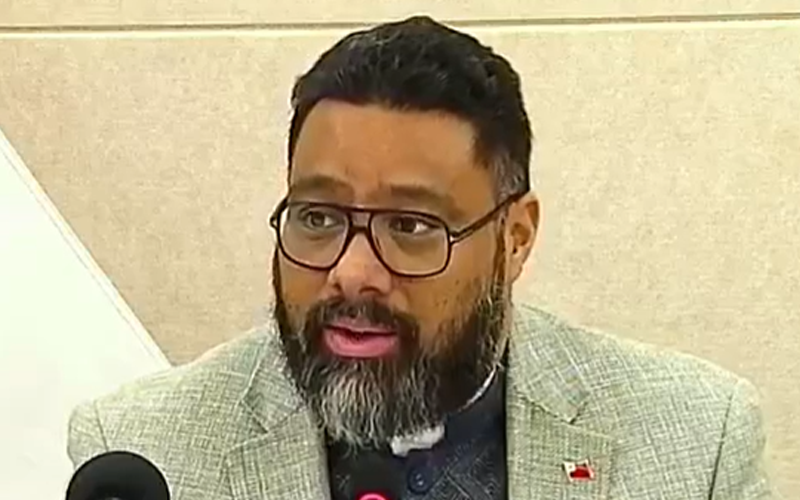
PM Lord Fakafanua
As reported by Kaniva News last night, Lord Fakafanua said he had yet to hear of TRU holding its constitutionally required AGM. He said the Government expected transparency and accountability from the union because it received public funding to support rugby.
A notice issued by TRU acting chief executive David Edwards today said the Special General Meeting would be held at Mele Siuʻilikutapu Hall in Halaʻano at 6pm on Friday, October 9.
The meeting will consider the union’s 2024 audited financial statements, receive an update on the progress and status of its 2025 financial audit, and elect two remaining board members.
However, the notice describes the gathering as a Special General Meeting rather than an annual general meeting.
Under Clause 5.2.3 of the TRU Constitution, business at the meeting will be restricted to the three matters listed in the notice.
TRU said at least two-thirds of eligible representatives must be present to constitute a quorum, while proxies will not be permitted.
The election of the two board members will be conducted by secret ballot and preferential voting.
TRU said members should receive relevant biographical information, employment histories and curricula vitae for the nominated candidates in accordance with the constitution.
Nominations must be submitted in writing to the TRU office at the FWC Building in Fasi-moe-Afi, or by email, no later than 4pm on Thursday, October 8.
Accountability concerns
Lord Fakafanua, who said he serves as TRU president under its constitution, told Tonga Broadcasting Commission chief executive Viola Ulakai that the Government was taking a firm position on the union’s governance and accountability.
He said TRU was required to demonstrate that government funding had been used properly and in accordance with good-governance policies.
The Prime Minister said this was important because proper governance and accountability would enable the Government to continue providing financial support to rugby.
He expressed hope that TRU would address the situation and put its affairs in order.
TRU’s website says its annual report is presented at its AGM following the end of its financial year on December 31.
The union publicly announced an AGM for May 17, 2024, but Kaniva News has not located a corresponding public notice or report confirming that an AGM was held in 2025 or 2026.
TRU has previously faced financial and governance difficulties. World Rugby suspended its funding in 2020 pending reforms addressing administrative problems, outstanding legal matters and the absence of appropriately audited financial statements.
Funding was later reinstated through a tripartite agreement involving World Rugby, the Tongan Government and TRU, with a joint committee established to oversee governance, financial arrangements and high-performance programmes.
Tonga’s Health Minister Dr Siale ʻAkauʻola says the Ministry is investigating two deaths suspected of being linked to influenza, but neither has yet been confirmed as having been caused by the virus.
Dr ʻAkauʻola’s comments follow a Ministry of Health warning last month that influenza had been detected in Tonga, with an increase in cases in recent months compared with the same period last year causing concern among health authorities.
He said one of the cases had tested positive for Influenza A, but the Ministry had yet to establish whether influenza was the direct cause of death or whether other related illnesses or factors were responsible.
The Minister said investigations were continuing before the deaths could be classified as influenza-related.
Dr ʻAkauʻola also sought to reassure the public about the influenza viruses currently detected in Tonga.
He said testing had identified H1, H2 and H3 subtypes, which he said were not considered unusual or of particular concern.
The subtype that would cause greater concern, he said, was H5, which is associated with more serious influenza.
Rise in respiratory illnesses
During a special Ministry livestream about the situation last month, Dr Joseph Tākai said the Ministry decided to alert the public after detecting an increase in people presenting with cold and respiratory-related illnesses.
The increase was particularly noticeable during July and August this year when compared with the corresponding period last year, Dr Tākai said.
Dr ʻAkauʻola’s comments today indicate that health authorities are continuing to investigate the suspected death before determining whether influenza played a direct role.
WHO’s latest global respiratory-virus surveillance reports show influenza continued circulating internationally through August and September, although global activity remained relatively low. Influenza A viruses predominated globally during that period.
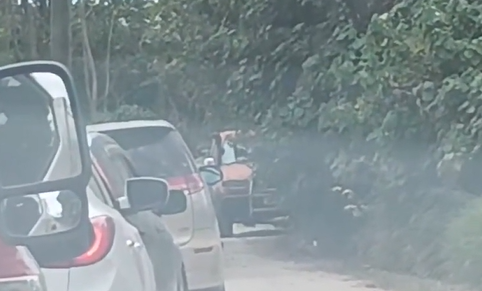
Traffic chaos erupted on rural roads in Tongatapu on Friday after Police completely closed a section of the main Taufaʻāhau Road for two hours during King Tupou VI’s official opening of the new National Emergency Management Office headquarters at Matatoa.
Videos and reports seen by Kaniva News showed long queues of vehicles crawling — and at times apparently coming to a standstill — on narrow roads through bush and plantation areas around Fualu as motorists sought alternative routes.
Some footage also appeared to show potentially dangerous vehicle manoeuvres as drivers attempted to negotiate the congested country roads.
The disruption followed Tonga Police’s decision to close Taufaʻāhau Road from 10.30am until 12.30pm, covering the section from its intersection with Peamotuʻa Road near the ʻAlonga Disability Centre to the Matakiʻeua road intersection in front of EM Jones Gas Station.
The closure was associated with the official opening of the nearby NEMO headquarters by King Tupou VI.
The traffic problems quickly fuelled public debate over whether completely shutting one of Tongatapu’s major roads was necessary for the ceremony.
Some questioned whether the opening ceremony itself was being held on the road and why traffic could not have continued through the area under Police control.
Others accused Police of making an inconsiderate decision that unnecessarily disrupted motorists and forced traffic onto less suitable rural roads.
However, supporters defended the closure, arguing that it lasted only two hours and that Police had made the appropriate decision to ensure the royal ceremony proceeded safely and without disruption.
Former Minister raised warning
The disruption came a day after former Infrastructure Minister Sēmisi Sika publicly questioned the decision to completely close the road.
Sika had warned that Taufaʻāhau Road was a vital transport route linking central Nukuʻalofa with eastern and southern Tongatapu, including Fuaʻamotu International Airport, and that alternative access was limited.
“This is a vital route connecting central Nukuʻalofa with the eastern and southern areas, including the airport, with limited alternative access. Friday is the busiest day of the week,” Sika said.
He called on the Government and Police to reconsider the full closure and suggested that at least one lane could remain open under Police supervision.
Sika pointed to an earlier royal event at the same location, saying the King’s opening of the Utility Office had been successfully conducted without completely closing the road.
“Perhaps the same arrangement could be considered for the opening and keeping at least one lane open under Police control,” he said.
“This would respect the importance of the occasion while minimising disruption to our economic development and to the wider public.”
Police had advised motorists in advance to plan their journeys and use alternative routes where possible.
The Road Safety Unit was stationed at the closure points to manage traffic and assist motorists, while Police apologised for the inconvenience and asked the public to cooperate with officers.
The new NEMO headquarters was constructed at Matatoa under Tonga’s Pacific Resilience Programme as part of efforts to strengthen the Kingdom’s disaster preparedness and emergency-response capability.
Friday’s commissioning had itself been delayed after earlier issues surrounding land arrangements involving Tonga Power Limited, MEIDECC and the Royal Estate.
Prime Minister Lord Fakafanua has raised concerns about governance and accountability at the Tonga Rugby Union (TRU), saying he has yet to hear of the organisation holding an annual general meeting as required under its constitution.
Prime Minister Lord Fakafanua
Lord Fakafanua, who said he is the president of the TRU under its constitution, said the issue was something the Government was taking a firm position on.
He made the comments during an interview with Tonga Broadcasting Commission chief executive Viola Ulakai, which was livestreamed.
The Prime Minister said the Government provided funding to support rugby and expected the TRU to be transparent and accountable for the public money it received.
He said the union was required to demonstrate that government funding had been used properly and in accordance with good-governance policies.
The issue was important, he said, because demonstrating proper governance and accountability would enable the Government to continue providing financial support to the sport.
Lord Fakafanua said he hoped the TRU would address the situation and put matters right.
Past Financial Troubles Resurface
Lord Fakafanua’s comments come against a history of governance and financial-accountability concerns involving TRU.
In 2020, World Rugby suspended funding to TRU pending a review of governance and administrative problems, including outstanding legal matters and a lack of appropriately audited financial statements.
Funding was subsequently reinstated after World Rugby, the Tongan Government and TRU entered a tripartite agreement establishing a Joint Management Committee to oversee governance reforms, financial arrangements and high-performance programmes.
TRU’s own website says its annual report is presented at its AGM following the end of its financial year on December 31. Its governance page currently publicly lists its 2023 Annual Report and a 2020 Financial Report.
A public notice confirms TRU scheduled an AGM for May 17, 2024, under Clause 5 of its constitution. Kaniva has not yet located a corresponding public notice or report of an AGM in 2025 or 2026.
A New Zealand man wanted in connection with serious organised and transnational crime has been deported from Tonga, weeks after a high-profile escape from police custody involving a Tongan-New Zealander and a Fijian national.
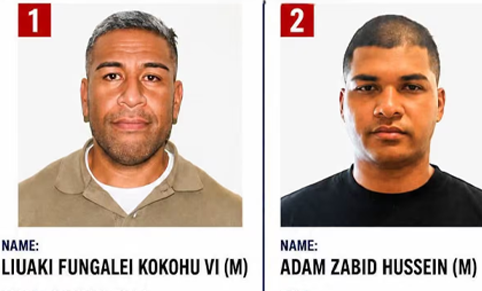
Tonga Police public alert showing New Zealand citizen Liuaki Vi, who was later recaptured after escaping from police custody in Nukuʻalofa with l Adam Zabid Hussein. Photo: Tonga Police.
Tonga Police confirmed on Friday 2 that an unidentified male New Zealand citizen was deported to New Zealand on September 16 following the completion of legal and administrative processes.
Police said the deported man was wanted in New Zealand in connection with “serious organised and transnational crime matters”.
During investigations in Tonga, he was charged with knowingly dealing with a forged document.
Police said that following his escape from lawful police custody on July 19, he was further charged with escaping from police custody and conspiracy.
Tonga Police have not identified the deported man, and have not confirmed whether he was one of the prisoners publicly named following the July escape.
Escape sparked major manhunt
The deportation comes after Tonga Police launched a major manhunt in July when three prisoners escaped from custody at the Central Police Station in Nukuʻalofa.
At the time, police publicly identified two adult escapees as 34-year-old Tongan-New Zealander Liuaki Fungalei Kokohu Vi, who also goes by the alias Michael Tama, and Fijian national Adam Zabid Hussein.
A third escapee, a 15-year-old boy, was recaptured shortly afterwards.
Police warned members of the public not to approach the two adult escapees and said they should be considered dangerous.
Police Commissioner Geoff Turner subsequently announced rewards of up to TOP$5000 for information leading to the arrest and capture of each man.
Turner said Vi was considered the “highest-risk escapee” because of his criminal history and the serious offences associated with him.
Police said at the time that both Vi and Hussein were wanted over passport fraud.
Turner also disclosed that Tonga Police were working with overseas authorities in relation to Vi because of his international links, although he declined to provide further details.
The escape also exposed concerns about security at Tonga’s main police station.
Turner said police had already identified a potential security vulnerability in the Central Police Station cells before the prisoners escaped.
A company had been scheduled to carry out upgrades to the cells on August 3, but the escape occurred before that work could be completed.
“Unfortunately, this happened before we could…upgrade the cells,” Turner said at the time.
Police warned that anyone found harbouring the fugitives could be prosecuted and potentially face up to 10 years in prison.
Deportation follows international cooperation
In Friday’s statement, Tonga Police said the deportation reflected continuing cooperation between Tonga and international law-enforcement agencies in tackling organised and transnational crime.
“His deportation reflects the continued cooperation between Tonga and international law enforcement agencies in addressing organised and transnational crime and preventing individuals from evading lawful processes across jurisdictions,” police said.
Tonga Police said they remained committed to international cooperation in fighting organised and transnational crime and upholding the rule of law across borders.
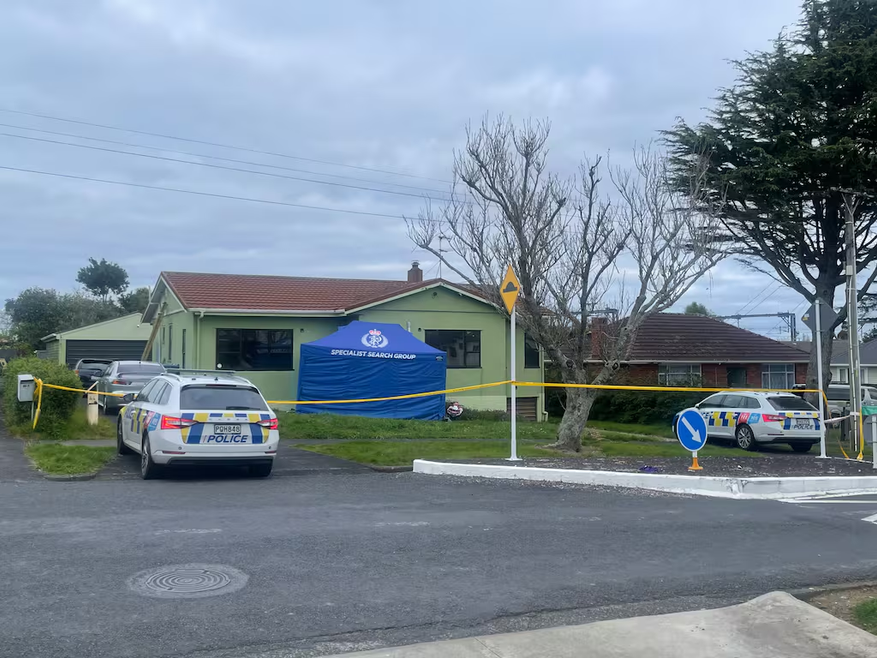
Three people have been found dead at a South Auckland home, prompting a major police investigation into what authorities have described as a “tragic event”.
Police at the scene on Cambridge Tce in Papatoetoe (Source: 1News)
Police were called to Cambridge Terrace in Papatoetoe at about 6.40pm on Thursday after receiving a report that a person had been found dead at the property.
When officers arrived, they found the person as well as two others inside the home who were also pronounced dead.
Detective Inspector Karen Bright of Counties Manukau CIB said the investigation remained in its early stages, but police were not currently looking for anyone else in connection with the deaths.
Police also said they did not believe there was any risk to the wider public.
A scene examination was under way as investigators attempted to establish what happened inside the property.
“We are doing everything we can to answer the many questions around this devastating incident,” Bright said.
Police said support was being provided to the whānau and neighbours of those who died.
Residents should expect an increased police presence in the area while the investigation continues.
Neighbours shocked by deaths
Neighbours have described their shock after emergency services descended on Cambridge Terrace on Thursday evening.
One neighbour told the New Zealand Herald he saw a man’s body at the entrance to the property after his daughter noticed police vehicles passing their home.
Another neighbour said they broke down after learning three people had died, describing those at the property as “a good family”.
St John responded to the incident with an ambulance, critical care unit and operations manager, while Fire and Emergency New Zealand sent three crews from Papatoetoe and Ōtara.
Police initially described the callout on Thursday night as a “serious incident” and established cordons around the Cambridge Terrace property as emergency services worked at the scene.
The cordons were expected to remain while the scene examination continued.
The identities of the three people and the circumstances surrounding their deaths have not yet been released.
Police have also not publicly confirmed whether the three were related.
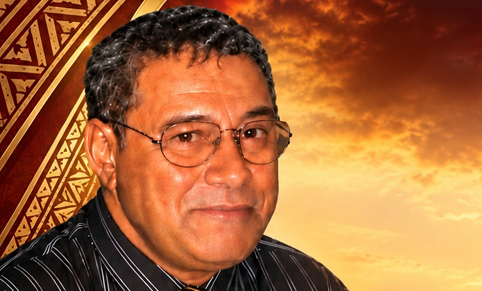
Former Tongan Cabinet Minister Lisiate ʻAloveita ʻAkolo, 76, will be laid to rest in Auckland on Monday following funeral services over the weekend.
Lisiate Akolo
His son Kalio ʻAkolo announced the funeral arrangements on Facebook, thanking family and friends for their “love, prayers and support during this time”.
A family failotu will be held at Ann’s Funeral Home in Wiri on Saturday, October 3, from 7pm to 9pm.
An ʻapo will follow at Tuingapapai ʻo Uesile in Favona on Sunday from 8pm to 10pm.
The burial service will be held at the same church from 9am on Monday, October 5, before ʻAkolo is laid to rest at Manukau Memorial Gardens in Wiri at 11am.
Lisiate was a prominent figure in Tonga’s government, politics, banking, commerce and regional affairs over several decades.
He entered Cabinet in 2006 when then Prime Minister Dr Feleti Sevele appointed him Minister for Labour, Commerce and Industries.
Before entering frontline politics, ʻAkolo had already built a lengthy career in economic development, including work with the Tonga Commodities Board and Tonga Development Bank and as chief executive of the South Pacific Tourism Organisation. He held a BA in Political Science and Public Administration from Victoria University of Wellington and an MA in Development Banking from American University in Washington DC.
He was elected as the People’s Representative for Vavaʻu 14 in Tonga’s landmark 2010 general election and remained in Cabinet under Prime Minister Lord Tuʻivakanō.
He initially continued as Minister for Labour, Commerce and Industries before being moved to the Police, Prisons and Fire Services portfolio in 2011.
In May 2012, ʻAkolo became Minister for Finance and National Planning. During his tenure he also served as a member of the Asian Development Bank’s Board of Governors and represented Tonga internationally on economic and fiscal issues.
Government records from the period show he was overseeing Tonga’s finances at a difficult time, when the country was confronting high external-debt risks and weak economic growth. In the Government’s 2012 annual public debt bulletin, ʻAkolo described Tonga as facing a “very challenging time” because of external debt distress and low growth.
His 2012/13 Budget was presented under the theme “Creating Opportunity in Extraordinary Times”, with ʻAkolo saying the Government was attempting to balance public expectations against difficult international and domestic financial conditions.
His tenure as Finance Minister ended amid a highly public political disagreement in January 2014.
Cabinet backed Lord Tuʻivakanō’s call for ʻAkolo to resign after he publicly commented on a proposed five-percent salary increase for civil servants. ʻAkolo refused to stand down and was subsequently removed as Finance Minister on January 9, 2014.
He was succeeded by ʻAisake Eke.
ʻAkolo contested Vavaʻu 14 again in the November 2014 general election but lost the seat to Dr Saia Piukala, receiving 739 votes to Piukala’s 1,232.
ʻAkolo’s public service was also recognised by the Tongan monarchy.
During the 2008 coronation celebrations for King George Tupou V, he was appointed a Grand Cross of the Order of Queen Sālote Tupou III, an honour bestowed in recognition of service and achievement.
His funeral will conclude with his burial at Manukau Memorial Gardens on Monday.
Former Infrastructure Minister Sēmisi Sika has questioned the decision to completely close part of Taufaʻāhau Road for two hours on Friday as Police prepare for a ceremony at which King Tupou VI is expected to officially open Tonga’s new National Emergency Management Office building.
Tonga Police announced that a section of the major road would be closed from 10.30am to 12.30pm on Friday, October 2, although its public notice did not state the reason for the closure. Kaniva News understands the traffic restrictions are associated with preparations to ensure the nearby opening ceremony can proceed without disruption.
Police said the closure would extend from the intersection of Taufaʻāhau Road and Peamotuʻa Road, near the ʻAlonga Disability Centre, to the intersection of Taufaʻāhau Road and the road to Matakiʻeua, in front of EM Jones Gas Station.
Members of the public have been advised to plan their journeys accordingly and use alternative routes where possible.
The Tonga Police Road Safety Unit will be stationed at the closure points to manage traffic and assist motorists.
Sika called on the Government and Police to reconsider a complete shutdown of the road, arguing that it is a vital route connecting central Nukuʻalofa with communities to the east and south, as well as the airport.
“With respect, I kindly ask the Government and Police to reconsider the full closure of Taufaʻāhau Road,” Sika said.
“This is a vital route connecting central Nukuʻalofa with the eastern and southern areas, including the airport, with limited alternative access. Friday is the busiest day of the week.”
Police apologised for any inconvenience caused by Friday’s road closure and asked motorists to cooperate with officers managing traffic in the area.
Previous royal opening cited
Sika questioned whether completely closing the road was necessary, pointing to a previous royal ceremony at the same location.
He said that when the King opened the Utility Office there, the ceremony had been successfully held without the road being completely closed.
“Perhaps the same arrangement could be considered for the opening and keeping at least one lane open under Police control,” Sika said.
“This would respect the importance of the occasion while minimising disruption to our economic development and to the wider public.”
NEMO Headquarters Opening Delayed
The new NEMO headquarters at Matatoa has itself faced delays in being officially opened.
The building was developed under Tonga’s Pacific Resilience Programme as part of efforts to strengthen the country’s disaster preparedness and emergency response infrastructure.
Government budget documents previously identified construction of the Meteorological Service and NEMO headquarters as one of the programme’s components.
Its commissioning had earlier been delayed by a dispute over the land lease arrangements involving Tonga Power Limited, MEIDECC and the Royal Estate. Reports based on Government correspondence said the King had deferred attending an earlier commissioning planned for January while the land issue was being resolved.