Saturday, February 21, 2026
Home Blog Page 9

Man’s death in Tauranga leads to murder charge against partner

A 37-year-old woman has been charged with murder following the death of a man in Tauranga last month.

Detective Senior Sergeant Mike Varnam said the man was found deceased at a Fraser Street address on Sunday, December 14, after emergency services were called to the property at around 11.40am.

“The woman was initially charged with assault on a person in a relationship,” Varnam said.

“Following further enquiries into the matter, she has now been charged with murder.”

Police said the investigation into the man’s death remains ongoing.

Tauranga Police are urging anyone who may have information about the incident, or those involved, to come forward.

Anyone who can assist is asked to contact Police online at 105.police.govt.nz by clicking “Update Report”, or by calling 105. Please use reference number 251214/9237.

Tongans still ‘broken’ four years on from Hunga Tonga-Hunga Ha’apai volcano eruption

By Soana Aholelei, RNZ Pacific journalist and is republished with permission

It is known as the day Tonga went black. January 15th marks four years since the devastating eruption of the Hunga Tonga-Hunga Ha’apai volcano and the tsunami that followed.

No caption

Photo:

Three people lost their lives and major damage was caused to infrastructure and crops in the surrounding islands. But it is the mental impacts which have scarred the local community the deepest.

Scientists described the underwater volcano as one of the largest volcanic eruptions in recorded history, equivalent to five underground nuclear bombs. It was an explosion that no one who experienced it could ever forget.

Business owner Liz Sullivan remembers that fateful day clearly. She was driving to safety with her late mother.

“As soon as we just turned this little turn, the world went dark and we could hear the bang, bang, bang and ash was down, falling, you know,” she recalled.

Hours later, she looked out at a surreal scene.

“When we went out and saw the ash was almost ankle high and it was just a very airy feeling in Tonga, you know, it was like something out of a movie. You never thought this would happen to us, but it did,” Sullivan explained.

Ash and debris covering houses and a road in Nuku'alofa, Tonga.

Photo: Consulate of the Kingdom of Tonga

Survivor Lusiana Kikau and her family are just grateful to be alive. They were employees of Fafa Island Resort. The small island, which is a 30-minute boat ride away from Tonga’s capital Nuku’alofa, was destroyed by the tsunami.

Kikau remembers sitting on the beach when the tsunami hit, and her main priority was to save her daughter who was 10 years old at the time.

“So, we just trying to save, save our daughter, so we try to clear with other two Fijian staff we were together on that island, just try to save our daughter. So, she climbed up on the tree. I just used the rope to tie around my waist when the waves start coming in,” Kikau recalled.

Kikau admitted that she was still traumatised by the event.

“Sometime when I heard loud sound like I’m scared, I always remember what happened on that day, when the loud sound like thunder or any sound,” she said.

This handout photo taken on January 16, 2022 and received on January 25 courtesy of Rev. Kisini Toetu'u via Matangi Tonga shows survivors praying on a hilltop at dawn on Mango Island, following the January 15 eruption of the nearby Hunga Tonga-Hunga Ha'apai underwater volcano.

This handout photo taken on January 16, 2022 and received on January 25 courtesy of Rev. Kisini Toetu’u via Matangi Tonga shows survivors praying on a hilltop at dawn on Mango Island, following the January 15 eruption of the nearby Hunga Tonga-Hunga Ha’apai underwater volcano. Photo: AFP PHOTO / Courtesy of Rev. Kisini Toetu’u via Matangi Tonga” –

In the immediate wake of the disaster, the Pasifika Medical Association Group sent an emergency response team of medical professionals to Tonga. It has subsequently returned each year with support focused on addressing the well-being of individuals.

PMA’s CEO Debbie Sorensen said today many people will be feeling overwhelmed by the legacy of the disaster.

“I think the anniversary brings up all sorts of feelings for people, you know, there are feelings of grief over what people have lost.

“There’s anxiety and fear, you know, I imagine quite a lot of people will be looking at that horizon wondering whether it’s going to be another one on the same day. You know, those are quite normal feelings,” she notes.

Sorensen said it’s important for those suffering trauma to seek help from the resources available, including reaching out to local mental health professionals

“The Tongan Mental Health Group is actually very well known amongst our community and in Tonga,” she said.

Volcanic clouds cover the skies over Tongatapu at around 5pm on 15 January 2022, as the Hunga Tonga - Hunga Ha'apai volcano started erupting.

Volcanic clouds cover the skies over Tongatapu at around 5pm on 15 January 2022, as the Hunga Tonga – Hunga Ha’apai volcano started erupting. Photo: Iliesa Tora

The traumatic event has left devastating effects on people’s well-being in TongaFor some people, the full impacts of trauma are delayed, and four years on many people are still grappling with the worst of it – a complex set of fears and emotions that may not be visible to others but is very real for the people affected.

Sullivan said she is deeply concerned about the people around her, and said more professional help is needed to help the community.

“Someone passionate that can a listener you know, to help these people, they’re broken,” Sullivan said.

“Because I don’t think some will ever be able to recover from this at all.”

Sorensen agreed that more needs to be invested in resources.

“I think that technology, you know, has played its part in being able to extend the services that are offered. But there’s no question that there needs to be more investment in more resources applied.”

Father apologises after beer bottle sparks online backlash following LDS Church fatal shooting

A father hopes that an incident involving his son inside a church—just moments before a tragedy outside claimed two lives in Salt Lake City—will serve as a turning point and an opportunity to change his son’s life.

Mana Toutai (Main photo) during his public apology. Inset: The moment that sparked the controversy—his son carrying beer inside the church.

This comes after police arrested and charged 32-year-old Ryan Daniel Toutai in connection with the shooting that occurred outside the church during a funeral memorial gathering.

Ryan denied any involvement and refused to cooperate with police before authorities charged him with one count of obstruction of justice, a second-degree felony.

The two men killed have been identified as Tongans Sione Vatuvei, 36, and Vaea Tulikihihifo, 46—both well known within the Tongan community.

In the hours following the tragedy, videos circulated on social media showing a young man dressed in a black long-sleeve top and loose black pants, with his head covered by a black beanie and his hair tied back, holding what appeared to be a bottle of beer.

It has been reported that Ryan was speaking at the funeral memorial service moments before the shooting occurred outside.

The footage divided online opinion.

Many criticised the young man for bringing alcohol onto church property, describing it as disrespectful and inappropriate given the sacred setting.

Others disagreed, arguing that carrying a beer was far less serious than other harmful behaviours and should not overshadow the gravity of the tragedy.

“Not judging but someone should remind them that this is sacred building and alcohol is not allowed,” a commenter wrote.

“Why is this guy holding a bottle of beer in his hand inside the chapel.”

Supporters argued that bringing beer into the church was understandable because the man was young.

On Wednesday, Mana Toutai addressed the issue in a Facebook livestream, revealing that the young man was his son, although he did not disclose the young man’s name.

“I apologise sincerely to everyone who was hurt or offended,” he wrote.

Mana apologised to the community and acknowledged that his son should not have brought alcohol into a church.

He shared that upon hearing about the incident, he was heartbroken and wanted to reach out to his son to reassure him of his love despite his mistakes.

He said that his son’s behaviour was wrong, regardless of the circumstances.

“My son was wrong and I accept responsibility as his father.”

His apology drew positive reactions from followers, as the video accumulated over 650 reactions, 140 shares, 200 comments, and 56,000 views.

Mana’s video was widely praised for providing a positive example to the community, especially as Tongan parents in Utah grapple with the serious issue of youth gang involvement.

Investigators say Ryan “has reported involvement” with a street gang with a long history in Salt Lake City “and was at the event dressed in gang colors and attire.”

As investigations continue, the Tongan community in Salt Lake City and beyond is left grappling with grief, shock, and the challenge of healing in the wake of a tragedy that has reverberated far beyond the church walls.

Vatuvei was once a member of the Tongan Crips, according to federal prosecutors who sent him to prison for a 2009 robbery. Vatuvei had since become a social media influencer who encouraged others to stay away from gangs and addiction.

That 2024 report on gangs listed Crips among the four biggest gangs in Utah, along with Bloods, Sureños and Norteños. A quarter of Utah’s prison inmates were gang members, the report said.

Man arrested after two Tongans killed in LDS Church shooting in Utah

A 32-year-old man has been arrested in connection with the deadly shooting outside an LDS church in Salt Lake City that left two Tongans dead and six others injured on January 7.

Sione Leonaitasi Vatuvei (left) and Vaea Tulikihihifo Jr.

Ryan Daniel Toutai was taken into custody and charged with one count of obstruction of justice, a second-degree felony, according to local media reports and court documents.

The charge follows an extensive police investigation into the shooting, which erupted outside a church during a funeral attended by members of the Tongan community.

Sione Leonaitasi Vatuvei, 38, and Vaea Tulikihihifo Jr, 45, were identified as the two victims who died in the shooting.

According to court records, Toutai was interviewed by law enforcement after the incident.

He told officers he had taken an Uber to the funeral and was inside the church when he heard gunshots. He said he stepped outside and saw a victim on the ground but claimed he did not see anyone with a firearm.

Despite his denial of involvement, investigators say Toutai closely matched descriptions provided by multiple witnesses of one of the shooters and was identified as being involved in an altercation in the church parking lot shortly before the gunfire erupted.

Police recovered a handgun, multiple spent shell casings, and a blue Los Angeles Dodgers baseball cap at the scene.

Video evidence reportedly shows Toutai wearing a hat matching the one recovered after the shooting.

Court documents further state that a video found on Toutai’s phone shows him handling the same firearm recovered at the scene. The footage was recorded approximately one month before the shooting.

Investigators also obtained additional videos showing Toutai driving a car with another man shortly before the funeral. The passenger was identified as one of the other individuals involved in the parking lot altercation.

During a follow-up interview, detectives confronted Toutai with the evidence. He continued to deny any involvement in the shooting.

Charging documents note that Toutai has acknowledged gang involvement and that he was “dressed in gang colors” at the time of the event.

Authorities say the investigation remains ongoing as they continue to piece together the events that led to one of the deadliest incidents to affect the Tongan community in Utah.

Lo‘au controversial university’s bluff unravels: From Police threats to publishing plans

Editorial – When Dr Siosiua Lafitani, dean of Lo‘au and founder of his controversially established university, announced more than three months ago that he had allegedly lodged a police complaint against Kaniva News, he did so with confidence and authority.

Dr Siosiua Lafitani

On social media—particularly during a live interview on the VPON Media Facebook page—the announcement drew strong endorsement from his followers.

Upon reviewing the interview, the Kaniva News editor was struck by the number of claims presented to the public that were factually incorrect and fabricated.

Among those claims was Lafitani’s assertion that he had not instigated any dispute with Kaniva News and that the outlet criticised him without cause.

That is demonstrably untrue. Lafitani was fully aware that Kaniva News was responding directly to statements he published on the Lo‘au Facebook page, in which he accused us—alongside other media professionals such as Kalafi Moala and lawyer Nalesoni Tupou—of spreading what he described as “false, unfounded, and dark‑age” ideas about Tonga’s democracy.

For years, he has been widely regarded as an opponent of Tongan democratic reform, notwithstanding the fact that he has been residing in Australia, one of the Pacific’s largest and most established democracies.

Our reporting arose directly from Lafitani’s allegations and constituted a legitimate journalistic response to claims he placed in the public domain.

Another falsehood was his suggestion to the host that Kaniva News had deleted the articles in which we rejected and debunked his statements—articles he described as defamatory—implying that their removal amounted to an admission of error.

That is not correct. Those articles were never removed. They remain published on the Kaniva News website and on our Facebook page, accessible to anyone who searches for them.

READ MORE:

No Legal Action

As hostility among VPON followers escalated during the interview—fuelled by calls for legal action and abusive comments—Kaniva News editor Kalino Latu intervened on Kaniva’s Facebook page to reject what he described as misinformation and scaremongering by Lafitani and VPON Media.

He told followers that Lafitani’s claim of having filed a police complaint was untrue. He explained that the authorities cannot act in the absence of evidence of a legal breach, reaffirming Kaniva News’ confidence that it has violated no law.

That remains true. Since Lafitani claimed in September to have filed a police complaint, Kaniva News has received no contact from police, no investigation, and no verifiable follow‑up.

In the absence of such confirmation, it is paramount for us as journalists to hold those in positions of influence—like Lafitani—accountable for the statements they made and the assurances they gave to the public.

Accusations Shift

Ironically, the narrative shifted last week. Members of the Lo‘au academic group—identified in accompanying photographs as Dr A. Achilles, Dr P. Williams, Dr B. Thomas, and Dr J. John—announced on Facebook their intention to publish a “critique” this year, responding to what they describe as “Defamatory, Personal, Anti-Educational, and Uneducational Allegations” by Kaniva News and lawyer Nalesoni Tupou.

They said the document would be sold on Amazon. Notably, there was no mention of the police complaints Lafitani claimed to have filed last year.

This shift—from a purported legal dispute to an academic publishing project—without any explanation linking the two or clarifying the status of the police complaint, suggests a disconnect that raises doubts about whether the earlier public statements were genuine or simply intended as scaremongering rather than accountability.

For the Lo‘au Facebook group—which presents itself as a body of academics committed to truth and justice, yet operates as a university whose legal status and online existence have themselves been questioned—this shift raises serious concerns for journalists such as Kaniva News.

Public Accountability Matters

Our primary role is to safeguard the community and hold to account those who act inconsistently—particularly when positions of influence are used to provide services to the public, yet legitimate concerns are met with unprofessional conduct rather than transparency and responsibility.

This became evident when former Lo‘au student Tokiʻukamea Liutai publicly challenged the quality of Lafitani’s teaching and courses, ultimately seeking a refund of his fees—a request Lafitani later agreed to honour.

However, the dispute did not end there. Liutai later accused Lafitani of unprofessional conduct after his personal information was published on Facebook. In the VPON interview in question, Lafitani called Liutai a “fool” and claimed he had met groups in Sydney who allegedly intended to assault Liutai.

Claims Without Evidence

Since Lo‘au first threatened legal action against Kaniva News last year, it has failed to identify a single specific statement in our reporting that is deemed defamatory.

This absence of precision stands in stark contrast to the academic standards Lo‘au professes to uphold. In scholarship, claims are advanced through facts, references, and demonstrable evidence. To allege defamation without pointing to the exact words in question is not only procedurally weak; it is intellectually careless. It risks reducing a serious legal concept to rhetoric.

The lack of these basic scholarly elements raises legitimate questions about Lo‘au’s understanding of defamation—whether it is genuinely apprehended as a legal and ethical standard, or merely invoked as a tactic. In any serious academic or legal context, accusation without specification is not argument; it is bluff.

Tonga’s passport ranking holds at 39th as citizenship-for-sale plan fears grow

The release of Tonga’s global passport ranking this week has reignited public debate over Prime Minister Lord Fakafanua’s proposal to introduce a citizenship-by-investment scheme in partnership with Henley & Partners.

Lord Fakfanua who was appointed new Prime Minister of Tonga in December

Henley & Partners is a global investment-migration consultancy best known for producing the Henley Passport Index, a ranking based on 20 years of exclusive International Air Transport Association (IATA) data that measures the travel freedom of the world’s passports.

The latest Henley Passport Index released this week ranks 199 passports across 227 destinations worldwide.

It shows that holders of Tongan passports can now travel visa-free to 131 countries, up from 127 in October.

Those destinations include China, the United Kingdom, Germany, Israel and France.

Tonga remains ranked 39th, unchanged from last year, while Samoa has edged up one place, moving from 39th to 38th.

Elsewhere in the Pacific, Tuvalu sits at 41st, Kiribati at 42nd, and Micronesia and Palau share 43rd place. Fiji has also improved slightly, rising to 54th from 55th last year.

Cash for Citizenship

The unchanged ranking comes a month after Kaniva News revealed confidential documents outlining a plan to sell Tongan citizenship through a Citizenship by Investment (CBI) programme.

The proposal, designed and promoted by Henley & Partners, would allow foreign nationals to obtain Tongan citizenship in exchange for a substantial financial contribution.

Under the plan, a single applicant would pay US$190,000, while a family of two to four would pay US$220,000. The payment is described as a non-refundable contribution to a government fund or a charitable donation.

Fiscal Rationale Explained

Prime Minister Lord Fakafanua, who advocated for the Henley & Partners proposal while serving as Speaker of Parliament last year and was elected Prime Minister in December, has argued that the programme offers a vital solution to Tonga’s chronic budget deficits and long-standing reliance on foreign aid.

He also told Kaniva News last year that no decision had been approved and that, if the proposal were to proceed, it would be subject to the full legal process, including public consultation and advice to the King.

Since his election as Prime Minister, Lord Fakafanua has yet to provide any public update on the proposed scheme.

His elevation to office, however, has led critics to argue that the plan is now imminent.

Firm’s Controversial Role

The debate has been further inflamed by recent restrictions on Tongan travellers to the United States, which some critics attribute, in part, to the legacy of Tonga’s failed passport sales programme in the 1980s—an episode that saw Tongan documents linked to international crime and abuse.

The controversial sale generated about US$26 million but later became linked to international criminals, including members of the ousted Marcos family of the Philippines, with much of the money lost in a failed investment scheme in the United States.

Henley & Partners’ involvement has also raised concern. The firm helped establish Malta’s “golden passport” programme, which was ruled illegal by the European Court of Justice (ECJ) in April 2025.

The court found that Malta’s scheme commodified citizenship without requiring a genuine link to the country, making it incompatible with EU law.

Henley & Partners, the sole marketing agent for that programme, opposed the ruling, arguing it misunderstood the socio-economic role of investment migration.

Warnings From History

The memories of earlier passport sales remain fresh in Tonga today. More than 400 Chinese citizens obtained Tongan passports in the early 1990s, settling in the kingdom under the previous scheme, despite the then-government’s assurances that such buyers would not reside in Tonga

The episode continues to shape public unease, particularly amid ongoing debate over Chinese influence in Nukuʻalofa’s central business district.

Anonymous critics told Kaniva News that, without ironclad transparency and governance, any new programme risks repeating those failures and undermining regional security.

While Tonga’s passport strength has modestly improved in terms of visa-free access, the ranking itself remains unchanged—highlighting that the value of citizenship rests not only on mobility, but on trust in how it is granted.

‘Shocking incident’: Man dead, three critically hurt in Horowhenua shooting

By 1News Reporters and republished with permission

  • Three people are in a critical condition and one man is dead after a “shocking” shooting overnight in the Horowhenua settlement of Waitārere Beach.
Manawatū Area Commander Inspector Ross Grantham said police responded to a 111 call about 12.40am today.
Manawatū Area Commander Inspector Ross Grantham said police responded to a 111 call about 12.40am today. (Source: 1News)

A man was found dead at the Waitārere Beach Road property, and police are not looking for anyone else in relation to the incident.

Manawatū Area Commander Inspector Ross Grantham said police responded to a 111 call about 12.40am today.

“Responding officers were told that a firearm had been discharged at the address and when they arrived, four people were found with wounds that are consistent with being shot,” he said.

“An adult woman and two older teenage males were located with critical injuries. The woman was taken to Palmerston North Hospital by ambulance and the two males flown to Wellington Hospital.

Speaking this afternoon from Waitārere Beach, Grantham confirmed the dead man was aged 60, the woman injured was 46 and the two injured males were 21 and 17.

The three injured people remain critically ill in hospital.

 Inspector Ross Grantham at the scene in Waitārere Beach.
Inspector Ross Grantham at the scene in Waitārere Beach. (Source: 1News)

“Another young person who was at the address is physically unharmed and they are being given wrap-around support.”

Grantham confirmed this child was a member of the family.

They were being cared for by other family members.

Grantham said a firearm was located at the scene and a forensic examination of the property would begin today.

Police said officers would be visible around the area while the investigation progresses.
Police said officers would be visible around the area while the investigation progresses. (Source: 1News)

He said the officers who administered first aid “very quickly” likely saved the lives of the people who survived.

“It is a confronting scene, it is nothing that anybody should have to experience. Unfortunately we do, and our people are doing the best they can in the circumstances.”

Asked if the 60-year-old man had a firearms licence or was known to police, Grantham said: “I don’t know.”

“Next steps will be that our team will conduct a scene examination and eventually the deceased will be removed and undergo a post-mortem examination which will be part of our inquiry.”

Grantham said this was another “terrible, terrible tragedy” in the community.

He said while police are not looking for anyone else, officers would be visible around the area while the investigation progresses.

“We are still in the very early stages of our inquiries, but we are focused on understanding how and why this tragic event occurred,” Grantham said.

A map showing Waitārere Beach in relation to Levin
A map showing Waitārere Beach in relation to Levin (Source: 1News)

Waitārere Volunteer Fire Brigade said the road was closed in both directions from the turn off and Grefor Lane following the incident.

“This means no entry or exit currently. The road will be re opened ASAP,” a spokesperson said.

In a post shared to Facebook, the brigade offered its support to “all involved – family, friends and all emergency responders”.

“Events like these impact small communities like ours in different ways,” the post said.

“Please look after yourselves, others, be kind, check in with each other and be respectful.”

The town, located 14km northwest of Levin, and 17km southwest of Foxton had a reported population of just over 2500 as of June 2025.

In 2015, the township was rocked by the killing of 10-year-old Alex Fisher, who was murdered by his half-brother Eric McIsaac.

Alex’s body was discovered after a three-day search involving over 100 people.

Tonga unveils locally designed baton for 2026 Commonwealth Games relay

By RNZPacific pacificnews@rnz.co.nz

Tonga’s sports association has unveiled a locally designed baton to be used in the relay for the 2026 Commonwealth Games.

TASANOC Secretary-General and CEO Mrs Netina Latu Vea presents the Tonga baton to British High Commissioner His Excellency Mr. Philip Malone.

Photo: TASANOC Facebook

The Tonga Association of Sport and National Olympic Committee (TASANOC) – also known as the Tonga Commonwealth Games Association – presented it to British High Commissioner Philip Malone.

Tonga’s Commonwealth Games Association (CGA) commissioned master carver Sitiveni Fehoko to craft the baton.

Carved on Scottish ashwood, the design represents Tonga’s deep ocean heritage and its early leadership in Pacific seafaring and navigation.

TASANOC Secretary-General and CEO Mrs Netina Latu Vea presents the Tonga baton to British High Commissioner His Excellency Mr. Philip Malone.

Photo: TASANOC Facebook

Tonga CGA Secretary-General and CEO, Netina Latu Vea, said the relay represents unity, pride and the shared commitment of all Commonwealth nations.

“Tonga’s baton tells our story – our identity, our ocean, and our people,” she said.

The Glasgow Games baton relay began in March 2025 in the Caribbean, and has since continued through parts of Africa and Asia. The relay for the 2026 Games takes place over 500 days.

Tonga will take part from 1-7 February 2026, and the baton is set to tour aged-care homes, community centres, and the Vaiola Hospital.

During that week, there will be three days of beach and waterfront clean-ups across Tongatapu to support the Commonwealth Games’ ‘Clean Oceans Plastics Campaign’ – aiming to remove one million pieces of plastic from the world’s waterways during the relay.

“We are honoured to contribute to the global ‘Plastic Free Oceans’ effort and to showcase Tongan creativity and culture through our deep connection to water,” Latu Vea said.

A series of free community sports sessions and clean ocean community education activities will be held in December and January.

Once it leaves Tonga, the relay will continue throughout the South Pacific and the Americas before arriving in Glasgow for the Games’ Opening Ceremony on 23 July.

Glasgow will host a scaled-down Games, with 10 sports: artistic gymnastics, athletics and para athletics, 3×3 basketball and 3×3 wheelchair basketball, boxing, swimming and para swimming, bowls and para bowls (indoor), judo, netball, track and para track cycling, and weightlifting and powerlifting.

Tongan researcher warns TikTok gout videos are misleading millions

A new international study led by Tongan researcher Dr Samuela ‘Ofanoa has found that TikTok videos about gout are frequently inaccurate, misleading, and out of step with medical guidelines—potentially putting millions of people at risk of poor disease management.

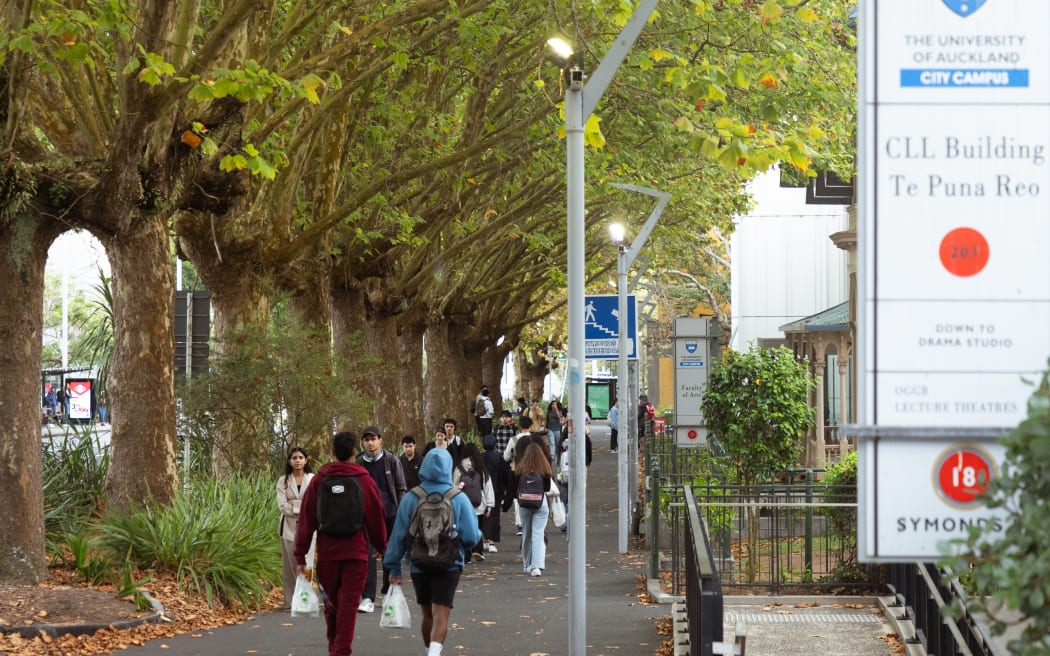
Dr Samuela ‘Ofanoa emphasises the research is about empowering communities and reframing the narrative. Photo/University of Auckland

Dr ‘Ofanoa, a Research Fellow at Waipapa Taumata Rau, University of Auckland, analysed 116 TikTok videos under the search term “gout”, which together attracted more than 426 million views. The findings were published this month in the medical journal Rheumatology Advances in Practice.

The study revealed that while 79 percent of videos discussed gout management, most focused on dietary advice and herbal remedies with limited long-term effectiveness. Only two videos mentioned urate-lowering therapy—the gold-standard treatment recommended by rheumatologists.

Nearly half of the videos addressed risk factors, but overwhelmingly blamed diet and lifestyle, while downplaying genetics, kidney function, and weight—key clinical determinants. Many promoted unverified supplements and “natural cures”, often using imagery of health professionals to boost credibility.

“TikTok has great potential as a tool to raise awareness around health issues such as gout,” Dr ‘Ofanoa said. “But our findings show that much of the content is inaccurate and reinforces stigma by framing gout as a personal choice.”

For Pacific communities, including Tongans, the implications are profound. Gout disproportionately affects Pacific peoples in Aotearoa, yet stigma and misunderstanding often prevent families from seeking timely care.

“For Pacific peoples, gout is not simply a lifestyle disease,” Dr ‘Ofanoa said. “Our bodies have evolved over centuries as wayfinding, seafaring peoples—adapted for survival in oceanic environments. These genetic factors mean we process uric acid differently.

“When TikTok videos blame diet alone, it fuels shame and stigma. We need culturally grounded education that explains the science and supports families without judgement.”

Globally, gout affects an estimated 41 million people, with around seven million new cases each year. Despite clear clinical guidelines, the condition remains poorly controlled, largely due to gaps in awareness and adherence to effective treatment.

Dr ‘Ofanoa says the study highlights an urgent opportunity for health authorities to engage Pacific and younger audiences through the same platforms they already use.

“Health professionals and organisations need to utilise the opportunity that social media presents and create engaging, evidence-based content to counter misinformation,” he said.

For Tonga and the wider Pacific, the message is clear: in the digital age, protecting public health means meeting people where they are—and ensuring that what they find is accurate, culturally grounded, and free from stigma.

China’s recent crackdown on churches rekindles reflections on Tonga’s Christianisation mission

A fresh series of arrests against underground Christian churches in China has refocused attention on Tonga’s earlier attempts to establish a Christian mission presence there—an ambition previously championed by members of the Tongan Royal Family.

Chinese police this month detained members of the Early Rain Covenant Church in Sichuan province, including its leader Li Yingqiang, after a raid on his home.

According to a report by the BBC, nine people were detained on Tuesday last week after police carried out raids on their homes and a church office in the central Chinese city of Chengdu. The Early Rain Covenant Church told the broadcaster that five of those detained had been released by Wednesday.

The BBC also reported that, more than 1,000 miles away in Wenzhou, authorities began demolishing the Yayang Church building. Video footage obtained by the non-profit organisation ChinaAid, which monitors religious persecution in China, showed the demolition taking place.

Christian groups cited by the BBC said the latest arrests—following similar actions last year—underscore what they describe as the Chinese Communist Party’s determination to suppress churches that do not align with state ideology.

Human Rights Watch said the detentions were part of a pattern of intensified pressure on unregistered Protestant churches.

In Zhejiang province, authorities recently detained around 100 members of Yayang Church and surrounded the building with armed police before demolition work began.

Other recent operations have included coordinated arrests involving leaders and members of the Zion Church and additional underground congregations across multiple cities.

Authorities Cite Legality

Chinese authorities maintain that such measures fall within legal regulations governing religious activity.

The Chinese government frames its crackdown of Christianity policies as being for the benefit of social harmony and national stability through “Sinicization,” or the alignment of religious doctrines with Chinese culture and the ideology of the Communist Party, says a report by the South China Morning Post.

Estimates of China’s Christian population vary widely, ranging from about 44 million registered believers in 2018 to more than 100 million when unregistered house church members are included.

Some projections suggest that, if current trends continue, China — with a population of about 1.42 billion in 2024–2025 — could become the world’s largest Christian nation by 2030.

Evangelical Hopes Reassessed

The recent developments revisit media report from 1998 in which Princess Pilolevu described Tonga’s growing diplomatic engagement with China as an opportunity for Christian outreach.

She said that while she was in China, she had been permitted to offer grace at official meetings, including at the Great Hall of the People and at the Ministry of Foreign Affairs — a practice she interpreted at the time as a sign of respect for Tonga’s Christian identity.

Nearly three decades after the Princess spoke of a Tongan Christian mission in China, there remains no known Tongan church established there. This stands in stark contrast to the flourishing network of newly founded Tongan congregations across the diaspora, including in the United States, New Zealand, Australia, and Japan.

Despite this, the close relationship between the Tongan Royal Family and the Chinese Communist Party has remained strong and continuous.

King Tupou VI of Tonga undertook a state visit to China last year from November 21 to 27 at the invitation of Chinese President Xi Jinping, marking the monarch’s first visit in seven years.

Chinese officials said the visit was aimed at strengthening bilateral relations, with discussions held on cooperation between the two countries as well as regional and international issues of mutual interest.

The Tongan constitution allows freedom of religious practice, freedom of worship, and freedom of assembly for religious services, provided these freedoms are not used “to commit evil and licentious acts” or to “do what is contrary to the law and peace of the land.”