Hawaii and Utah are among the locations being considered for the 2030 Rugby League World Cup as the sport’s international governing body plans to stage matches in the Pacific and United States, targeting areas with substantial Tongan, Samoan and other Pacific Islander populations.
The International Rugby League (IRL) confirmed on Monday that the tournament would be staged across five locations in the Pacific and United States, introducing a new competition format as part of its international expansion plans.
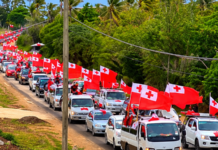
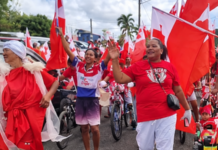
The announcement follows recent flag-waving vehicle parades by Tongan communities in Portland, Utah and Hawaii in support of Tonga National Rugby League XIII during its 2026 World Cup campaign.
In Portland, Oregon, more than 100 vehicles decorated in Tonga’s red and white colours travelled through the streets on 6 November ahead of the team’s semifinal against New Zealand, according to Oregon Public Broadcasting.
Similar celebrations were reported in Salt Lake City, Utah, while Tongan and Samoan supporters also paraded through Waikiki, Hawaii, ahead of their teams’ World Cup encounter on 1 November.
Although the five host locations have yet to be selected, Hawaii and Utah have been identified as potential venues because of their Pacific Islander populations.
IRL chairman Troy Grant said prospective host cities would be assessed according to their strategic locations and the availability of stadiums capable of accommodating multiple matches over several days.
Under the proposed format, each location would host a series of matches in a concentrated period, following a model similar to the National Rugby League’s Magic Round.
The tournament would then move between selected cities, with matches and associated promotional activities taking place at each venue.
The men’s competition will expand from 10 teams in 2026 to 12 in 2030, while the women’s tournament will increase from eight to 10 participating nations.
Grant said the competition was expected to feature three weeks of matches involving all participating nations, followed by the semifinals and finals.
The final tournament structure remains under consideration following discussions with member nations during the IRL’s annual general meeting and congress in Sydney.
Tongan population and US expansion plans
According to the 2020 US Census, 78,871 people identified as Tongan alone or in combination with another racial identity.
Utah accounted for 20,372 of them, including 12,859 in Salt Lake County, which recorded the largest Tongan population of any county in the United States.
Hawaii also has an established Tongan community, with the 2016–2020 American Community Survey estimating its population at approximately 8,798.
The presence of these communities provides demographic context for the IRL’s interest in staging World Cup matches in the two states.
The recent parades also attracted attention beyond the Tongan community, with Australian media reporting on the celebrations in Waikiki and other American cities following Tonga’s narrow 20–18 victory over Samoa.
The inclusion of the United States forms part of the IRL’s plans to develop rugby league outside its established markets, with Pacific communities identified as potential audiences for international matches.
If Hawaii or Utah is selected, local Tongan and other Pacific communities would have an opportunity to attend World Cup matches without travelling overseas.
The IRL has not announced a timetable for confirming the five host locations.