Home Blog Page 108

COMMENTARY As King welcomes Eke government public curiosity turns to constitutional demands 

Commentary – The Eke government’s recent update, confirming the Prime Minister’s regular meetings with the King, signals a positive relationship between the monarchy and the current administration.
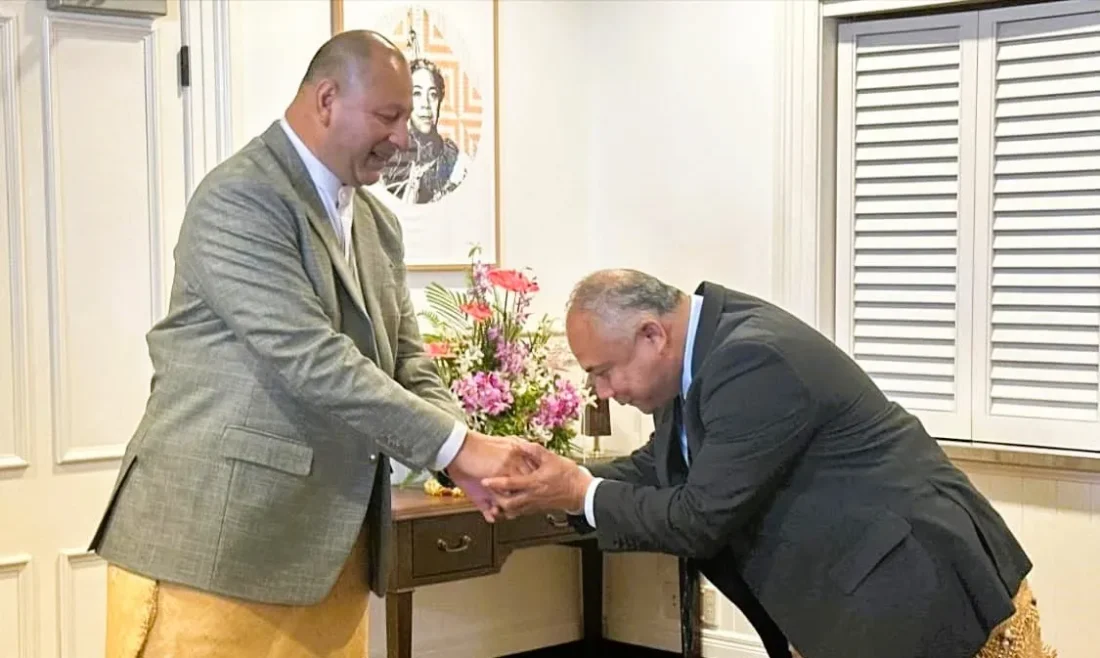
PM Dr. ‘Aisake Valu ‘Eke holds regular meetings with the king, marking improved executive-royal relations under Clause 50(a)3 of Tonga’s Constitution.

This development carries particular significance, given the stark contrast with former Prime Minister Huʻakavameiliku’s tenure, when tensions with the palace escalated to the point where the King promptly approved his resignation letter. 

The late Prime Minister Pōhiva Tu’i’onetoa once sought membership in the King’s Privy Council, proposing this would allow him to advise the monarch in real time on governmental matters. The King denied the request, maintaining that both leaders must adhere to their constitutionally mandated roles.

It appears Tu’i’onetoa failed to recognise the superior opportunity available under Clause 50(a)3, which empowers the Prime Minister to report to the King on state affairs formally.

The warm King-PM meetings also mark a striking departure from years of royal friction with previous governments. Where past prime ministers faced cold shoulders—despite constitutional obligations for regular briefings—the King’s openness to Eke suggests cautious approval of the current administration.

Constitutional Duties Defined

This shift raises questions: Is this mere symbolism, or does it reflect genuine progress in governance?  

The answer lies in what sets Eke apart from his predecessor. Unlike Huʻakavameiliku, under whose administration corrupt systems persisted, Eke’s demonstrated commitment to dismantling Tonga’s entrenched patronage structures appears to have earned him the King’s confidence.

Eke’s administration has demonstrated exceptional transparency through its unprecedented weekly hour-long press conferences—a practice maintained every Friday since taking office.

The government has also established a high benchmark for accountability by delivering on key campaign promises, including comprehensive reforms of Lulutai Airlines, a thorough review and restructuring of all government boards, and the resolution of the protracted Tonga Development Bank/National Reserve Bank dispute, among other significant policy achievements.

This leads us to the next critical question: What does Tonga’s Constitution actually say about King-PM meetings? To understand this, we must examine the constitutional text itself.  

Clause 50(a)3 of Tonga’s constitution says:

“The Prime Minister shall regularly and as required report to the King upon matters that have arisen with the government and upon the state of the country.”

From an analysis point of view, the phrase “matters that have arisen with the government and upon the state of the country” could refer to pressing issues impacting both national leadership and the nation as a whole.

These typically involve government-related controversies, such as corruption scandals, financial mismanagement, or lack of transparency, that undermine public trust.

At the same time, they reflect broader national challenges, including economic instability, social inequality, or systemic failures in public services. 

Fakalotofale Drives Reforms

In other words, these meetings are fakalotofale (a Tongan term for confidential in-house discussions) between the King and Prime Minister, where open dialogue on any matter is permitted.

Late Prime Minister Akilisi Pōhiva told Kaniva News the King reviewed Cabinet travel records during a meeting and objected to two ministers’ excessive trips. The PM then warned ministers about the King’s concerns.

In the context of Lulutai Airlines’ failures, including the $60 million in missing records and the Tonga Development Bank/National Reserve Bank saga, these matters absolutely warrant reporting to the King under constitutional Clause 50(a)3. Since the government’s announcement of its board restructuring plans and director appointments, these are key reforms the King deserves to know, and they must be reported to the King.  

This meeting enables the Prime Minister to inform the King about parliamentary obstructions, particularly opposition from the nobility regarding critical bills, that undermine governance efficiency. This communication is crucial, as the King holds unique influence over the nobility that could help resolve such impasses.

These meetings are not limited to presenting a strategic opportunity for the Prime Minister. Demonstrating government competence, he can build royal trust while tactfully advocating for Tonga’s most urgent need: systemic political reforms.

Transparency here builds confidence in the government’s overhaul of Tonga’s compromised systems. 
Tonga Police enforce Sunday trading ban in wake of King’s call for Sabbath observance

The Tonga Police have reinforced their warning against Sunday trading, following King Tupou VI’s recent reaffirmation of the nation’s Christian values and strict Sabbath observance.

The monarch’s remarks come amid reports by Kaniva News highlighting uneven enforcement of Sunday trading laws, with some businesses allegedly remaining open for tourists while locals face restrictions.

Under Tongan law, operating or shopping at businesses on Sundays is prohibited, with penalties for vendors and customers.

The police statement this evening follows numerous complaints about shops operating across Tongatapu on Sundays, which violates national law.

Under Tongan law, opening or operating a shop on Sundays, as well as selling or purchasing goods on this day, is illegal.

Authorities have made it clear that both shop owners and customers found breaking these rules will face consequences.

The police emphasised the importance of upholding Tonga’s cultural and religious traditions, urging the community to respect Sunday as a sacred day.

In their announcement, the Tonga Police called on the public to honour the country’s faith-based values by refraining from commercial activities on Sundays.

The statement concludes with a respectful tone, reaffirming the police’s commitment to maintaining the law while preserving the nation’s way of life.

It comes after the king reminded citizens of broader biblical commandments such as “Thou shalt not steal” and “Thou shalt not covet,” urging Tongans to reject jealousy and materialism.

Massive Drug Bust at Auckland Airport: $26M Worth of Meth and Cocaine Seized

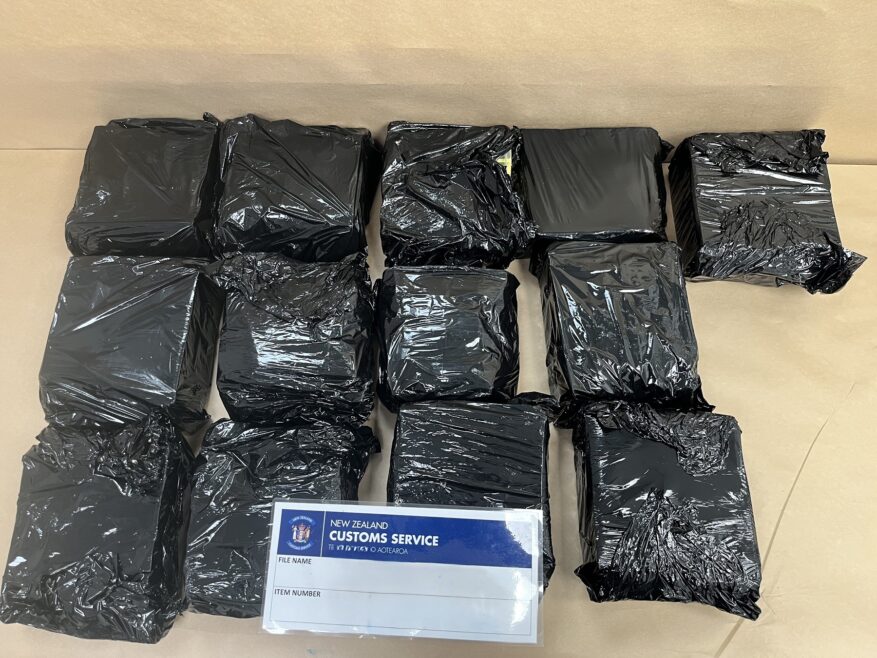
New Zealand Customs officers made a major breakthrough in the fight against drug trafficking, intercepting 67.8kg of methamphetamine and 1.1kg of cocaine at Auckland International Airport in two separate operations on 29 May 2025.

The combined street value of the seized drugs is estimated at up to NZ$25.81 million, marking one of the most significant drug busts at the border this year.

In the first interception, customs officials discovered 50kg of methamphetamine hidden in unaccompanied baggage arriving on a flight from Malaysia.

Hours later, officers identified 17.8kg of methamphetamine and 1.1kg of cocaine concealed in the luggage of a 22-year-old male passenger arriving from New York. The suspect was immediately arrested and now faces serious drug importation charges.

Customs Acting Manager Donnelle Nicholson commended the officers involved, stating, “Both these seizures were the result of the excellent skills of our frontline officers who recognised tell-tale signs that prompted further investigations. Customs officers are relentless in their drive and commitment to protect our border and people from harm. They take a great deal of pride when they achieve successes like these overnight”

Nicholson emphasised that customs officers remain unwavering in protecting New Zealand’s borders from illegal substances.

The latest seizures add to an already impressive record for 2025, with customs officials stopping approximately half a tonne of illicit drugs from entering New Zealand through Auckland International Airport alone this year.

Authorities attribute this success to enhanced screening technologies, improved intelligence sharing, and the sharp observational skills of border protection staff.

New Zealand Customs encourages the public to report any suspicious activity related to drug smuggling through their 24-hour confidential hotline at 0800 WE PROTECT (0800 937 768) or anonymously via Crimestoppers on 0800 555 111.

The recent intercepts serve as a stern warning to criminal organisations attempting to traffic drugs through New Zealand’s borders.

As investigations continue, authorities have not ruled out further arrests concerning these cases.

The massive haul underscores the ongoing challenges faced by border security agencies in combating the international drug trade while demonstrating New Zealand’s strong stance against narcotics trafficking.

Tonga in health crisis as last ENT specialist departs – PM Eke scrambles for solution

Tonga is facing a critical shortage in specialised healthcare services following the departure of Dr Āmone Vaka’uta, the country’s last remaining Ear, Nose, and Throat (ENT) specialist.

He is said to have taken up a new position in the Marshall Islands.

The Prime Minister was informed this afternoon that the lack of an ENT specialist has raised significant concerns among the public regarding access to essential medical care for related conditions.

Prime Minister Eke said there is currently a doctor working in the ENT department, but he did not say whether he was a specialist.

“We are aware of this critical gap and are taking steps to resolve it,” PM Eke stated in Tonga.

However, he stopped short of specific details about the government’s plans or timeline for securing a replacement specialist.

Tonga’s Ear, Nose, and Throat (ENT) department was established in 1987 by the Late Dr Leiukamea Saafi, a consultant specialist and head of the department.

After the report of the vacancy this week, social media platforms have seen growing calls for the government to prioritise medical workforce development to prevent similar shortages in other specialities.

In 2020, it was reported that the Eisdell Moore Centre from New Zealand worked with colleagues in the Pacific region, including Tonga, to support the development of Ear and Hearing Care services in the region.   

It was reported at the time that a volunteer Audiology Specialist from New Zealand, Mr Philip Luey, started working at the clinic in Tonga two days a week to assist with the development of the new audiology service. 

A local visiting team regularly travelled around the outer island to conduct outpatient clinics and surgeries for the local community.

Deputy PM warns journalists: ‘Get Your Facts Right’ – suggests radio show be shut down over alleged misinformation

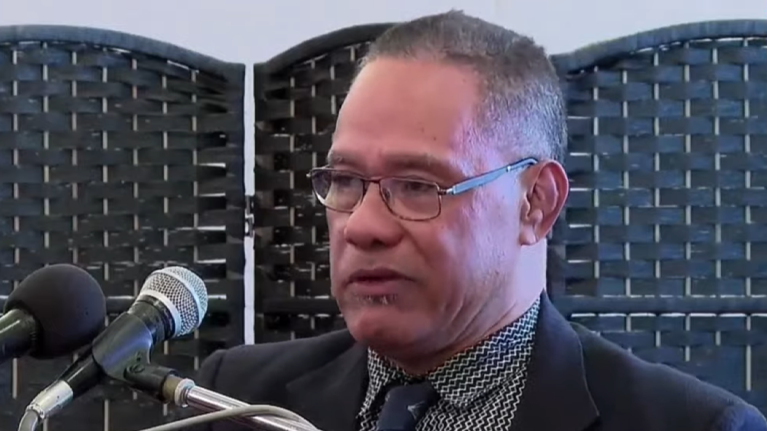
Nuku’alofa, Tonga—Deputy Prime Minister Dr Taniela Fusimālohi has issued a sharp warning to journalists, urging them to verify facts before reporting.

Deputy Prime Minister Dr Taniela Fusimālohi

This follows criticism of an FM87.5 radio program hosted by Siaosi Lavaka and featuring New Zealand-based Tongan lawyer Nalesoni Tupou.

According to Fusimālohi, the controversy arose after Tupou allegedly claimed that the government acted illegally when it terminated contracts of the former Board of Directors of the government.

Fusimālohi strongly refuted the claim during a press conference in Nuku’alofa this afternoon, stating that the termination was “nothing wrong.”

He claimed that the caretaker government had wrongly renewed the contracts, as it was legally prohibited from making decisions that could result in such “financial commitments.”

The Deputy PM went further, suggesting that the radio program should be shut down, after accusing it of spreading misinformation that could mislead the public.

Katalina Tohi, owner of FM87.5, challenged Fusimālohi regarding the contract terminations. She warned that similar situations had occurred previously when the government made decisions that resulted in court cases in which the government was ultimately fined.

However, the Prime Minister stepped in, clarifying that a caretaker government, according to the law, was not in a position to make decisions that should have been left for the upcoming government.

It is understood that the Board of Directors’ contracts were supposed to end in March 2025, but the caretaker government renewed them around December 2024.

The government has not indicated whether it will take formal action against the station, but Fusimālohi’s remarks signal a hardening stance against what officials perceive as irresponsible journalism.

This latest clash highlights ongoing tensions between the Tongan government and media over reporting standards and legal interpretations.

The Minister of Public Enterprises Piveni Piukala has accused local journalists of reckless reporting regarding allegations about the review of government boards.

He said that none of them had actually approached him with questions to verify the facts surrounding the issue.

Tonga Gov’t threatens to cut grants to church schools again over failure to account for funds – PM calls it a ‘Big Issue’

Nuku’alofa, Tonga—The Tongan government has sternly warned church-run schools that it will stop paying school grants unless they provide proper accountability for how the funds were spent.

The warning highlights recurring issues, including halted foreign grants, ongoing court cases against school operators, and previous suspensions of funding due to similar failures.

Prime Minister Eke expressed frustration over the lack of financial reporting, calling it a “big issue” for the government.

The Prime Minister revealed that school directors had blamed their inability to submit reports on principals’ failure to cooperate, with some citing teachers’ being on holiday as a reason for the delay.

This comes after the Ministry of Education and Training previously withheld funding for non-government high schools for over three years starting in 2021, following findings that some grants were not used in line with the funding program’s objectives.

The issue has resurfaced amid an ongoing court case involving alleged misuse of government education funds. The case involves former MPs and Cabinet Ministers Akosita Lavulavu and her husband, Etuate Lavulavu, who were charged after a 2016 audit of the ‘Unuaki ‘o Tonga Royal Institute uncovered financial irregularities.

The government previously emphasised that transparency is non-negotiable, and schools must comply with financial reporting requirements to continue receiving state support. Failure to do so, officials warn, could result in permanent funding cuts.

Education advocates have raised concerns over the potential impact on students, urging both the government and school administrations to resolve the matter swiftly to avoid disruptions in learning.

As Kaniva News reported previously, New Zealand’s Ministry of Foreign Affairs and Trade contributed NZ$4,458,606 through the TESPII scheme, via a grant to the Government of Tonga, from 2013 to 2016.

“A proportion of this funding went to school grants, which included assistance to non-government schools,” a spokesperson told Te Waha Nui.

These funds were managed by Tonga’s Ministry of Education and Training under terms set out in the Grant Funding Arrangement.

New Zealand’s current education support to Tonga is focused on numeracy and literacy outcomes for students, as well as education policy.

New Zealand has a record of putting a stop to its aid funding to Tonga when controversies arise.

In 2013 New Zealand’s foreign minister said he would withhold tourism funding to Tonga until a plane gifted by China was certified by a respected international authority, despite China insisting it was safe.

Fiji, Vanuatu move to end Tonga student border rejections following Minister’s formal complain

Nuku’alofa, Tonga – Tonga’s Education Minister, Pingi Fasi, has formally complained to Fijian and Vanuatu authorities after numerous Tongan students were denied entry and sent back home due to visa issues, despite a long-standing visa-free agreement between the nations.

The matter was recently addressed during a high-level meeting with University of the South Pacific (USP) officials in New Zealand, where Minister Fasi revealed that students were being turned away at airports without proper justification.

“When we raised the issue, they were surprised and claimed they didn’t know about it happened,” Fasi said.

Following urgent discussions, Fiji and Vanuatu agreed to immediately stop the practice and ensure border officials are properly informed of the agreement.

The minister hailed the resolution as a significant step forward, emphasising that the treaty should facilitate seamless travel for Tongan students and citizens.

COMMENTARY Setting the record straight on the King’s role in hereditary title disputes

Commentary—Kaniva News’ report on the King’s authority over hereditary titles has triggered heated debate online.

At the heart of the debate is the interpretation of two key constitutional clauses—Section 50(2) and Section 44—and how they interact in matters of noble succession.

The controversy stems from our report last night on the court case of Lord Fielakepa and his nephew Tupou Tongaliuaki Filo‘aulo Aleamotu‘a, in which the Land Court initially ruled in favour of Tupou Tongaliuaki Filo‘aulo Aleamotu‘a as the rightful heir.

Fielakepa then appealed to the Privy Council under Section 50(2), seeking to revoke the Lands Court decision. However, the King exercised his constitutional authority under that clause to uphold that Fielakepa’s nephew Tupou Tongaliuaki Filo‘aulo Aleamotu‘a was the rightful air, issuing a final and binding decision.

The constitution clause 50 (2) says: Constitution and powers of Privy Council

If any case shall be heard in the Land Court relating to the determination of hereditary estates and titles, it shall be lawful for either party thereto to appeal to the King in Privy Council which shall determine how the appeal shall proceed and the judgment of the King in Privy Council shall be final.

The constitution clause 44 says: King may confer titles

It is the King’s prerogative to give titles of honour and to confer honourable distinctions but it shall not be lawful for him to deprive anyone who has an hereditary title of his title such as chiefs of hereditary lands and nobles of the Legislative Assembly who possess hereditary lands except in cases of treason. And if anyone shall be tried and found guilty of treason the King shall appoint a member of that family to succeed to the name and inheritance of the guilty person.

Critics argue that such royal discretion could undermine hereditary traditions, while supporters maintain that the King’s role as the ultimate arbiter ensures legal finality.

Importantly, Section 44 explicitly prohibits the King from arbitrarily stripping hereditary titles—except in cases of treason—while Section 50(2) comes into play only when disputes are formally appealed to the Privy Council.

This legal framework ensures checks and balances, meaning the King cannot act unilaterally to remove titles, but once a case reaches the Privy Council, his judgment is conclusive.

The Fielakepa case exemplifies this process, affirming that the monarchy’s powers are constitutionally defined and judicially circumscribed.

Billion dollar drug seizure by NZ-led task force in Mid-East

By 1News Reporters

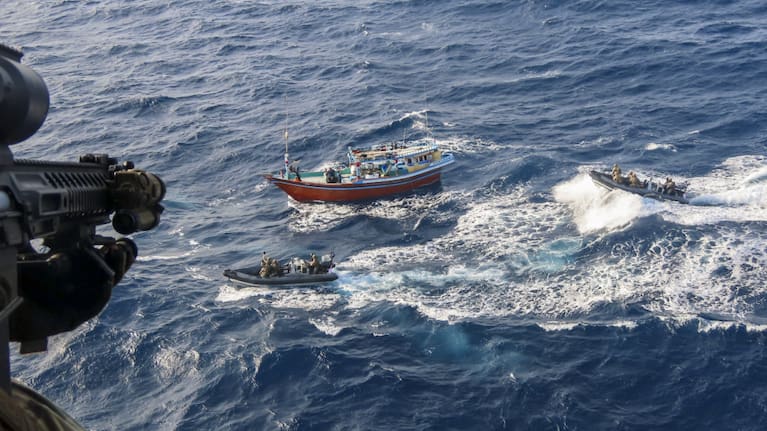
A massive drug haul worth over $1 billion has been seized in the Middle East by a New Zealand-led maritime task force.

The New Zealand-led Combined Task Force 150 (CTF 150).

The Royal Navy Frigate HMS Lancaster intercepted a suspicious cargo vessel while patrolling in the North Arabian Sea late last week.

Using a Peregrine uncrewed arial system to track the dhow, Royal Marine boarding teams stormed the ship while a Wildcat helicopter with a Royal Marine sniper team covered them.

Once the crew of six were secured, boarding teams discovered 1000kg of heroin, 660kg of hashish, and 6kg of amphetamine tablets hidden onboard. The drugs were transported back to Lancaster for testing and disposal.

It was the largest value narcotics interdiction made under New Zealand command this year.

Lancaster Commanding Officer, Commander Chris Chew, credited the success of the operation to the professionalism and dedication of the crew.

“This is another example of where Lancaster has delivered at range, in isolation, using her own organic assets,” he said.

Royal Navy frigate HMS Lancaster, part of New Zealand-led CTF 150.

CTF 150 Commander Commodore Roger Ward of the Royal New Zealand Navy called the operation a “significant blow” to the revenue streams of criminal and terrorist organisations involved in drug smuggling.

“Conducting maritime interdictions requires a team effort from the men and women here in the headquarters in Bahrain reaching through to those out on the oceans disrupting drug smuggling operations at the coal face,” he said.

“I’d like to acknowledge the 210-strong ship’s company from Lancaster for continuing to get amongst it day-after-day.”

CTF 150 was one of five operational task forces under the Combined Maritime Forces based in Bahrain and focused on regional maritime security.

So far, the task force and its partners have seized narcotics with a New Zealand street value of $1.8 billion, Commodore Ward said.

“Furthermore, we estimate that our presence and the intelligence collected from our operations has resulted in the disruption of nearly three times that amount.”

Auckland teen charged over shoplifting spree valued at over $10,000

By 1News Reporters

A 17-year-old Aucklander has been charged after a spate of shoplifting, which police say added up to $10,000 worth of items.

Police recovered the products which were then returned to the supermarket.
Police recovered the products which were then returned to the supermarket. (Source: New Zealand Police)

He was tracked down after allegedly bagging $800 worth of groceries in one haul.

Initially, police said there was a report of a male shoplifting from a Manukau supermarket at 9am on Saturday, May 24.

Counties Manukau central area prevention manager inspector Warrick Adkin said the youth allegedly took a large amount of meat products and fled the scene in a vehicle.

Attending officers made inquiries about the vehicle, and discovered it was likely that the same person had been involved in shoplifting at a Three Kings supermarket only an hour earlier.

“Police officers immediately responded in an attempt to locate this male and the vehicle,” said Adkin.

“Not long after, the vehicle was located a short distance away, as it was about to enter State Highway 20.”

Police said they took a youth into custody while about $800 worth of groceries were located and returned to the store.

“Further enquiries revealed this male has allegedly been involved in numerous shoplifting or theft incidents this year, totalling several thousand dollars.

“We are pleased to have brought this spree to an end and for this male to be held accountable for his actions. We will not tolerate such brazen criminal offending.”

Police said the 17-year-old appeared in the Manukau Youth Court on May 24, charged with multiple shoplifting offences.