Tonga’s long-awaited dialysis centre project, which the nation was told would be launched last year, has effectively collapsed after the United States-based organisation behind it failed to secure the funding needed to deliver the promised service, Health Minister Dr Siale ʻAkauʻola has revealed.
The disclosure marks a dramatic setback for a project that was initially presented as a major philanthropic initiative backed by a Utah-based family with medical and business connections and an interest in addressing Tonga’s growing burden of diabetes and kidney disease.
In 2019, Utah news outlet KSL reported that Dr Mansoor Emam, a US-based doctor who had visited Tonga and treated patients suffering from diabetes and related illnesses, and his brother-in-law Khosrow B. Semnani, a prominent Salt Lake City industrialist and philanthropist, were behind plans to build the dialysis facility in Tonga.
The 2019 report did not indicate that the project was dependent on raising funds from donors or other outside sources. By 2024, however, fundraising and donor support had become an explicit part of efforts to establish the dialysis service, indicating that securing sufficient funding had become a significant issue for the project.
Dr Emam’s son, Rod Emam, had close ties to Tonga through his friendship with the late Tongan-American Siaosi Brown. Following Brown’s death while attempting to rescue a woman and child from dangerous waters in Utah, Emam proposed naming the dialysis facility the Siaosi Brown Dialysis Center in his friend’s memory. KSL reported that Dr Emam and Semnani agreed to the proposal.
Dialysis Project Background
The dialysis centre was to form part of a larger facility known as the Semnani Health Center and was promoted as bringing desperately needed dialysis treatment to Tonga, where no such service is currently available.
Tonga has a high burden of non-communicable diseases, particularly diabetes and hypertension, which can lead to chronic kidney disease and kidney failure. With no established dialysis service in Tonga, patients requiring dialysis have had to seek treatment overseas, including in Fiji, New Zealand and the United States, often at considerable financial and personal cost.
Semnani is the co-founder of the Semnani Family Foundation, a Utah-based philanthropic organisation that lists Tonga among the countries where it has undertaken humanitarian work. The foundation focuses primarily on health, education and disaster relief and reported net assets of about US$92.5 million in 2019, the year the Tonga dialysis project was publicly reported. By 2024, its net assets had grown to about US$132.1 million, according to publicly available US tax records.
Over the following years, however, fundraising and donor support became an increasingly visible part of the initiative, while the project appeared to make substantial progress: a groundbreaking ceremony was held in Tonga in 2023, construction began, international organisations became involved, and dialysis equipment was acquired.
The project moved even closer to becoming operational when 10 dialysis machines arrived in Tonga around April last year. This was followed by an announcement from then-Health Minister Dr ʻAna ʻAkauʻola at a press conference that the centre was expected to open in November 2025, prompting widespread celebration on social media as Tonga appeared finally set to have its own dialysis service.
However, Dr Siale revealed last week that the machines were second-hand.
Funding Capacity Falls Short
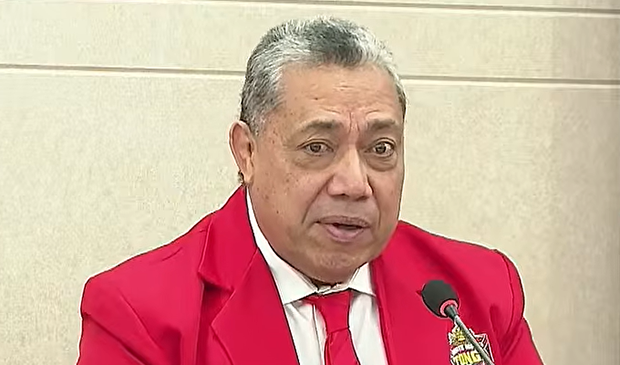
Dr Siale, the newly appointed Minister of Health, has now said that after reviewing the communications surrounding the project, it became clear that the sponsor had struggled to raise the necessary funds and lacked the financial capacity to deliver the service it had promised.
In Tongan he said: “Mahino ia ‘oku ‘ikai ke nau kei lava ke fakahoko ‘enau me’a ne palōmesi’.”
The sponsor has indicated that it needs more time to reconsider the project, but the Minister’s comments have raised serious doubts over whether the original arrangement can still proceed.
The failure of the original funding arrangement now leaves the Government facing a more fundamental question: how Tonga can establish and sustain its own dialysis service, and whether another funding arrangement or international partner will be required.
Operating Costs Pose Challenge
Dr Siale said the problem now was that the Ministry was not prepared to operate such an expensive and sophisticated service. While obtaining some of the necessary equipment was relatively straightforward, he said the greater challenge was the high cost of securing the specialised medical professionals required to provide dialysis treatment safely and sustainably.
He said there was a signed agreement between the Government and the US sponsors, under which the sponsors were responsible for providing the dialysis equipment and the specialist medical personnel required to operate the service for up to 10 yeas, while Tonga’s contribution was limited to providing the land, buildings and staffing.
A website dedicated to the project, siaisibrowndialysiscenter.com, still states that Tonga’s first dialysis clinic will begin providing services in 2026. It says five dialysis machines will be available at a site in Veitongo, near Vaiola Hospital, with treatment provided free of charge.
The website also outlines plans for a larger Health Education Center intended to serve hundreds of Tongans with chronic kidney disease, regardless of their ability to pay.