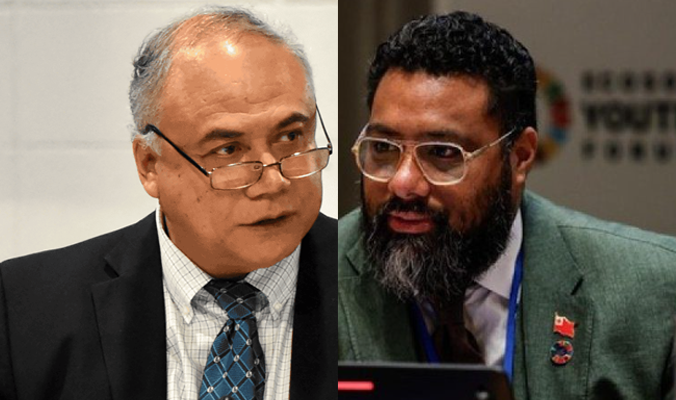
Tongan international Tevita Pangai Junior will join fellow Mate Maʻa Tonga forward Joe Ofahengaue at Leigh Leopards after securing a multi-year Super League deal from 2027.
The move gives Leigh another experienced Tongan presence in its forward pack as the English club strengthens its squad under head coach Adrian Lam.
Pangai Junior, 30, brings 147 NRL appearances and international experience with Tonga, having made his Mate Maʻa Tonga debut during the historic 2017 Rugby League World Cup campaign.
He began his NRL career with Brisbane Broncos in 2016 and later played for Penrith Panthers, Canterbury-Bankstown Bulldogs and the Dolphins.
Pangai Junior also represented New South Wales in State of Origin in 2023 before taking his career to Europe.
He joined Catalans Dragons for the 2025 Super League season, making 23 appearances and scoring four tries, before moving to Hull KR during the 2026 campaign.
His latest move will reunite him with Ofahengaue, with both Tongan internationals having previously played for Brisbane.
Pangai Junior said he and his family were excited about joining Leigh and thanked the club for putting its faith in him.
“I’m really looking forward to getting a full pre-season and working hard with my new teammates,” he said.
Lam said Pangai Junior would add “size, power, aggression and competitiveness” to Leigh’s forward pack.
The coach also expects the experienced Tongan to develop into a leader at the club.
Pangai Junior’s arrival adds another Mate Maʻa Tonga connection to Leigh as the club prepares for its 2027 campaign.
His multi-year agreement means the powerful forward is set to extend a career that has now taken him from the NRL to France and England.
Clarify the 15-line formatTighten the headline for impact
Tonga’s Supreme Court has warned that illegal importation of firearms and ammunition is increasing and should attract custodial sentences, as a 79-year-old man was given a fully suspended 12-month prison term for illegally importing 258 rounds of ammunition from the United States.
August William Hoeft pleaded guilty on August 21 to importing 258 rounds of .22 long-range ammunition without an import licence and failing to declare the ammunition, both offences under the Customs and Excise Management Act.
Justice Tupou KC sentenced Hoeft in the Supreme Court at Neiafu on September 16.
The Court heard that two plastic bins belonging to Hoeft arrived in Tongatapu from the United States in May 2025.
An electronic scan detected ammunition inside one of the bins. Customs later found the 258 rounds concealed inside a plastic bottle.
A Police Armoury Report found the ammunition was in good condition for use and that Hoeft did not have a licence to import it. When confronted about failing to declare the ammunition, Hoeft insisted he had an import licence, but the claim later proved to be untrue.
Court warns of increasing offending
Justice Tupou said offences involving the illegal importation of firearms and ammunition now warranted custodial sentences.
“It is without question that this type of criminal activity is recently increasing,” the judge said.
The Court noted that sentencing practice had shifted from fines towards imprisonment because of the need for deterrence.
Justice Tupou described the importation of the 258 rounds without a licence and the decision not to declare them as a serious offence involving an intentional disregard of laws governing prohibited goods.
The judge said sentencing had to take account of punishment, denunciation and deterrence as well as the potential misuse of ammunition and the resulting risk to community and public security.
Hoeft’s defence argued that there was no allegation involving a firearm, violence, drugs, trafficking, sale, commercial activity, bribery, interference with Customs or any wider criminal enterprise.
It also argued that 258 rounds were at the lower end of ammunition-importation offending and proposed a total fine of $1,500 instead of imprisonment.
However, Justice Tupou rejected the suggestion that the absence of those other criminal factors mitigated Hoeft’s offending.
The judge also rejected the argument that 258 rounds was an insignificant quantity, saying the ammunition was legally classified as prohibited goods, had been imported without a licence and declaration, and could pose a security risk if it fell into the wrong hands or was used illegally.
Age and ill health spare jail
The Crown proposed a starting point of 18 months’ imprisonment for the illegal importation and six months for failing to declare the ammunition, with the sentences to run concurrently.
Justice Tupou adopted those starting points and deducted six months for Hoeft’s early guilty plea and cooperation with Police, leaving a final sentence of 12 months’ imprisonment.
The defence told the Court Hoeft was 79 and in ill health. He was described as a long-standing member of The Church of Jesus Christ of Latter-day Saints and as “respectful, cooperative and dependable”.
Justice Tupou said Hoeft’s advanced age and ill health made actual imprisonment inappropriate.
The 12-month sentence was therefore fully suspended for 18 months.
During that period Hoeft must not commit an offence punishable by imprisonment, must remain on probation and report immediately to the probation office.
He was also ordered to pay a $3,000 fine within two weeks or serve three months in prison.
The Court warned that breaching the suspension conditions could result in the suspension being cancelled and Hoeft being required to serve the balance of his prison sentence.
All 258 rounds of ammunition were ordered forfeited under the Customs and Excise Management Act.
Tributes are flowing for a man killed in an alleged road crash at Veitongo, Tonga, on Saturday, with family and friends remembering him as a quiet, loving and hardworking person devoted to his church and village.
Pāhulu Hafoka
Pāhulu Hafoka died after he was allegedly struck by a vehicle while riding his bicycle, his brother Talanoa Hafoka confirmed to Kaniva News.
The matter is currently with Tonga Police and Kaniva News is withholding further details about the circumstances of the incident at this stage.
Talanoa described his brother as a loving person who worked hard and regularly travelled around by bicycle.
He said the family had been planning for Pāhulu to travel to Australia for a visit before his life was suddenly cut short.
News of his death prompted an outpouring of grief from kāinga and friends, who posted messages of condolence and memories of him on Facebook.
“Oh, my heart is broken to hear he died from a fatal crash,” one commenter wrote.
Another remembered Pāhulu for his quiet nature and service to his community.
“I felt for Pahulu as he is very silent and worked on his own for the church and village. Gone too soon,” the commenter wrote.
The tragedy has left his family and community mourning a man remembered for his good conduct, quiet character and willingness to work for others.
Family and friends are being encouraged to rally around Pāhulu’s loved ones as they come to terms with his sudden death.
A Fijian man accused of raping and sexually assaulting a Virgin Australia cabin crew member during a New Year stopover in Nadi has been acquitted after the High Court found significant inconsistencies in the complainant’s evidence.
Ilaisa Tanoa Degei was found not guilty of one count of rape and one count of sexual assault by Justice Sunil Sharma in the High Court at Lautoka on September 24. He was released following the judgment.
The charges arose from allegations involving a 21-year-old Virgin Australia cabin crew member following New Year’s Eve celebrations in Nadi between December 31, 2024 and January 1, 2025.
Justice Sharma ruled that it would be unsafe to convict Degei because the prosecution had not proved the charges beyond reasonable doubt.
The Court identified significant inconsistencies between the complainant’s initial police statement and a later statement, as well as contradictions that emerged during cross-examination. Justice Sharma found her evidence unreliable when considered alongside the other evidence before the Court.
The Court also considered evidence from the taxi driver who transported Degei and the complainant. The driver said he had looked through his rear-view mirror several times and observed no improper conduct, although evidence at trial also included his recollection of hearing the complainant say she did not like something during the journey.
Medical evidence did not independently establish whether rape or sexual assault had occurred. The doctor who examined the complainant could neither confirm nor rule out the alleged offences, while the Court found there was insufficient evidence to establish that a mild bruise on her breast had resulted from the alleged assault.
Justice Sharma found Degei’s denial of improper conduct credible and said it had not been undermined during cross-examination. The Court ultimately found the evidence left reasonable doubt and acquitted him on both charges.
The acquittal comes more than 20 months after Degei was arrested and charged following an incident that attracted international attention because the complainant was a member of a Virgin Australia crew staying in Fiji between flights.
In January 2025, Degei was initially refused bail in the Nadi Magistrates Court and remanded in custody before the case was transferred to the High Court because of the seriousness of the charges. He was subsequently granted bail during the proceedings.
The allegations emerged after Virgin Australia crew members had been celebrating New Year’s Eve at a nightclub in Nadi’s Martintar district during a layover.
Throughout the trial, Degei denied sexually assaulting the woman. He told the Court that he had been attempting to help her return safely to her hotel because she was heavily intoxicated.
The Office of the Director of Public Prosecutions said it would review the judgment before deciding whether to appeal.
The complainant’s identity remains suppressed by court order.
Virgin Australia previously operated services to Tonga, including flights between Auckland and Nukuʻalofa, but the airline withdrew from the route in 2020 and does not currently list Tonga among its international destinations.
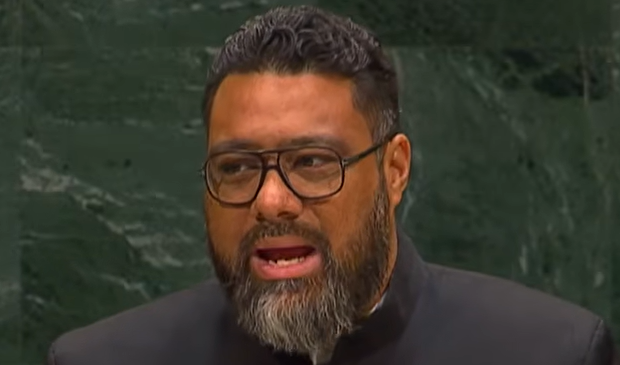
Tonga Prime Minister Lord Fakafanua has warned world leaders that the Pacific must not become a staging ground for military escalation or major-power rivalry, as he called for reform of the international system and stronger action on climate change and ocean protection.
Prime Minister Lord Fakafanua
Delivering Tonga’s national statement at the 81st United Nations General Assembly in New York on September 25, Lord Fakafanua reaffirmed Tonga’s commitment to the Pacific Islands Forum’s 2050 Strategy for the Blue Pacific Continent and the region’s declaration as an Ocean of Peace.
“Our Ocean of Peace is more than the absence of conflict,” the Prime Minister said, pointing to transnational crime, illicit drugs, illegal, unreported and unregulated fishing, cyber threats and the unresolved consequences of nuclear testing and radioactive contamination among challenges confronting the region.
His remarks came as Pacific governments seek to maintain greater regional agency amid increasing geopolitical competition and security engagement by major powers.
Lord Fakafanua also used his UN address to argue that international institutions established after World War II were no longer adequately reflecting contemporary global realities.
“Too much of the international architecture still reflects the world of 1945 rather than today’s realities,” he said.
“If the United Nations is to remain the principal vehicle through which sovereign nations confront global challenges, it must transform.”
He called for a stronger UN General Assembly, a more inclusive and representative Security Council and reforms to the international financial system to provide faster and more accessible financing for countries most in need.
Climate change remained central to Tonga’s statement, with Lord Fakafanua warning that exceeding the 1.5C warming threshold should not be treated as a reason to abandon efforts to limit global temperature increases.
“Every fraction of a degree matters,” he said, calling for any overshoot to be limited in extent and duration and for temperatures to be brought below 1.5C as quickly as possible.
The Prime Minister urged major greenhouse-gas emitters to attend pre-COP31 meetings scheduled for Fiji and Tuvalu next month.
“Come to the Pacific and confront what 1.5 degrees means for our water, our food, our homes and our people,” he said.
He also called for greater international backing for Pacific-designed climate resilience initiatives, including the Pacific Resilience Facility and Weather Ready Pacific, as well as Tonga’s Climate Trust Fund.
Lord Fakafanua argued that climate change, biodiversity loss and ocean degradation could no longer be addressed as largely separate international issues.
“We cannot keep negotiating climate, biodiversity and the ocean in separate processes when they form an interconnected ecosystem requiring coherent solutions,” he said.
Tonga intends to protect at least 30 percent of its ocean by 2030, while the Government is targeting 70 percent renewable electricity by 2030 and 100 percent by 2035, according to the statement.
The Prime Minister also announced that Tonga intends to convene a Polynesian Ocean Summit in May 2027, bringing together governments, communities, scientists and international partners to strengthen ocean governance and turn regional commitments into practical action.
Pacific Islands Forum leaders had already welcomed the Polynesian Leaders Group’s intention to convene such a summit in 2027 as a Pacific-led platform for ocean governance, marine conservation and the blue economy.
Lord Fakafanua also turned to artificial intelligence and other emerging technologies, arguing that Small Island Developing States should have a role in determining the international rules governing technological change.
“Tonga does not need to be first in artificial intelligence, quantum computing or every technology that follows,” he said.
“But we will not simply endure global transformation. We will exercise sovereignty by helping shape the rules and norms that govern it.”
Before the General Assembly, Tonga had signalled that climate action, energy security, connectivity, sustainable development and the priorities of Small Island Developing States would be among the major issues its delegation would raise in New York.
Lord Fakafanua concluded Tonga’s message by reaffirming the Kingdom’s support for a more representative and responsive multilateral system that gives greater recognition to the vulnerabilities and priorities of small island states.
A Tongan prison officer who served for 24 years has been sentenced to 18 months in prison after illegally importing a .22 rifle, 1,655 rounds of ammunition and a large quantity of fireworks into Vavaʻu.
Spencer Masaniai Loloma Sikalu was ordered to serve eight months in prison, with the final 10 months of his sentence suspended for 12 months, following sentencing in the Supreme Court at Neiafu on September 16.
Justice P. Tupou KC said Sikalu’s long service as a prison officer placed a higher responsibility on him to obey the law and be a model citizen, rejecting arguments that his professional humiliation and reputational damage should mitigate his sentence.
Sikalu pleaded guilty to five charges involving the unlicensed importation of the rifle, ammunition and fireworks, and failing to declare the ammunition and fireworks.
The prohibited goods were discovered after a crate consigned to Sikalu arrived in Vavaʻu on January 3 and was flagged for inspection by the Dog Detector Unit.
When Sikalu and a customs broker arrived to release the crate on January 19, he declared that it contained a firearm and told officers he had packed the crate himself. During the inspection, officers discovered the .22 rifle and fireworks.
The Court said that as an officer moved towards another black suitcase inside the crate, Sikalu quickly grabbed it and was asked to hand it over. Customs officers opened the suitcase and discovered ammunition and more fireworks.
Justice Tupou found Sikalu knew what the suitcase contained and said that, had the customs officer not approached it, the ammunition and fireworks would have escaped inspection.
“That, in my view, was dishonest if not an attempt to conceal,” the judge said.
Police later examined the seized weapon and ammunition and found the .22 rifle was in good condition and capable of firing, while all 1,655 rounds were in good condition for use. Sikalu did not hold a licence to import either the rifle or ammunition, and authorities also confirmed he had no permit to import the fireworks.
The Crown argued that aggravating factors included the large quantity of prohibited goods, Sikalu’s failure to be forthcoming about the ammunition and the potential use of firearms and ammunition in criminal offending.
The Court said there had been a shift in sentencing for illegal firearm and ammunition imports, from fines towards imprisonment, because of the need for deterrence. Justice Tupou said such offending was increasing and warned that inadequate sentences risked allowing it to “get out of hand”.
The judge initially calculated an aggregate starting point of six-and-a-half years across the five offences but reduced this to two-and-a-half years to avoid a “crushing first period of incarceration”. A further 12 months was deducted for Sikalu’s early guilty pleas and cooperation with police, leaving a final sentence of 18 months.
Ten months of the sentence were suspended, meaning Sikalu must serve eight months, subject to any remission under the Prisons Act.
After his release, Sikalu must remain offence-free during the suspension period, be placed on probation, report to the probation office within 48 hours and complete a life-skills or other course directed by his probation officer.
The Court also ordered the rifle, ammunition and fireworks forfeited under the Customs and Excise Management Act.
Legendary British reggae band UB40 is preparing to take its Unstoppable World Tour to New Zealand and Australia as it begins celebrations marking nearly 50 years in music — bringing the band back to two countries that together are home to a Tongan population larger than the population living in Tonga itself.
British reggae band UB40 performs on stage as the group prepares for its Unstoppable World Tour of Australia and New Zealand in May 2027, kicking off celebrations marking nearly 50 years in music. Photo: RJP Photography UK
Founding member Robin Campbell and his son Matt Campbell, who performs backing vocals and manages the band, have spoken to ABC Pacific’s Island Music about the upcoming tour and the group’s long musical journey.
UB40 has officially announced six Australia and New Zealand concerts in May 2027, beginning in Perth on May 17 and ending at Auckland’s Spark Arena on May 26, with British group Soul II Soul as special guests.
The tour carries particular interest for Pacific audiences, including Tongans, among whom UB40 and reggae have maintained a strong following across generations.
That connection was dramatically demonstrated in Tonga in March 2006 when UB40 performed at Teufaiva Stadium in Nukuʻalofa before an estimated crowd of between 10,000 and 15,000 people — an extraordinary turnout in a country with a population of about 100,000. Contemporary reporting described it as Nukuʻalofa’s “biggest ever party”.
Twenty years later, UB40 featuring former lead singer Ali Campbell returned to Teufaiva in January this year, drawing thousands of fans and again demonstrating the enduring popularity of the band’s catalogue in the Kingdom. That touring group is separate from the current UB40 led by founding members including Robin Campbell.
The upcoming Australian and New Zealand tour also takes UB40 directly into the two countries containing the largest concentrations of the Tongan diaspora.
New Zealand’s 2023 Census recorded 97,824 people identifying as Tongan, making Tongans the country’s second-largest Pacific ethnic group after Samoans.
Australia’s 2021 Census recorded 43,469 people reporting Tongan ancestry, including both Tonga-born and Australian-born people.
Together, those figures amount to more than 141,000 people, compared with the 100,179 people counted in Tonga’s 2021 Population and Housing Census. The figures are not directly equivalent because New Zealand measures ethnic identification while the Australian figure is based on ancestry, and the censuses were conducted in different years. Nevertheless, they illustrate the scale of the Tongan population now living across the two countries.
UB40’s influence has also extended into Pacific reggae itself. New Zealand reggae musicians have cited the British group as an important influence, with members of Tomorrow People saying much of their early sound was influenced by UB40, whose music they had grown up hearing through their parents.
Formed in Birmingham in 1978, UB40 became one of the world’s most successful reggae bands, producing internationally recognised songs including Red Red Wine, Kingston Town and (I Can’t Help) Falling in Love with You.
Robin Campbell remains a founding member, guitarist, vocalist and lyricist, while Matt Campbell — Robin’s son — joined the band’s management before becoming its manager in 2019 and later joining the touring line-up as a backing vocalist.
The band says the 2027 Australia and New Zealand dates will begin its celebrations of 50 years in music, rather than mark the precise anniversary, which falls in 2028.
The Unstoppable World Tour will visit Perth, Adelaide, Melbourne, Sydney and Brisbane before finishing at Spark Arena in Auckland on May 26.
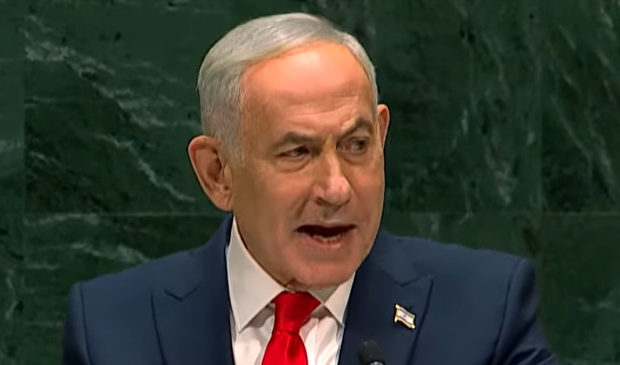
The Tongan Government has rejected reports suggesting its delegation joined a mass walkout during Israeli Prime Minister Benjamin Netanyahu’s address to the United Nations General Assembly, confirming a Tongan representative remained in the chamber.
Israeli Prime Minister Benjamin Netanyahu addresses the 81st session of the United Nations General Assembly in New York on September 24, 2026.
The clarification follows widespread international coverage of the dramatic scenes at the UN General Assembly, where dozens of delegates left the chamber as Mr Netanyahu took the podium.
However, confusion emerged over exactly which countries participated in the protest.
An Israeli count subsequently identified 77 countries whose delegations were either absent from the chamber or left at the beginning of Mr Netanyahu’s address.
The published list included Tonga.
But Israeli officials themselves acknowledged that not all 77 countries had participated in the organised walkout. Some delegations were simply not present for the address, while others physically left the chamber in protest.
That distinction was central to Kaniva News’ decision to seek confirmation directly from the Tongan Government rather than report that Tonga had participated in the walkout.
The Prime Minister’s Office confirmed Tonga’s position to Kaniva News this morning.
Elizabeth Kite, Communications and Engagement Advisor to the Prime Minister of Tonga, described claims that Tonga had walked out as false.
“We are unsure as to why anybody is believing these false claims of Tonga walking out when Israel delivered their statement, as this is a highly televised and public event which clearly shows — when watched — that Tonga was in fact one of the countries that remained seated,” Ms Kite told Kaniva News.
“This is available on UN Web TV, and many other platforms.
“Tonga did not walk out, and we had a representative present during Israel’s statement.”
Reports suggesting Tonga had joined the protest had also prompted strong reaction on social media, particularly among Tongan supporters of Israel.
International footage showed scores of delegates leaving the General Assembly chamber as Mr Netanyahu approached the podium, amid boos, cheers and calls from the General Assembly president for order.
The Israeli Prime Minister responded to those leaving by telling the assembly: “If there are any other moral cowards who haven’t yet left this hall, please do so now.”
Tonga has previously sided with Israel and the United States in significant UN votes concerning Israel. In December 2025, Tonga was among just 12 countries that voted against a General Assembly resolution welcoming an International Court of Justice advisory opinion concerning Israel’s obligations in the Occupied Palestinian Territory.
Former Prime Minister Dr ʻAisake Eke has rejected as “not true” Prime Minister Lord Fakafanua’s claim that failures by Eke’s former government to complete necessary land and contractual preparations contributed to delays in the multi-million-dollar Fangaʻuta Lagoon Bridge project.
MP Dr ‘Aisake Eke with Prime Minister Lord Fakafanua
The construction contract for the US$97 million project was signed by Eke’s government and McConnell Dowell Constructors Ltd in September 2025 at a ceremony presided over by the King. The project includes a 720-metre bridge across Fangaʻuta Lagoon and 2.1 kilometres of approach roads linking Nukuʻalofa with southern Tongatapu.
Eke told Kaniva News that all immediate requirements had been met and work continued until his government left office on 18 December.
“Fakafanua’s statement is not true,” Eke said.
Eke also rejected the suggestion that the delay began while he was still Prime Minister.
“The delay occurred after the new Prime Minister, Fakafanua, and his government took office,” Dr Eke alleged.
The former Prime Minister’s account directly challenges Lord Fakafanua’s recent public statements blaming the bridge construction delays, recently revealed by Kaniva News, on unresolved preparatory matters that he said were inherited from the previous administration.
Earlier this month, Lord Fakafanua also revealed that he had only recently learned of further land disputes affecting access to the bridge at Folaha and Longoteme. He said he had since resolved the issues through Zoom calls and social-media messaging with the affected landowners, most of whom lived overseas.
He said the necessary documents were now being sent to the affected landowners in Australia and New Zealand for their signatures.
Prime Minister Asked to Respond
Kaniva News has contacted Lord Fakafanua and put Dr Eke’s allegations directly to him, including Eke’s characterisation of the Prime Minister’s claim as not true, “’ikai ke mo’oni”. The Prime Minister has been asked to respond and provide evidence supporting his account of when the project entered delay and what caused it.
The conflicting accounts come after former Infrastructure Minister Sēmisi Sika told Kaniva News that the Government had incurred approximately TOP$7 million in what he described as penalties (tautea) during the six months from September 2025 to February 2026 because of the prolonged delay.
Sika said the TOP$7 million in delay-related costs incurred between September 2025 and February 2026 could continue to accumulate if construction of the bridge remained stalled, potentially adding another TOP$7 million by September 2026.
Lord Fakafanua later confirmed at a press conference that the Government had received McConnell Dowell’s claim for delay-related costs. However, he said the amount might be reduced through a value-engineering process aimed at lowering the cost of some construction materials.
It is now September 2026, but at his latest press conference this month, Lord Fakafanua did not clarify whether the construction had resumed or confirm whether any further delay-related costs had accrued.
The period Mr Sika identified began while Eke’s government was still in office. Eke’s government left office on 18 December 2025.
Eke Disputes Construction Halt
Eke, however, firmly disputes that construction had stopped during that period.
He claimed that, before Parliament approved the Government’s annual budget in June, Lord Fakafanua had already told the House that all land disputes affecting the project had been resolved.
Eke said that, during his tenure, the requirements that had to be met before the contract was signed were assessed by representatives of the Asian Development Bank and the World Bank. He said they regularly visited Tonga to review the project’s progress and met with him and officials from the Ministries of Lands, Forestry and Agriculture, as well as the Attorney-General’s Office.
Eke said he chaired weekly meetings involving relevant government ministries, an ADB representative in Tonga, the contractor and the Project Management Unit to identify and resolve problems that could interfere with construction.
Some Land Issues Deferred
He said the project’s land requirements were divided into two categories: about nine properties needed for the immediate bridge works and others that could be addressed later.
However, he did not clarify whether these arrangements, including the agreement to resolve some land matters later, covered the properties that Lord Fakafanua now says are subject to disputes that have stalled construction.
Accordingly, Eke said in Tongan: “ʻI heʻene pehē, ne ʻosi maau e ngāue ia ke fakahoko, ʻa ia ʻoku hala ʻa e tukuakiʻi” kuo fai ʻe Fakafanua.
This translates as: The work was ready to proceed; therefore, Fakafanua’s allegation was incorrect.
Preparations Unfinished After Election
He acknowledged there had been an unresolved compensation issue involving property at ʻUmusī, where approximately TOP$10 million to TOP$12 million was being sought.
Eke said he personally met the person holding the power of attorney for the affected landowners and discussed the compensation demand. He maintained that an understanding was reached that negotiations over compensation could continue without preventing work on the bridge.
He said an agreement had been signed allowing bridge construction to proceed while final compensation negotiations continued, although no compensation had actually been paid to affected landowners before his government left office.
Eke also rejected a suggestion put to him by Kaniva News that, given Lord Fakafanua and Sika had referred to penalty charges dating back to September 2025, he should have been aware of any construction stoppage while he was Prime Minister.
“That claim is false. The work did not stop while we were still in government,” he said, adding that he only became aware of the reported delay during parliamentary debate on the 2026/27 Budget in June.
McConnell Dowell Made No Claim
He also said McConnell Dowell had not submitted a financial claim to his government for delays caused by any failure by the Government to meet its contractual obligations.
“There was no delay-related financial claim from the bridge contractor against the Government while we were in office,” Eke claimed.
He said that had he remained in government, the bridge project would not have encountered the problems it is now facing.
Kaniva News has also contacted McConnell Dowell for comment. A response is expected and will be published once received.
Former NRL player Jamil Hopoate, a member of one of Tonga’s best-known rugby league families, has reportedly been arrested following an alleged incident on Sydney’s Northern Beaches.
Australian media reported that the 31-year-old was arrested after allegedly crashing into a parked vehicle.
He was also reported to have returned a positive roadside breath test, although details of any charges have yet to be publicly confirmed.
Hopoate is the son of Tonga-born former Manly Sea Eagles star John Hopoate, who represented both Tonga and Australia during his playing career.
Jamil played 12 NRL matches for the Brisbane Broncos during the 2020 season.
He had earlier been involved in the junior systems at Parramatta and Manly before eventually breaking into first grade with Brisbane.
The Hopoate family has produced several prominent rugby league players, including Jamil’s brothers William and Lehi.
William represented Tonga at international level, including during the Mate Maʻa Tonga run to the 2017 Rugby League World Cup semi-finals.
Lehi currently plays for the Manly Sea Eagles and has also represented Tonga internationally.
Jamil’s playing career was repeatedly interrupted by off-field legal problems.
He was previously imprisoned over his involvement in an attempted cocaine importation and was released in 2024.